Planning and Construction
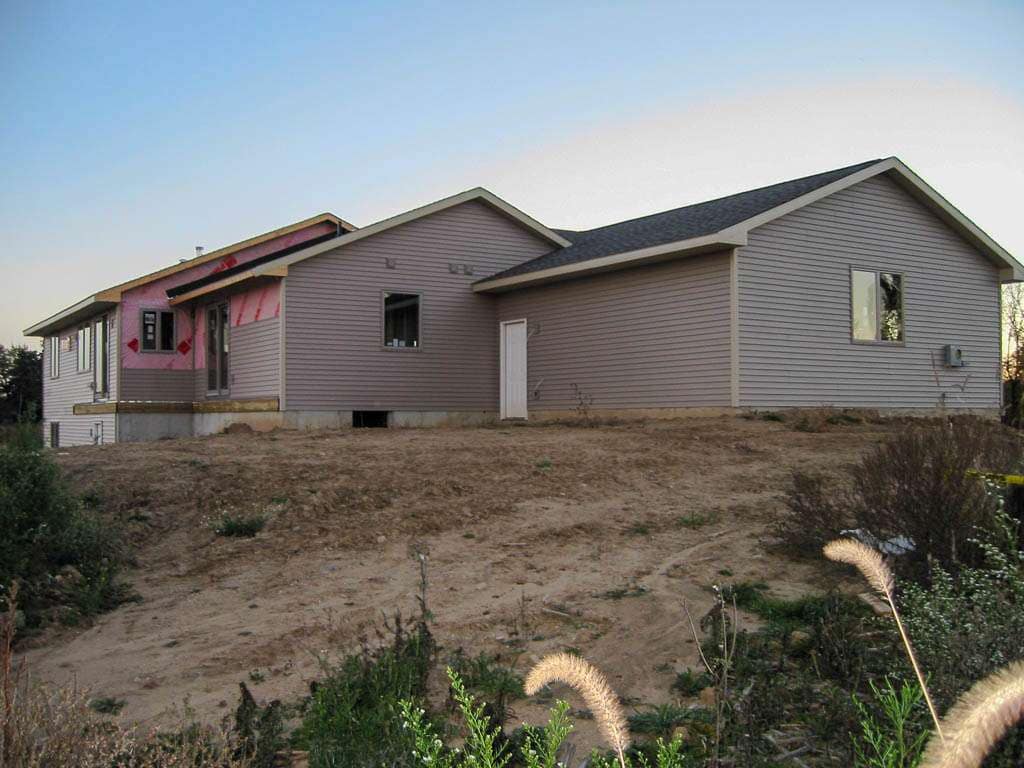
We decided to put it behind the garage, where we could enjoy it from the gazebo. That was about as blank a slate as you could get. Weeds wouldn’t even grow there. We had piles of rocks that we’d cleared from other areas, some construction debris leftover from building the house that we had to move before we got started, and one larger rock that we had roughly shoved into position by Bobcat when we had the slope graded. (Because there was no way we were moving that by ourselves.) That became the outer corner of the pond area.
We did a lot of research, especially because we wanted to have goldfish and wanted them to be able to winter outdoors. So we made the pond 24” deep in the center, which is deep enough for fish to survive Michigan winter. (They go into a kind of torpor or hibernation under the ice.) We built in plant ledges around the sides for pond plants. Steve had the pond dug before I got out of bed one morning. We were younger then. I was not a morning person then either.
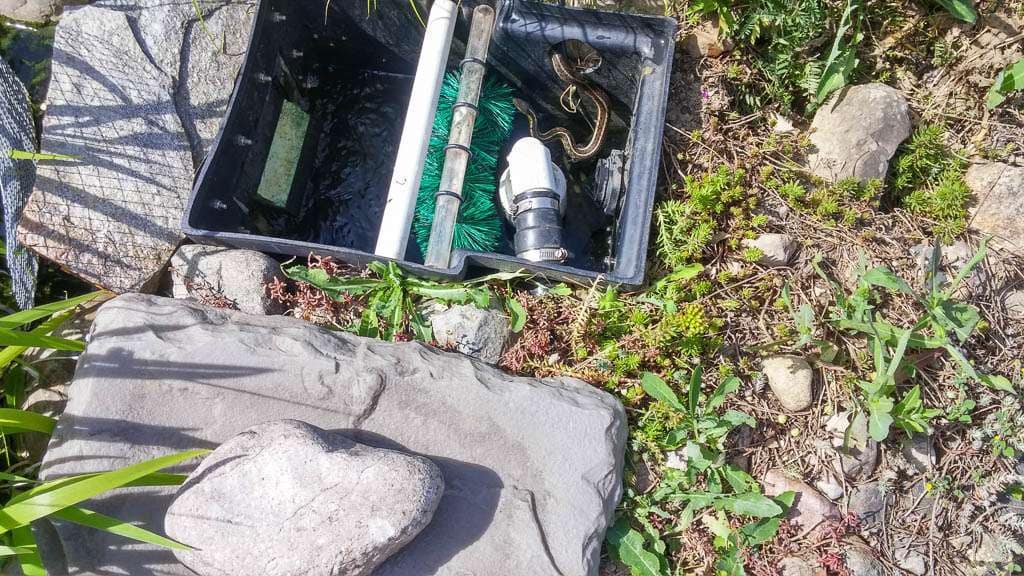
We bought a pond kit that included a plastic box for a waterfall and a smaller one for the skimmer. The pump sits in the skimmer. The two are connected by a corrugated hose. Water is pumped from the skimmer up to the falls, where it flows over the falls into the pond. We went with a rubber liner and underlayment for more flexibility. The disadvantage is you have to be careful you don’t puncture the liner!
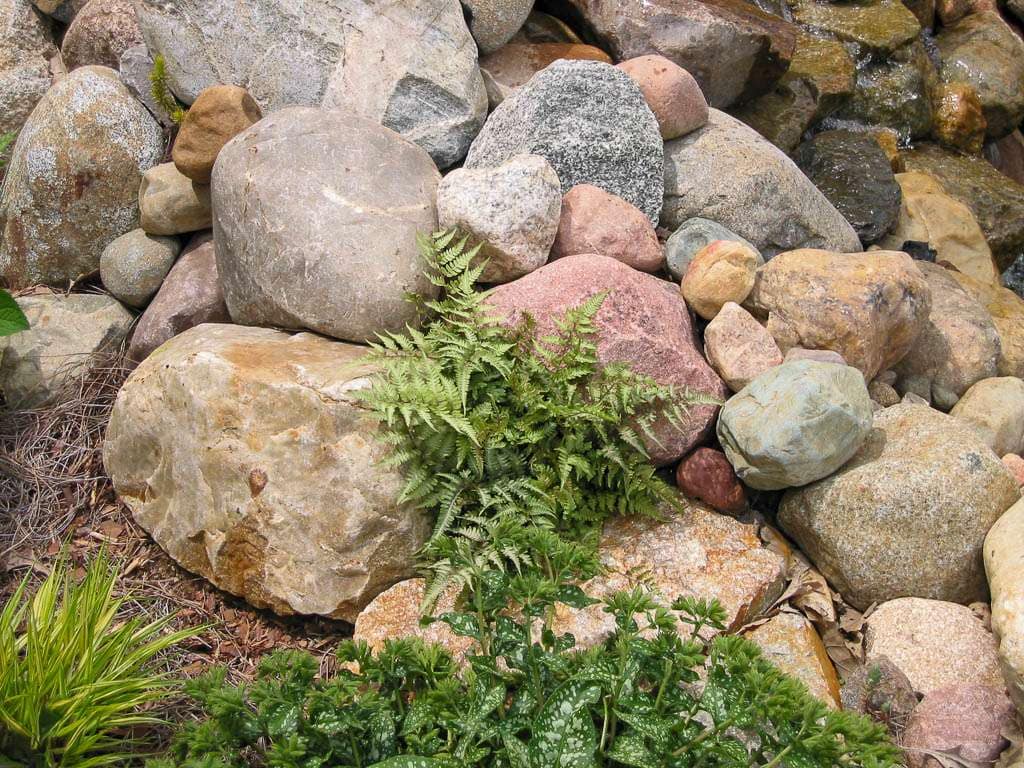
We also bought boulders, since most of the rocks we harvested from our yard were too small. Who knew you could buy boulders? By the pound? In different sizes?
Constructing the pond was fairly easy though tedious and stressful. We placed the pond and skimmer and connected them, ran wiring for the pump from the garage, connected to a switch so we could easily turn it on and off. We cleared visible stones from the pond pit and spread the underlayment, then the pond liner. The liner then gets covered with rocks since sunlight can damage it. (Plus it’s not very aesthetically pleasing.)
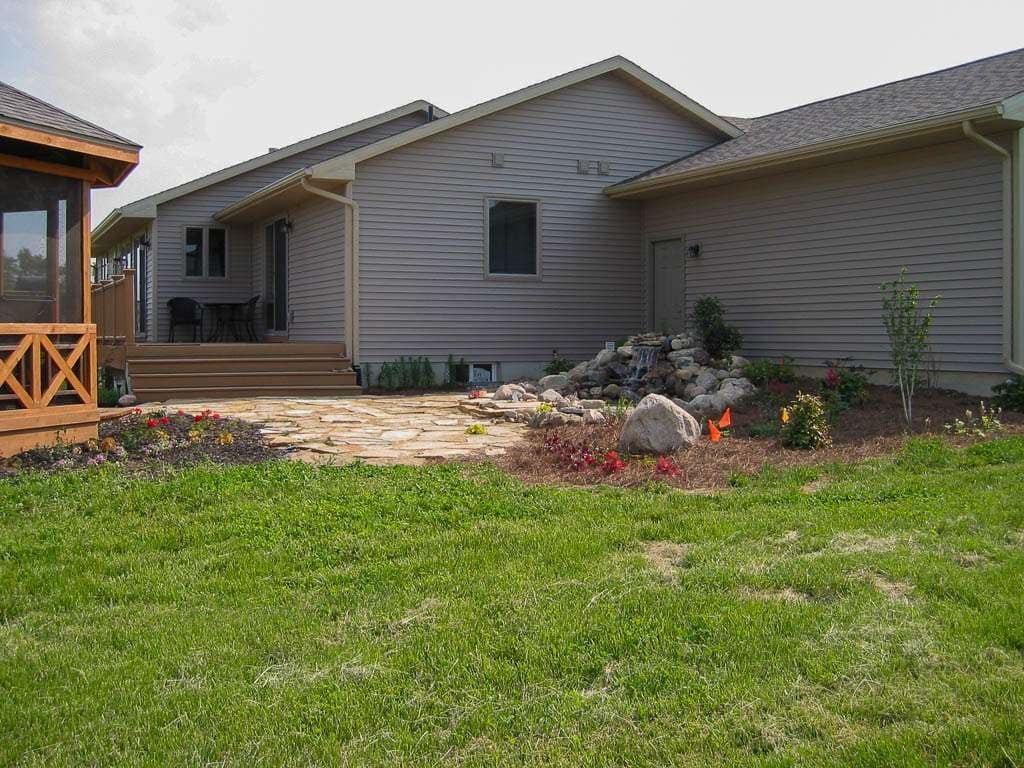
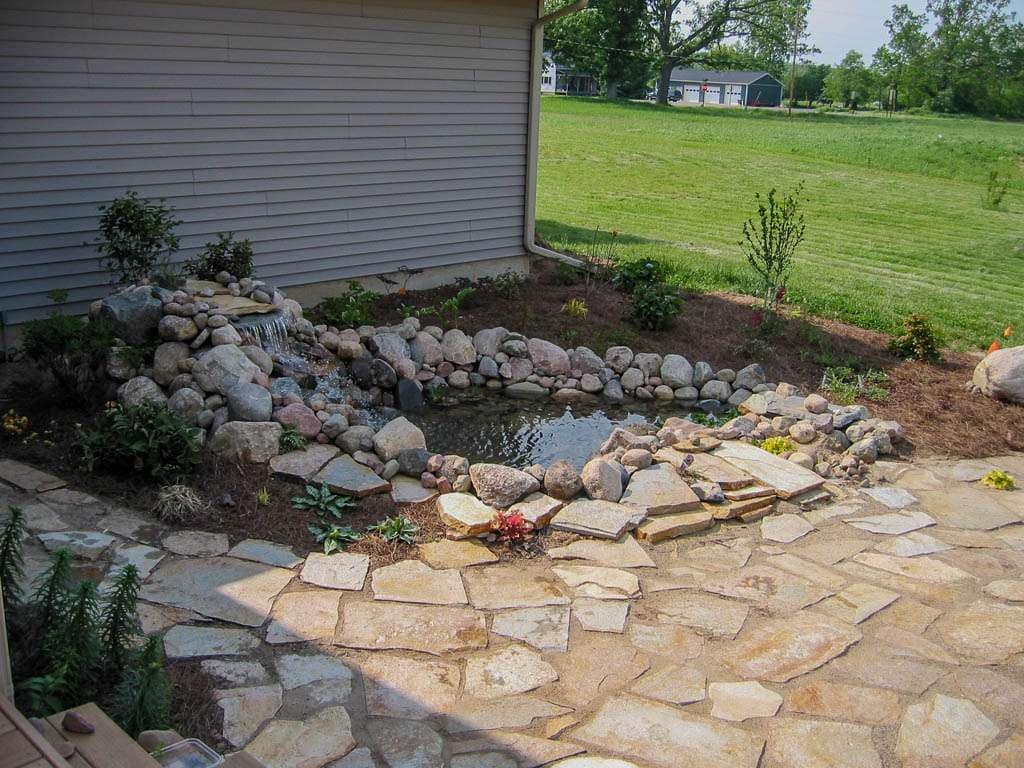
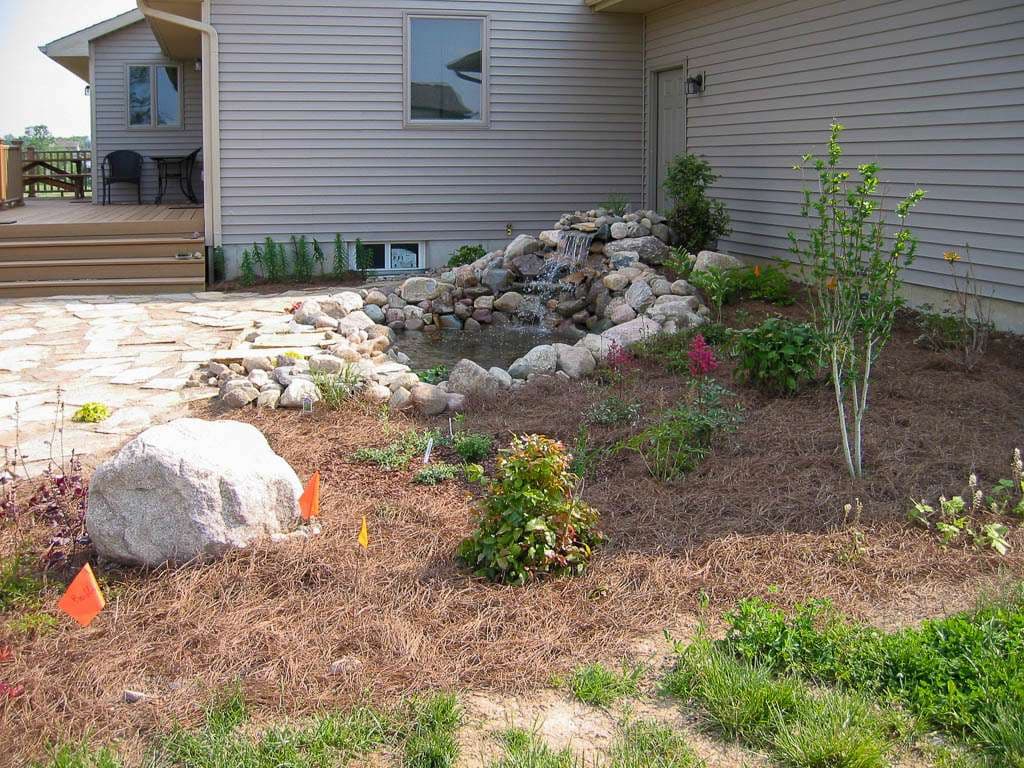
The hardscape included building a flagstone patio between the garage door, deck, and gazebo to connect the three. It’s large enough you could put a small table and a couple of chairs on it though we never have. It’s more of a wide pathway. We also added some lights to the pond, though we never really used them and eventually removed them.
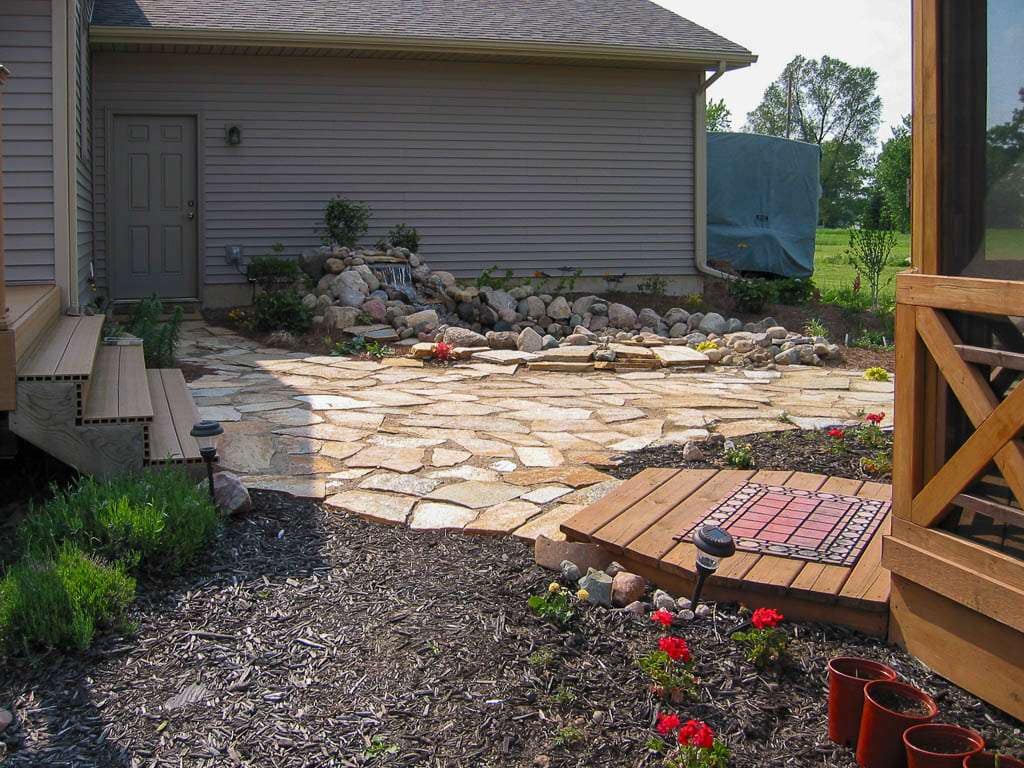
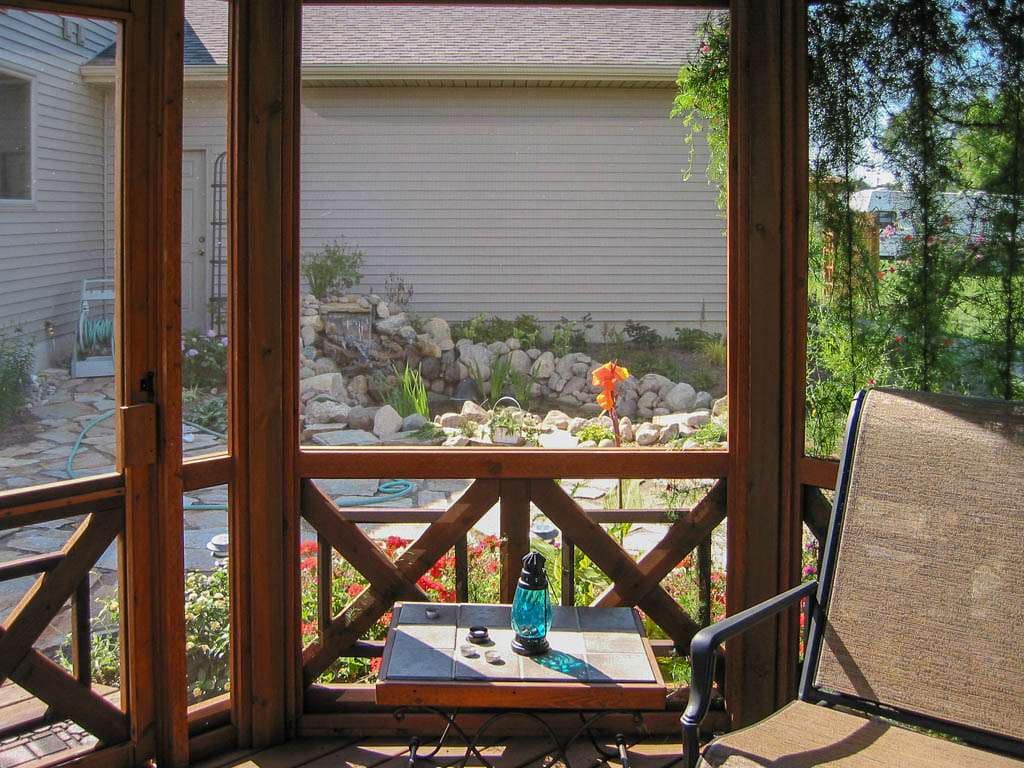
I just looked at my original planting plan for around the pond and almost laughed out loud. I was so far off on available space and I think available plants, too. I thought the area would be more shady and planned for that, with a woodland look. Well, it isn’t that shady after all and any azaleas I put there failed miserably. The hydrangeas are doing better, though the two that get more sun never bloom. We plan to move those soon.
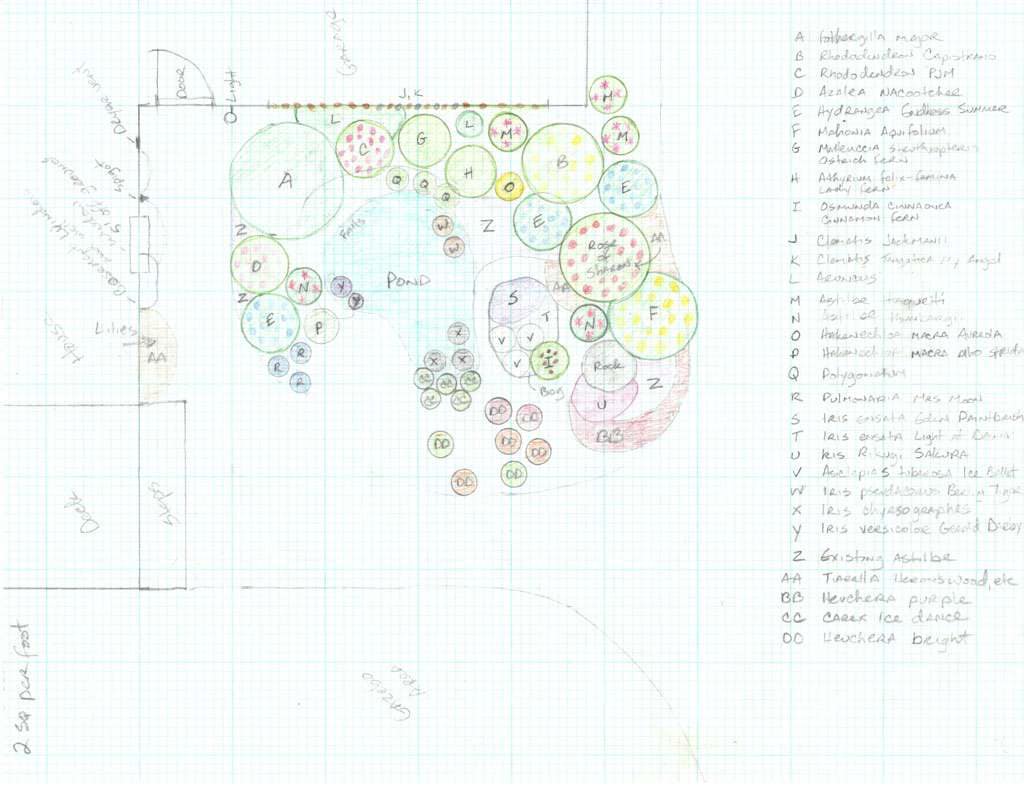
Fothergilla majorLonicera x Heckrotti Gold Flame Honeysuckle on obeliskRhododendron CapistranoGolden Lights AzaleaRhododendron PJMFernsAzalea NacoocheeOrchid Lights Azalea- Hydrangea Endless Summer
- Mahonia aquifolium
- Matteuccia struthiopteris
- Athyrium felix-femina
- Osmunda cinnamomea
Clematis jackmaniiClematis tangutica My Angel- Aruncus dioicus
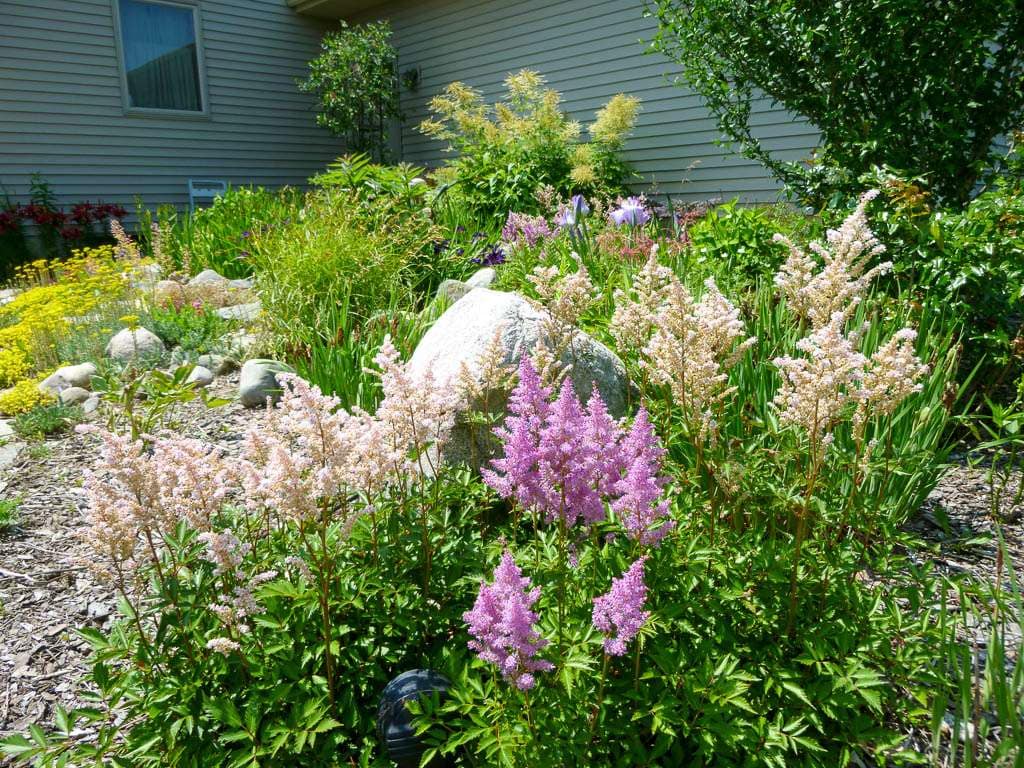
- Astilbe chinensis var taquetii
- Astilbe thunbergii Ostrich Plume
- Hakonechloa macra Aureola
- Hakonechloa macra albo striata
- Polygonatum Variegatum
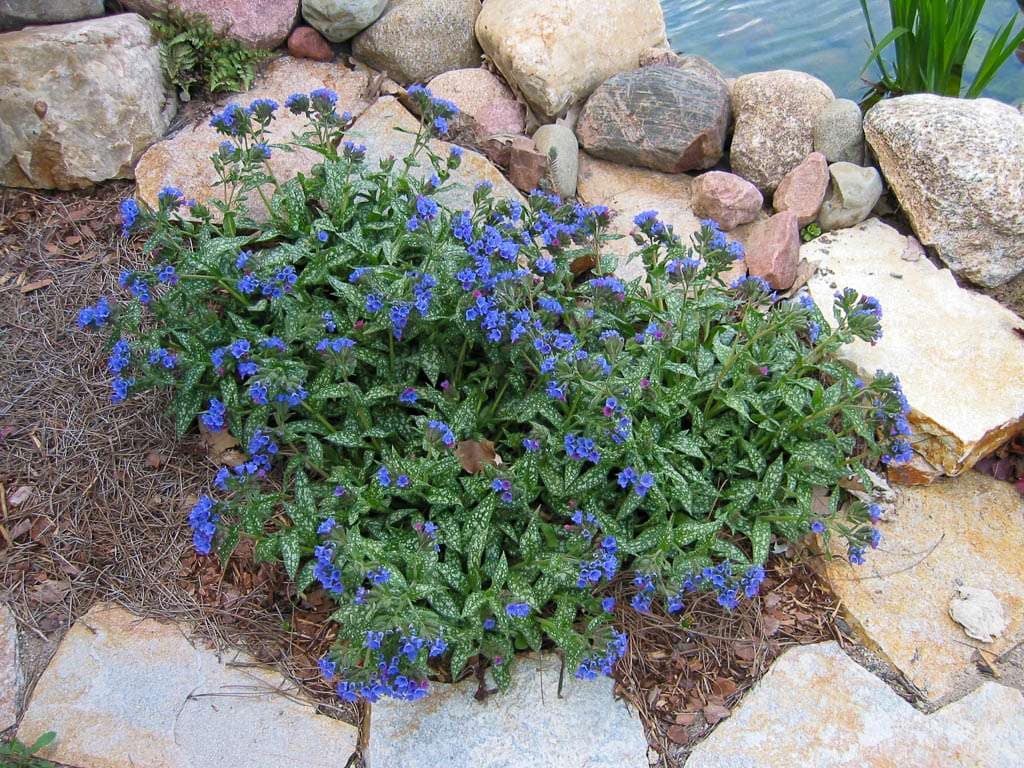
- Pulmonaria
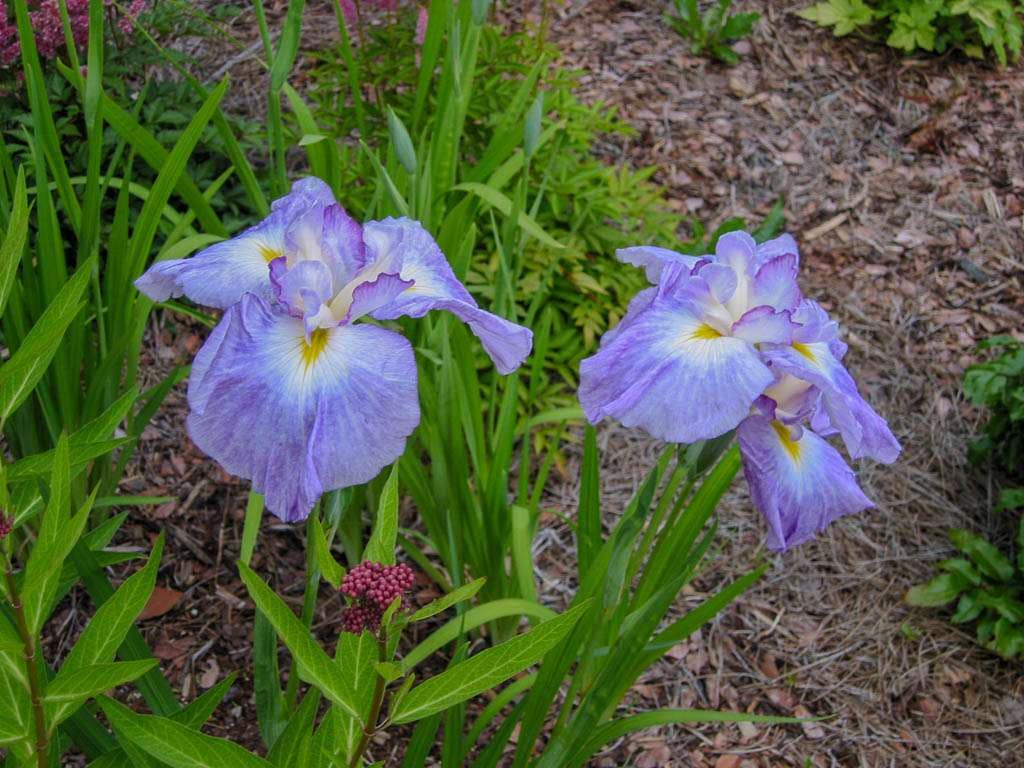
Mrs MoonTrevi Fountain - Iris ensata Eden Paintbrush
- Iris ensata Light of Dawn
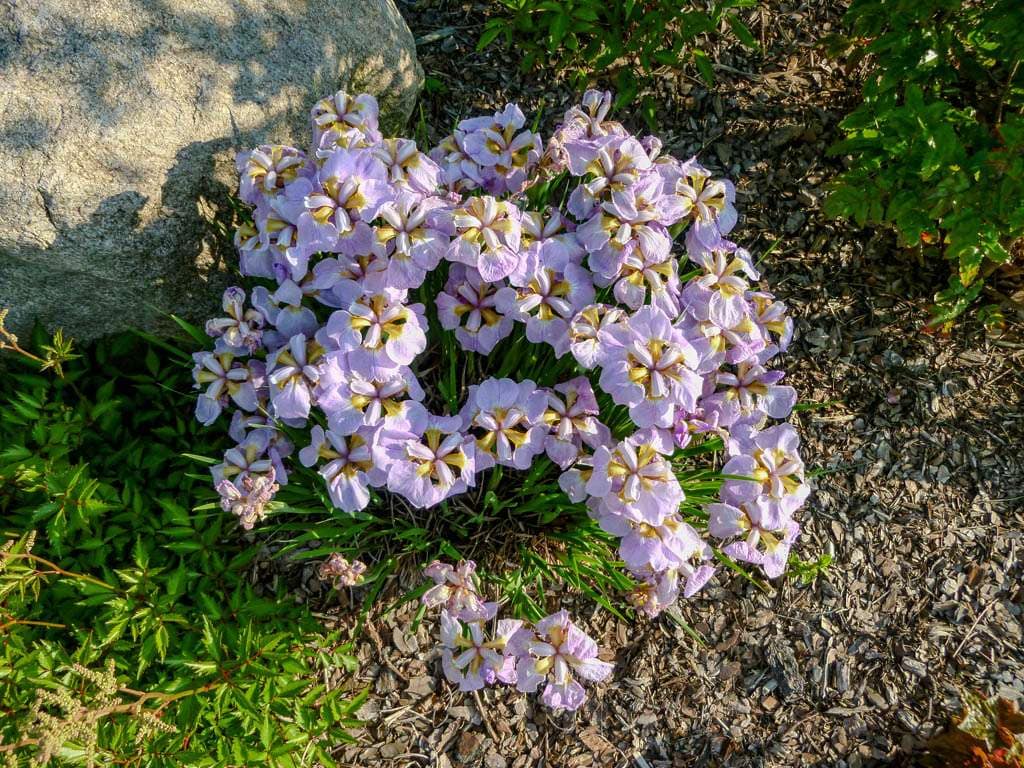
- Iris Rikugi Sakura
- Asclepias tuberosa Ice Ballet
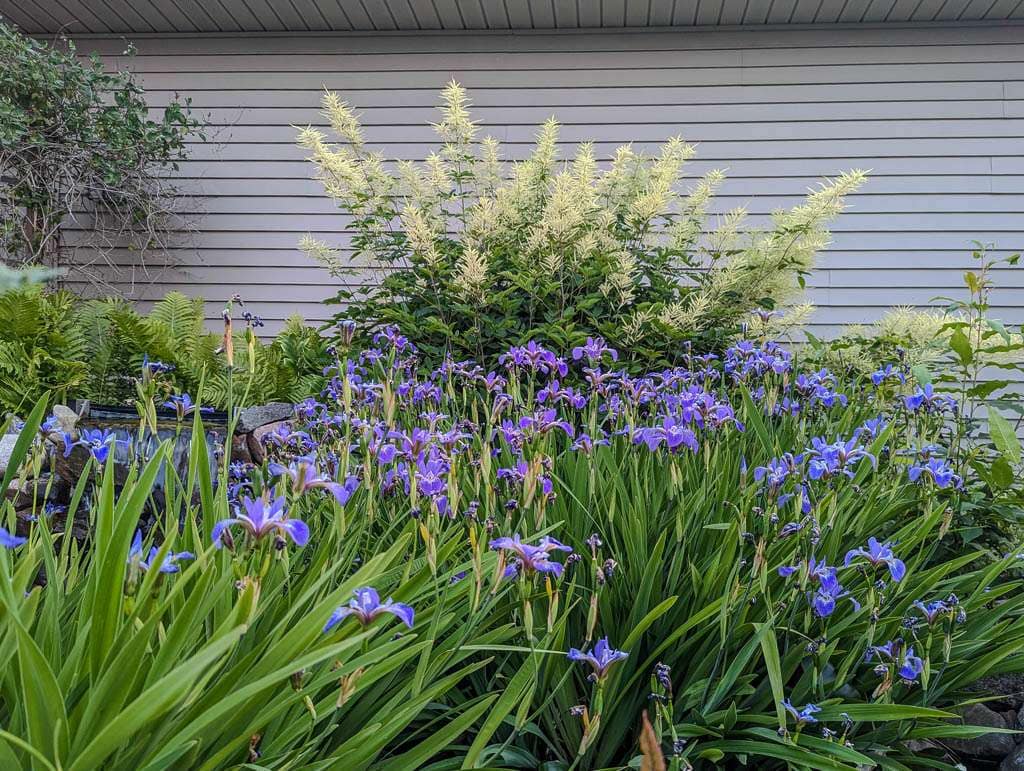
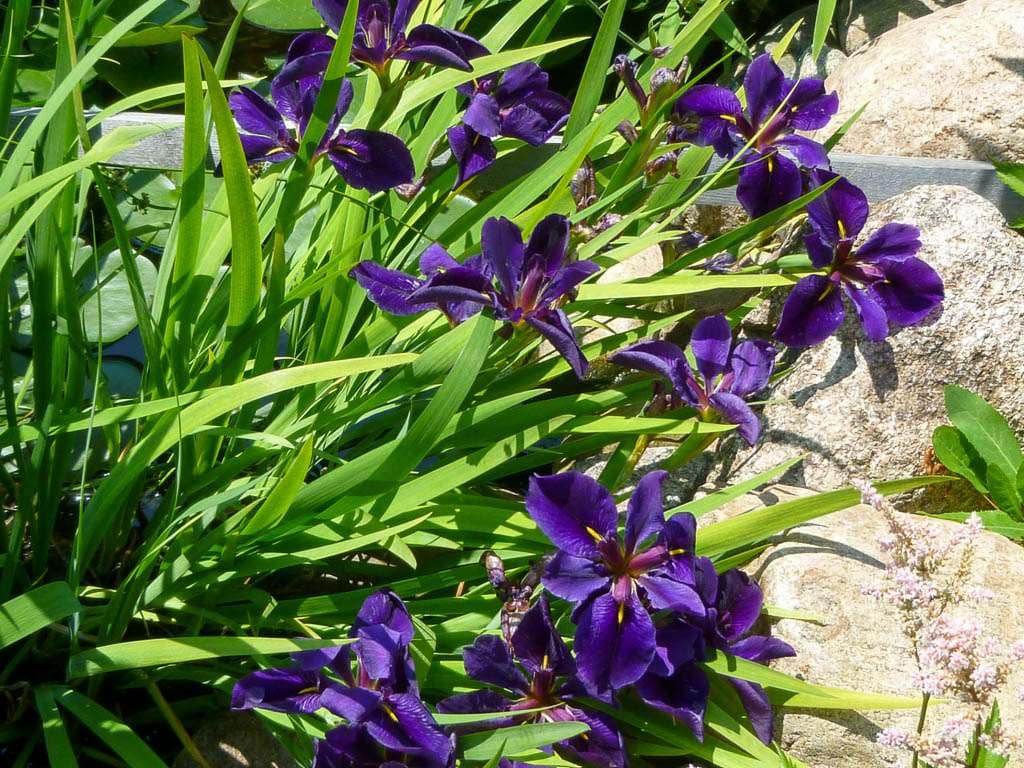
Iris pseudacorus Berlin TigerIris versicolor Gerald DarbyIris chrysographesIris louisiana Black Gamecock- Iris versicolor Gerald Darby
- Astilbe (moved plants)
- Rose of Sharon, Tiarella
HeronswoodCrow Feather - Heuchera Palace Purple
- Carex Ice Dance
- Heuchera in bright colors
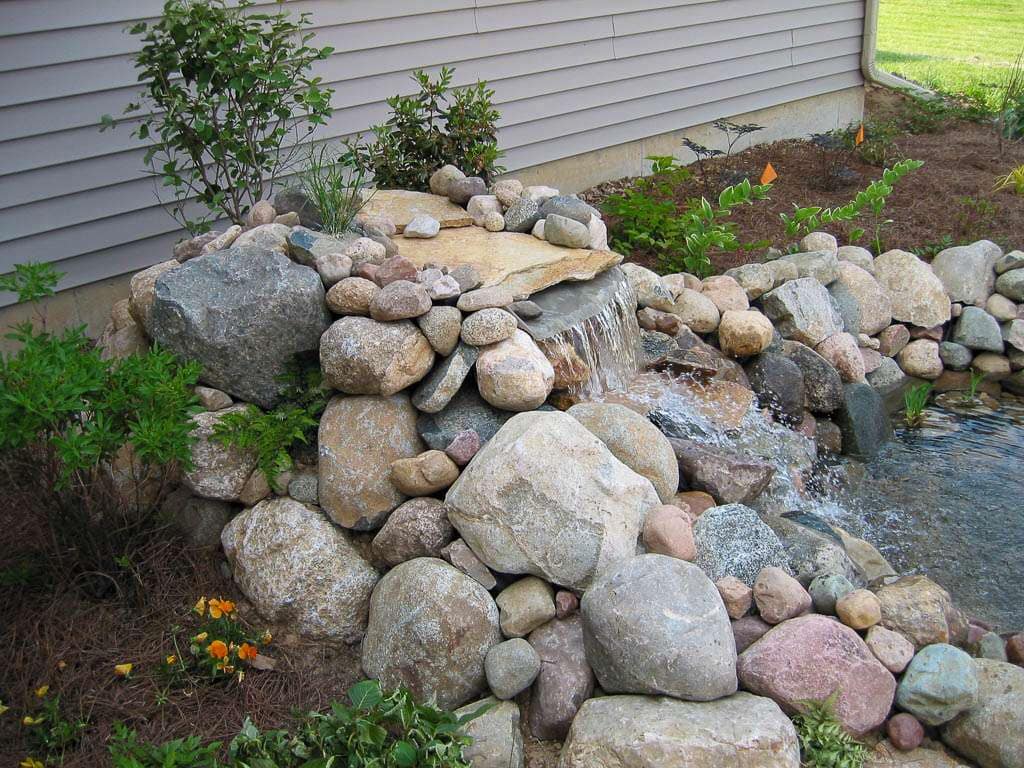
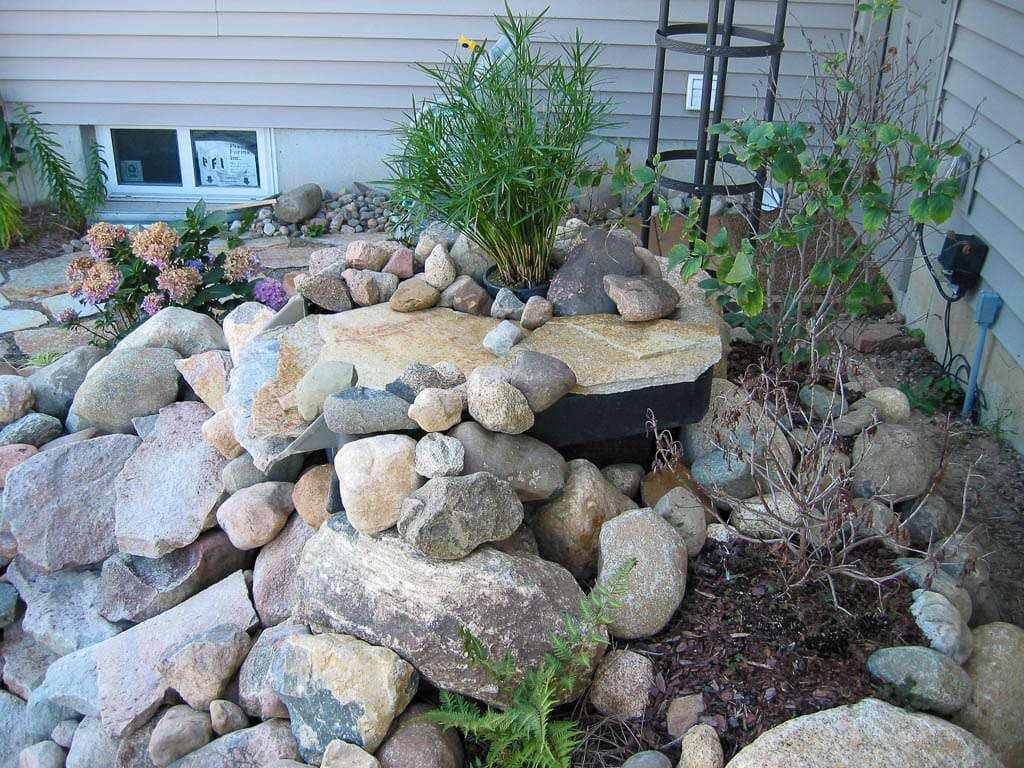
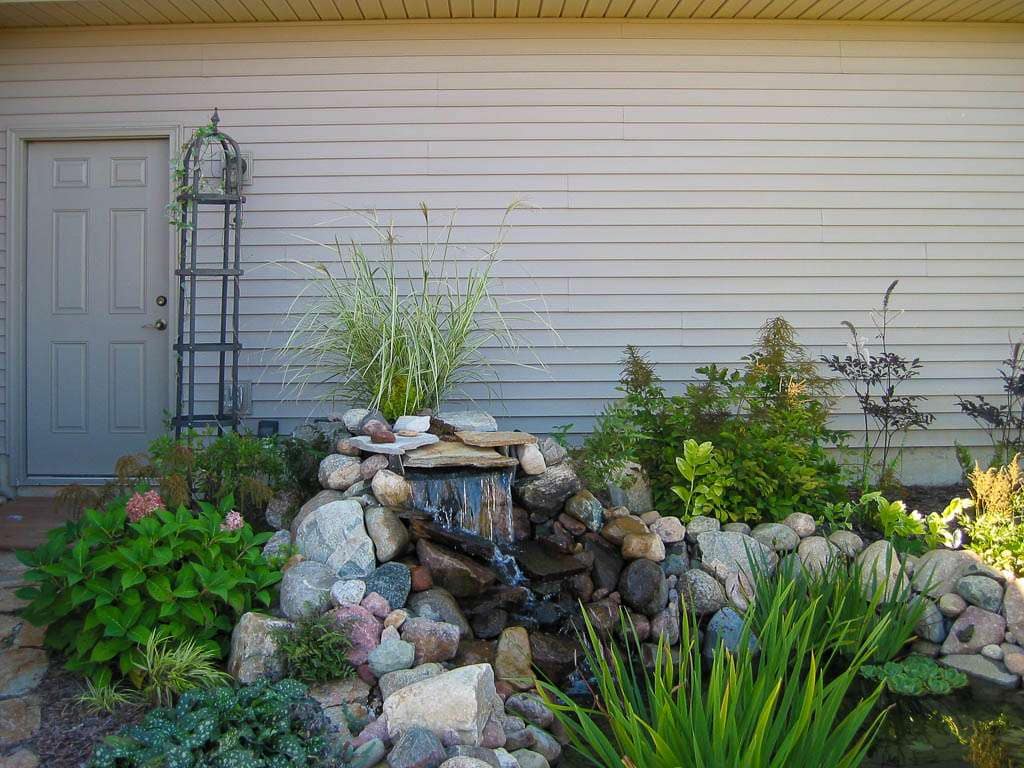
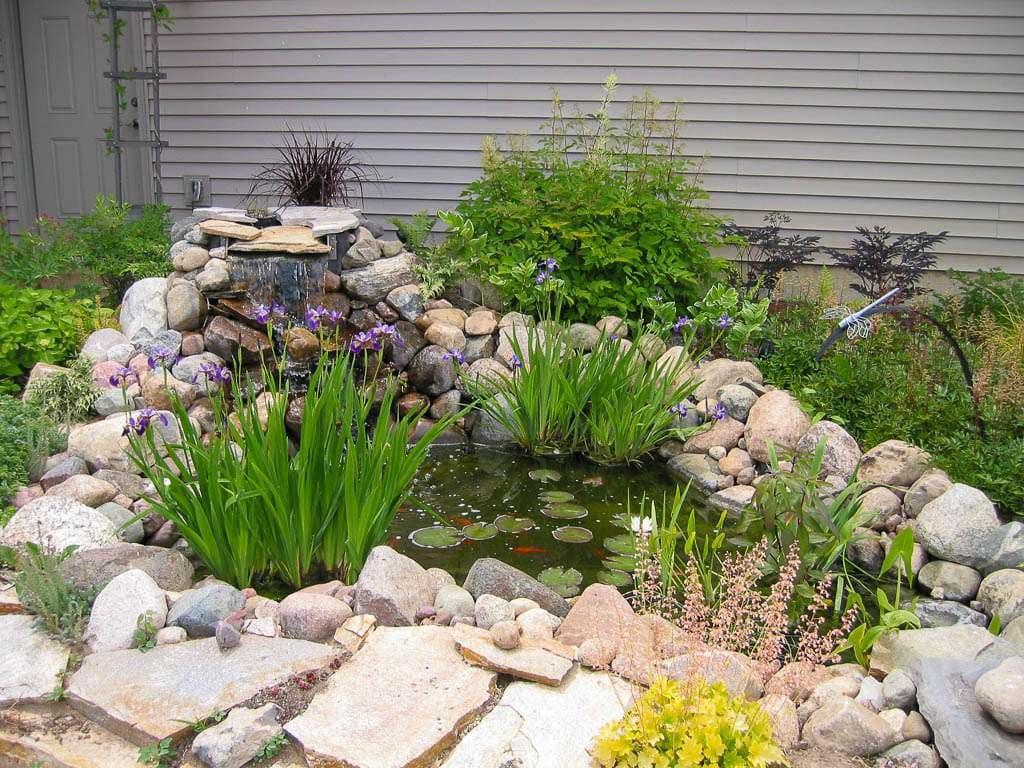
Additions and replacements, deaths
- The Fothergilla major would not fit where I’d planned so we found another home for it and put an obelisk growing Lonicera x Heckrotti (Gold Flame Honeysuckle) behind the falls. It looks good and works well there.
- The two azaleas held out for a while …
- I tucked some Athyrium niponicum (Japanese Painted Fern) between rocks in the falls. I like the look.
- I swapped the locations of the Hakonechloa macra Aureola and the Hakonechloa macra albo striata. I can’t recall if it was accidental or not, but the Hakonechloa macra Aureola has done well and is ready to be divided. The Hakonechloa macra albo striata did not survive.
- The Rose of Sharon died. We replaced it with Malus hybrid Coralburst, a small crabapple.
- If we ever planted Athyrium felix-femina (lady fern) where I’d planned it didn’t last long.
- The Tiarella and the Heuchera were overtaken by the Mahonia aquifolium (Oregon Grape Holly) which has done surprisingly well for being borderline hardy here.
- The Carex Ice Dance did not survive.
- The Heuchera in bright colors did not last.
- The Iris versicolor Gerald Darby in the pond has done so well we’ve had to thin it a couple of times. We planted the extras outside the pond and they’re doing pretty well.
- Most of the area to the right of the pond has been taken over by an unidentified wildflower. It flowers profusely in late May-early June and we’re kind of letting it stay.
I tried a bog garden to the right of the falls, thinking the pond overflow would run into it. It didn’t work out that way (we had to run the overflow pipe in a different direction) and now you can’t tell the bog was ever there. The plants I planted in the bog did not survive.
- Osmunda cinnamomea (Cinnamon fern)
- Hakonechloa macra albo striata
- Iris ensata Eden Paintbrush (Japanese iris)
- Iris ensata Light of Dawn (Japanese iris)
- Asclepias tuberosa Ice Ballet (white butterfly weed)
Despite very little going according to plan, it has the lush, woodland feel I was going for, so I’m happy with how it turned out.
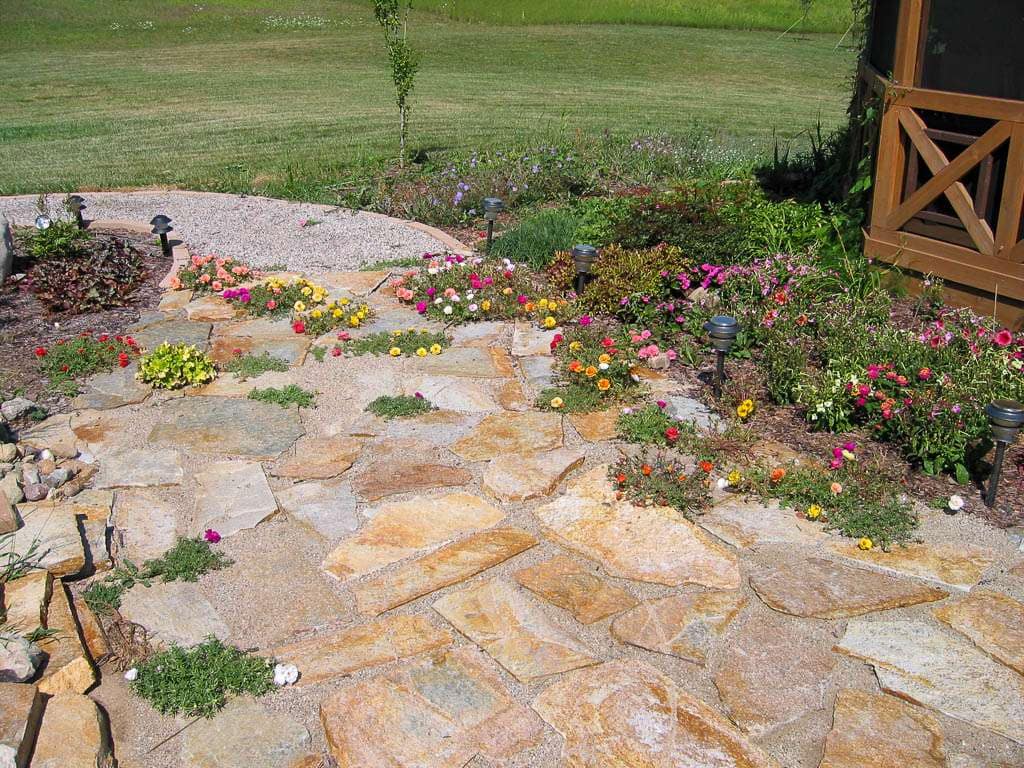
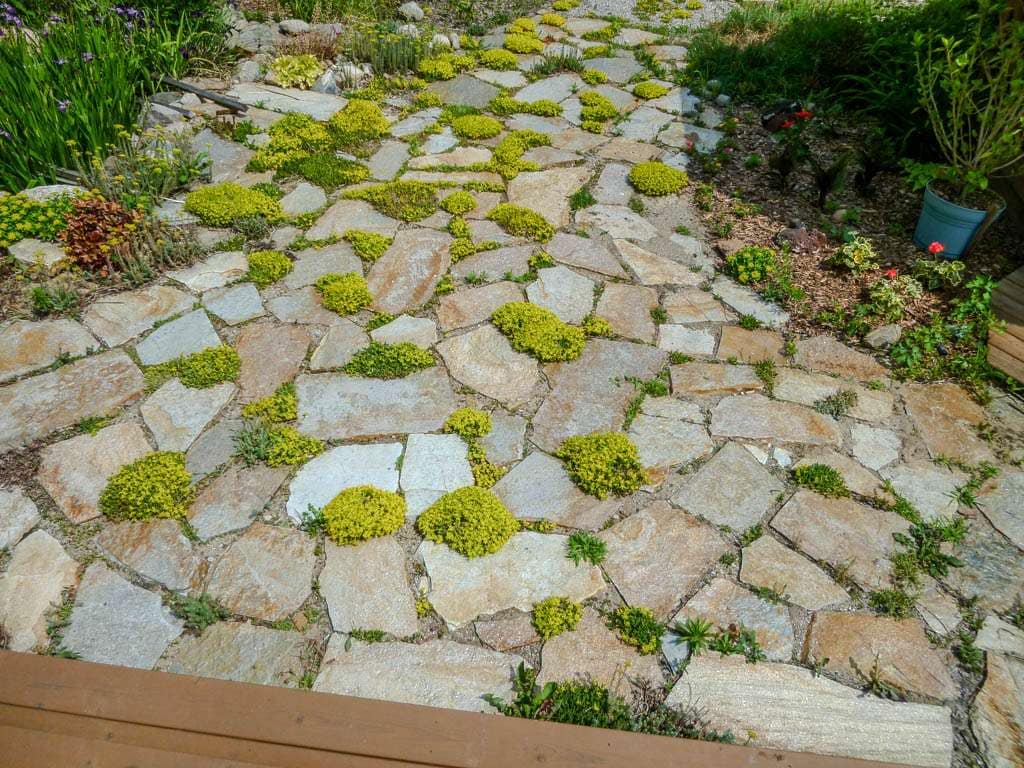
The patio has gone through a couple of iterations. We like the look of moss rose among the stones but it’s a lot of work to do it every year. We also like the look of stonecrop among the stones but this type is too invasive. Originally we just used sand. A few years ago we cleaned up the weeds well and added pea stone between the flagstones.
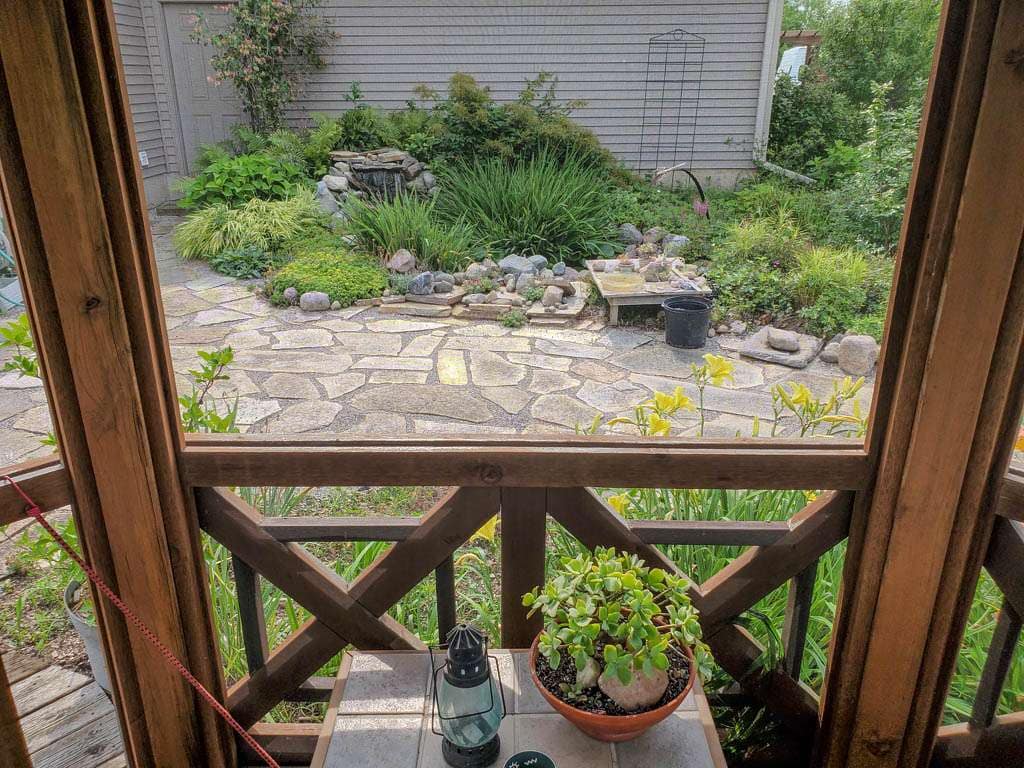
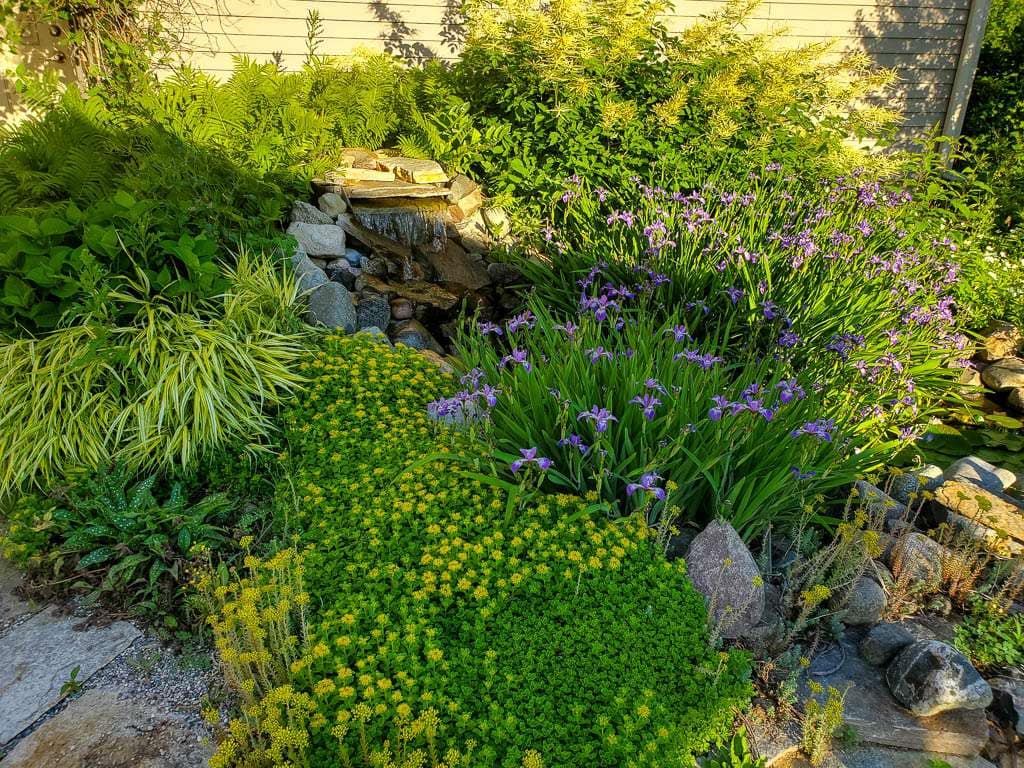
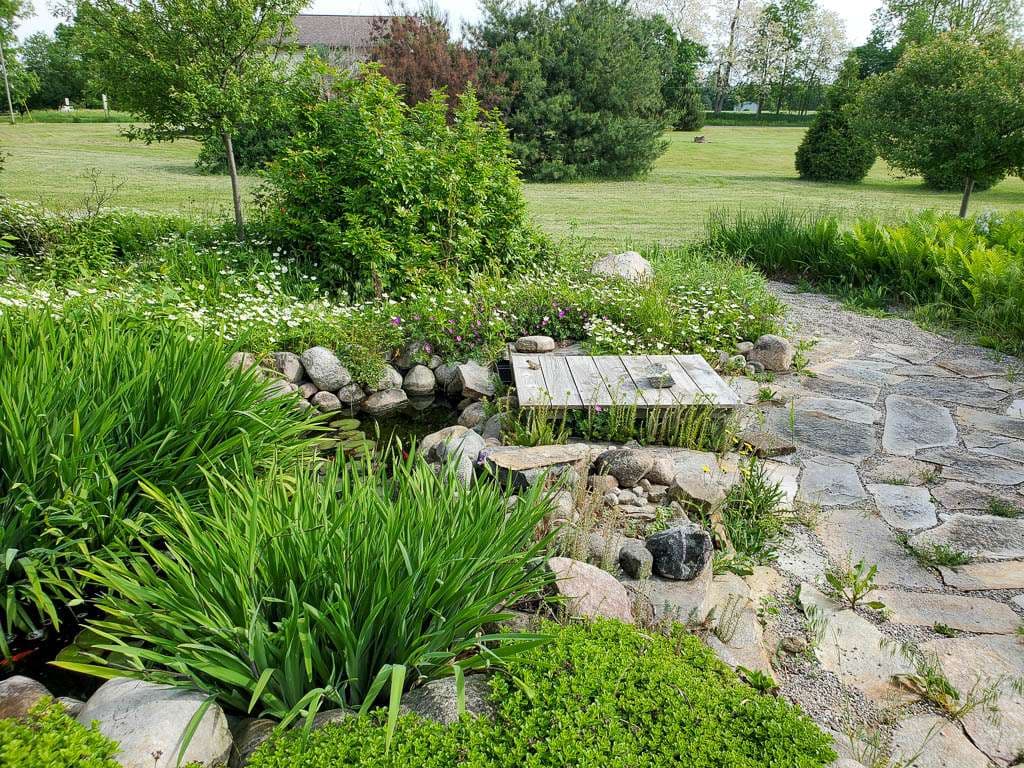
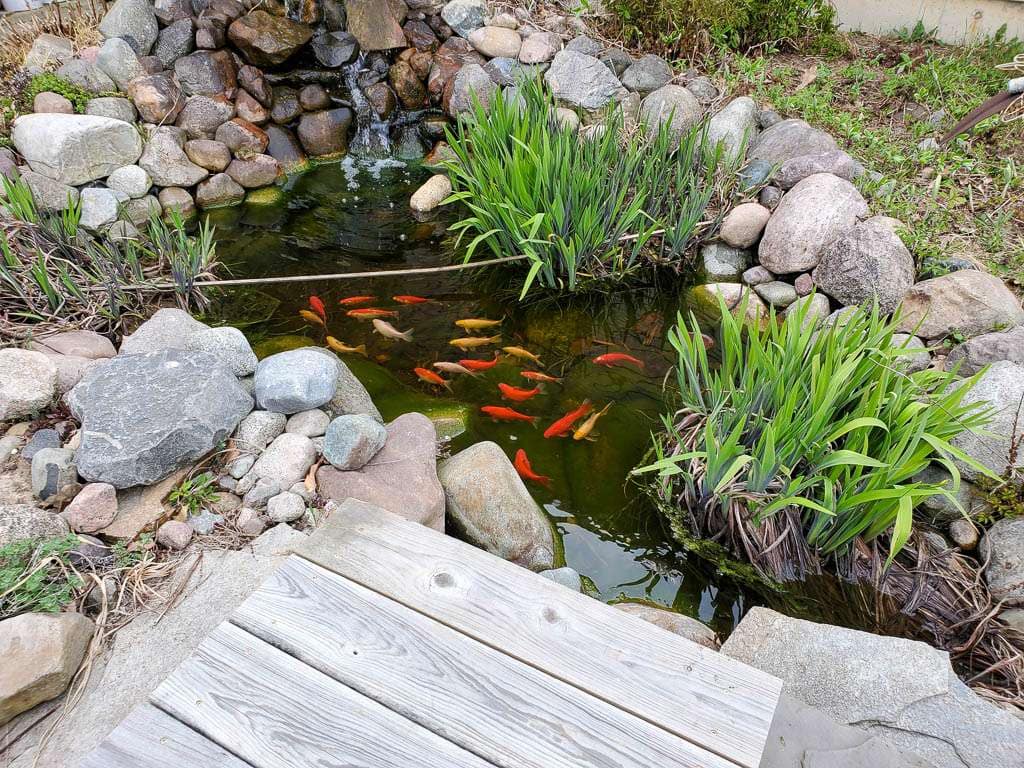
Here’s how the pond has changed over the years.
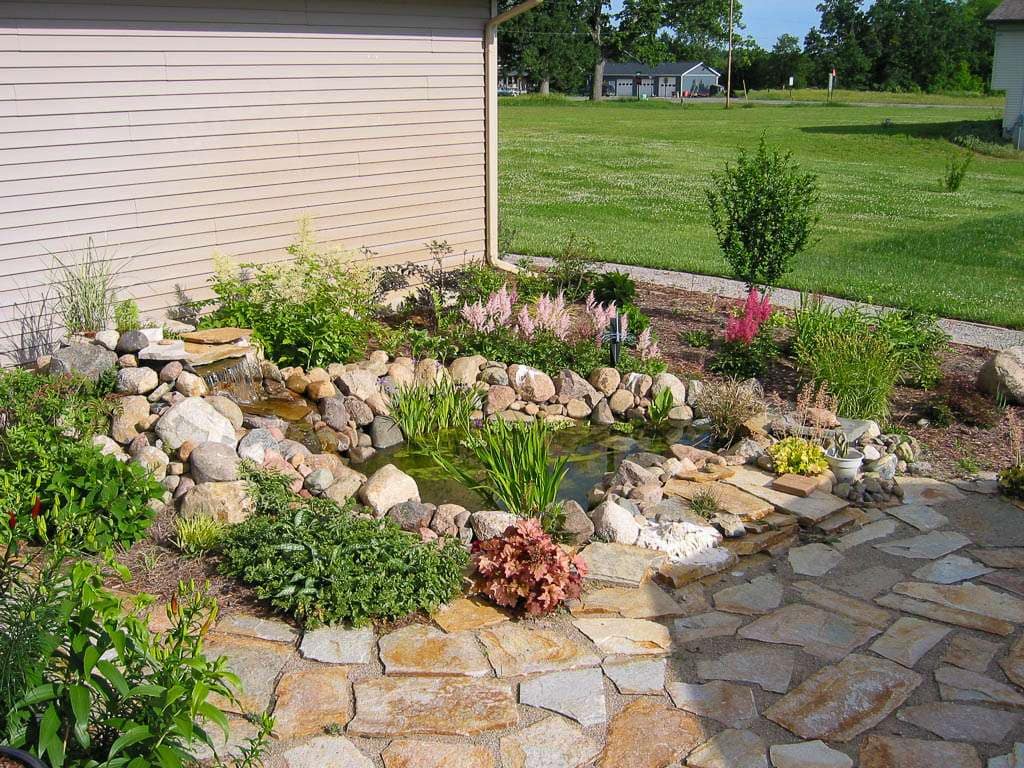
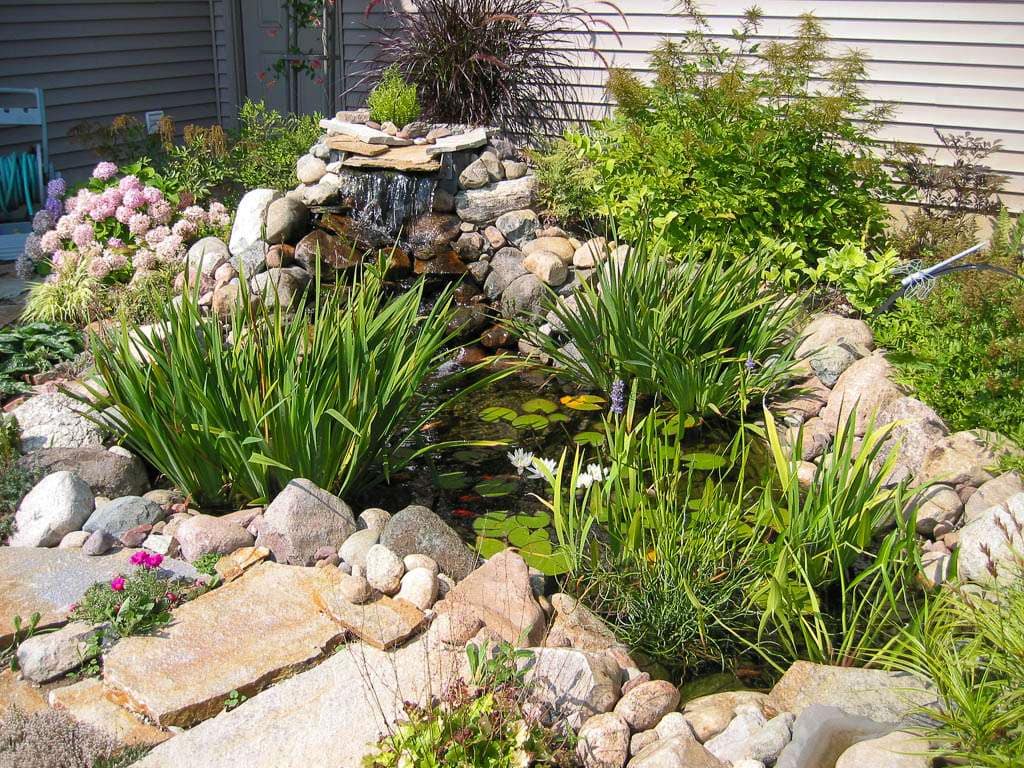
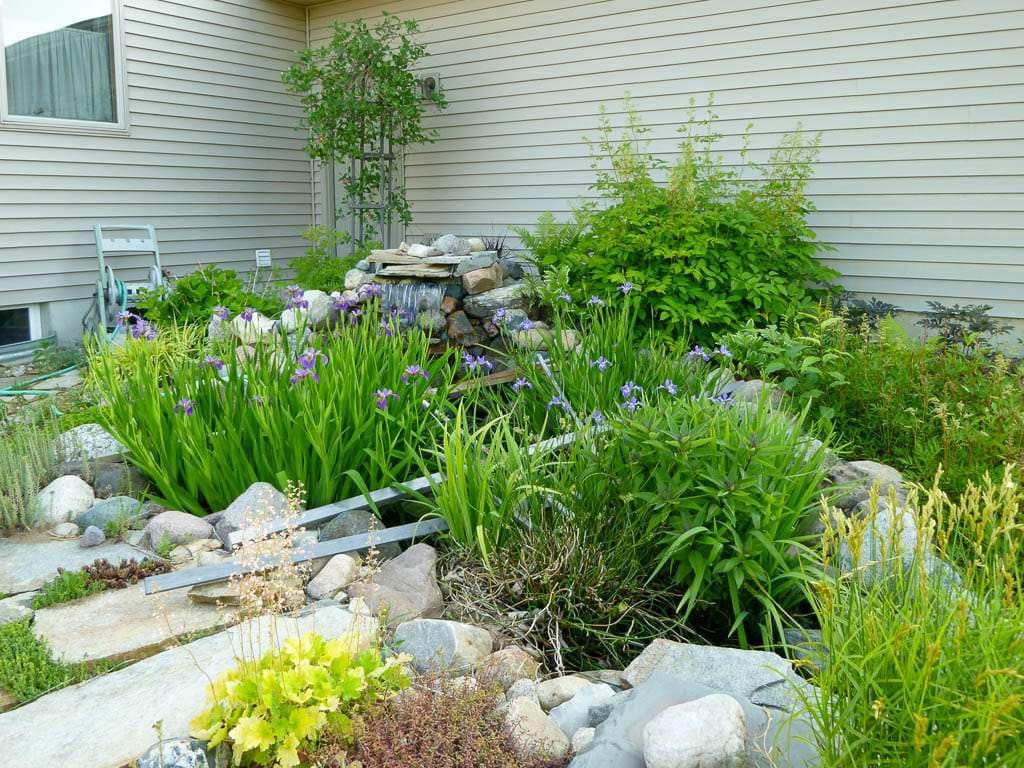
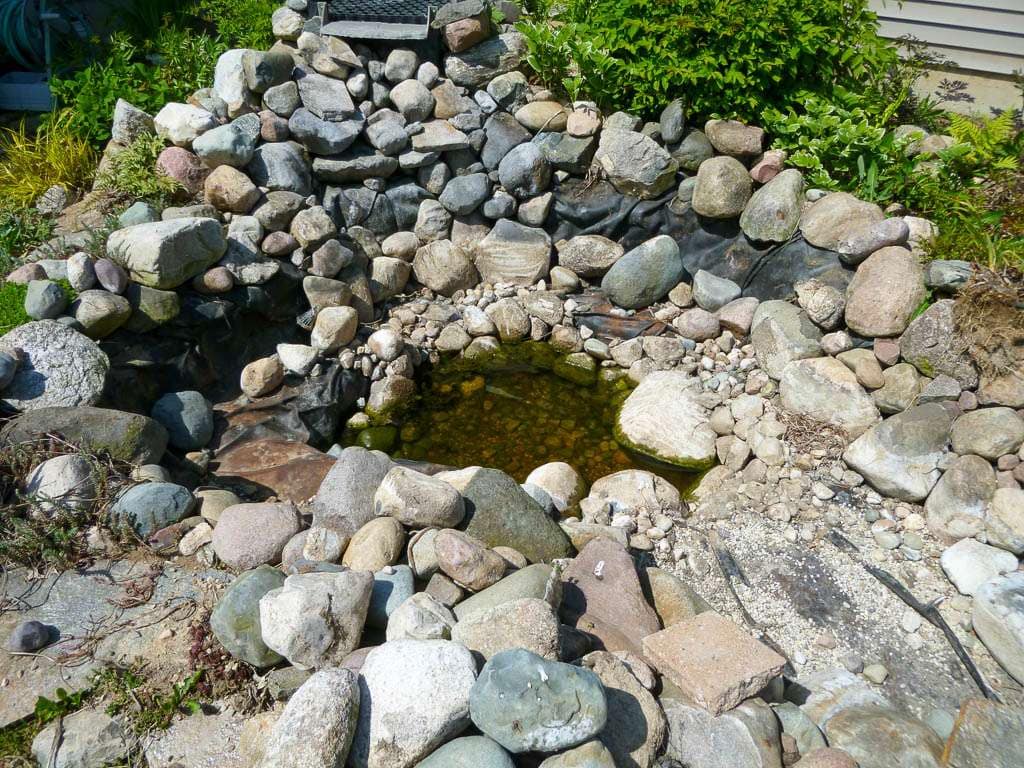
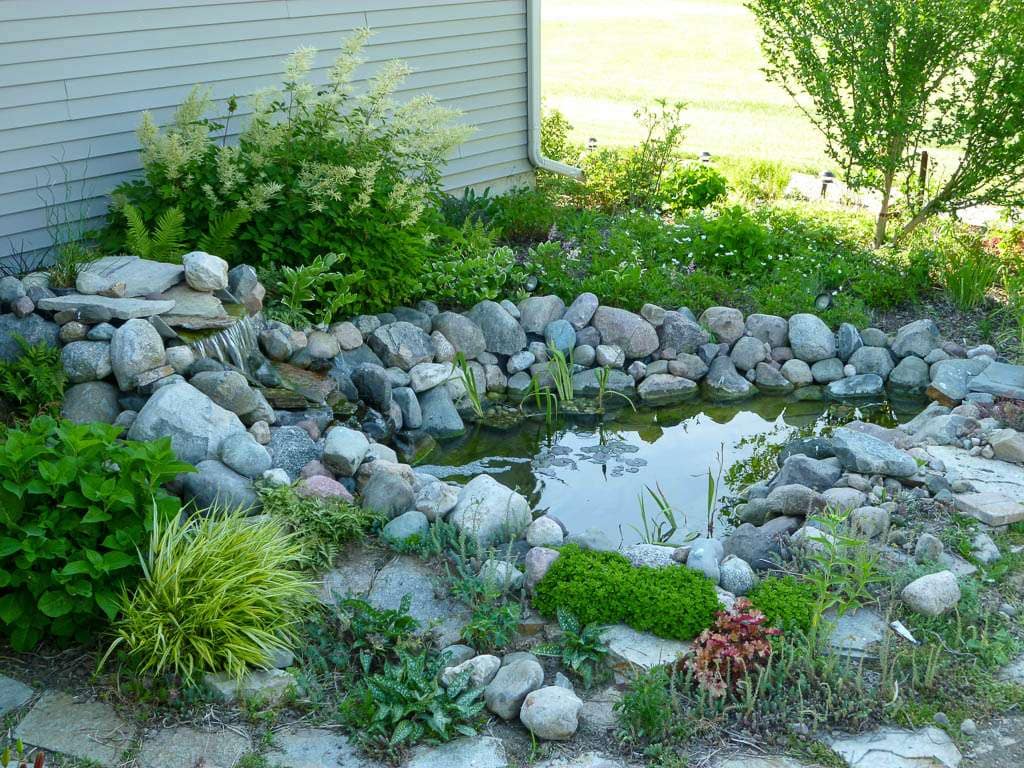
This is what it looked like in 2022.
Maintenance
If you think a pond is low maintenance, think again.
Regular Maintenance
- Maintaining Water Level: The pond is mostly self-regulating. It has a flexible overflow pipe to handle excess water if we get a lot of rain.. During periods of low rain we top off the pond using the hose. (If it gets very low the pump and waterfall stop working.) Our pond is right next to a spigot and the overflow is directed into the surrounding planting bed.
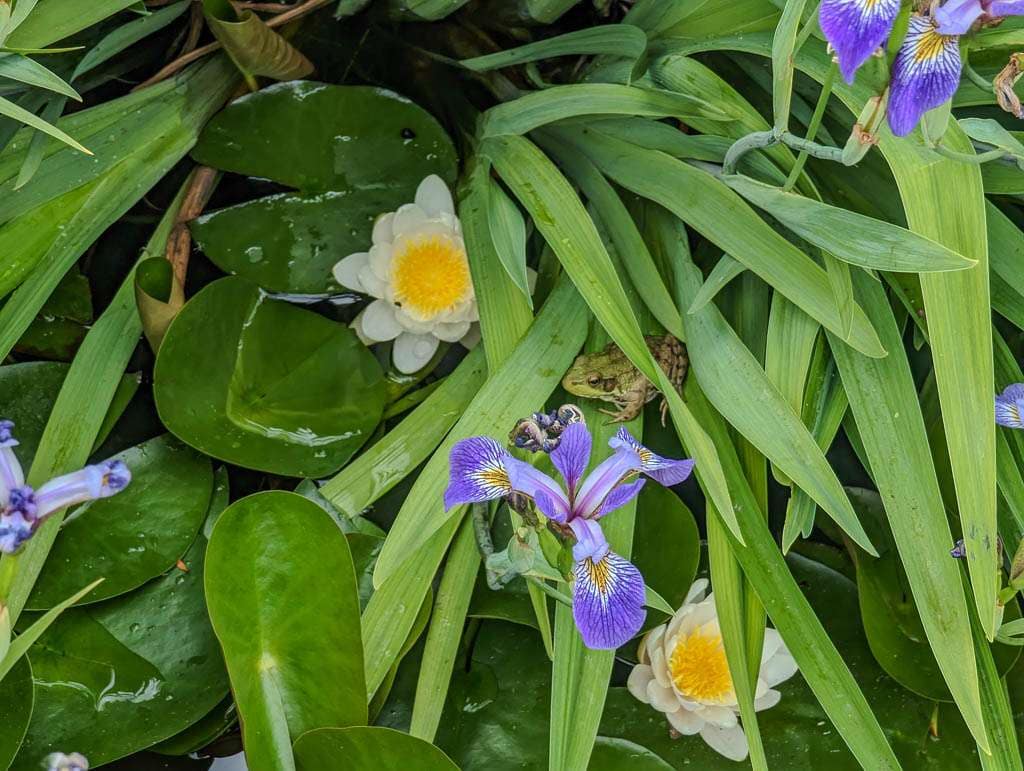
- Algae: We don’t have many traditional weeds in the pond but we do have algae. Water plants compete with algae for nutrients and floating plants add shade which is also a deterrent. We use iris and water lily. While the water lily was small we supplemented it with annual floating plants. We also originally used barley straw as a preventive but have since installed a UV filter.
- Skimmer Filter Cleaning: Dead leaves and algae can build up and clog the skimmer filters, preventing water flow to the pump. When that happens we clean out the filters by hand and with a hose.
- Fish: Goldfish in an outdoor pond are about as low maintenance as a pet gets — I joke that this is the highest level of dependency that I’m comfortable with — but they still need to be fed when the weather is warm. And during the winter you need to keep the pond from freezing over completely. Which brings us to …
Annual Maintenance
Winterizing includes pulling the pump and replacing it with a bubbler that provides a little ventilation and keeps ice from completely covering the pond (so the goldfish don’t die). We also pull, clean (by spraying with a hose), and store the various filters and rocks from the waterfall and the skimmer and turn the waterfall off. So in the spring of course we need to put it all back together.
The water plants also need annual maintenance. We’re still mastering growing water plants. We started with nine water iris and a water lily but that was way too much. You could barely see the water! We’ve since decreased it to six iris and a water lily and plan to reduce it to three iris and a water lily. We also plan to start removing the iris from the pond for the winter and replacing them in the spring.
The water plants are planted in baskets designed for that purpose. The plants are planted in plain kitty litter, which is effectively clay pellets. (Make sure it’s plain! No deodorizers or anything.) However, the plants grow over the top of the baskets and the roots grow through and into the surrounding rocks. Since we try to not get in the pond and risk putting holes in the liner, it’s difficult to get to the plants to prune dead leaves and such. Removing the plants to overwinter them should prevent overgrowth and make maintenance easier because we’ll be able to prune the dead leaves while the plant is out of the water.
Other Maintenance
We developed a leak in the hose between the pump and the falls and had to splice it. We’ve also had to rearrange rocks in the waterfall as they settle to prevent water from being directed outside the pond. And we replaced the original pump when it wore out.
Additional Photos and Info
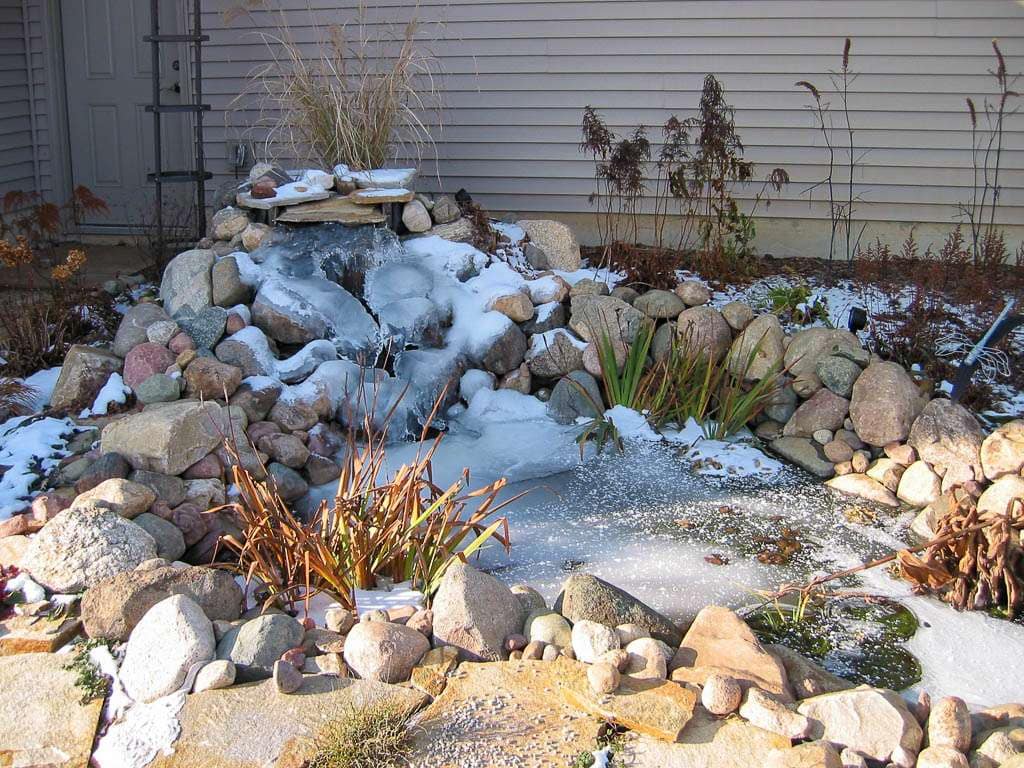
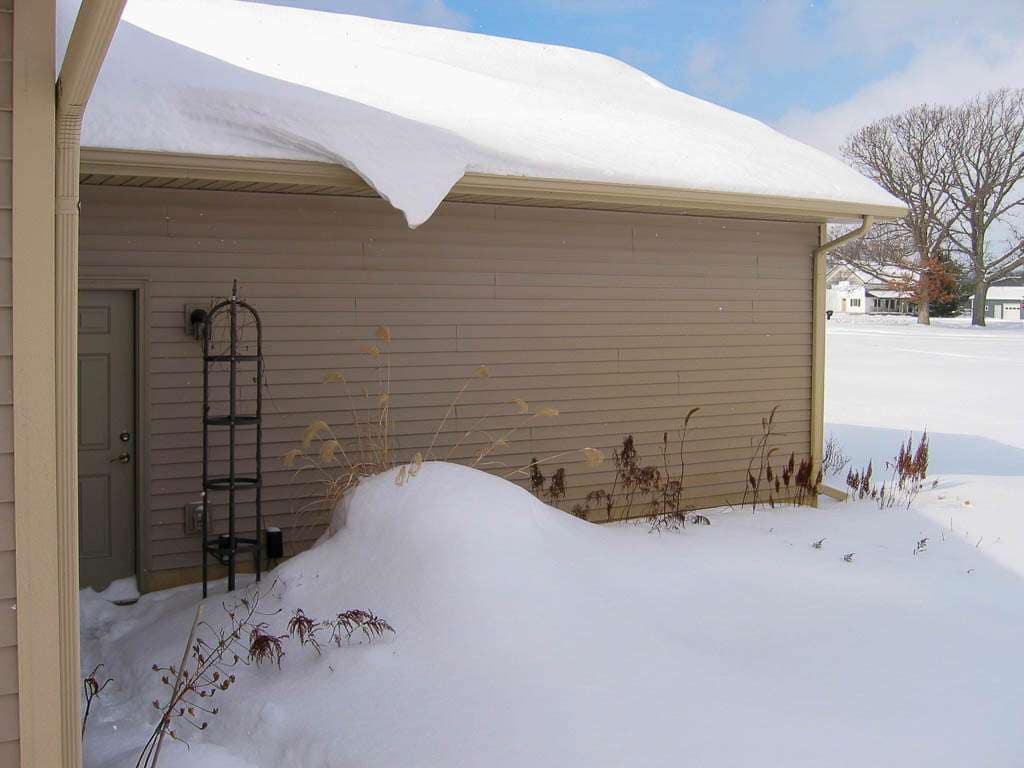
The pond in winter.
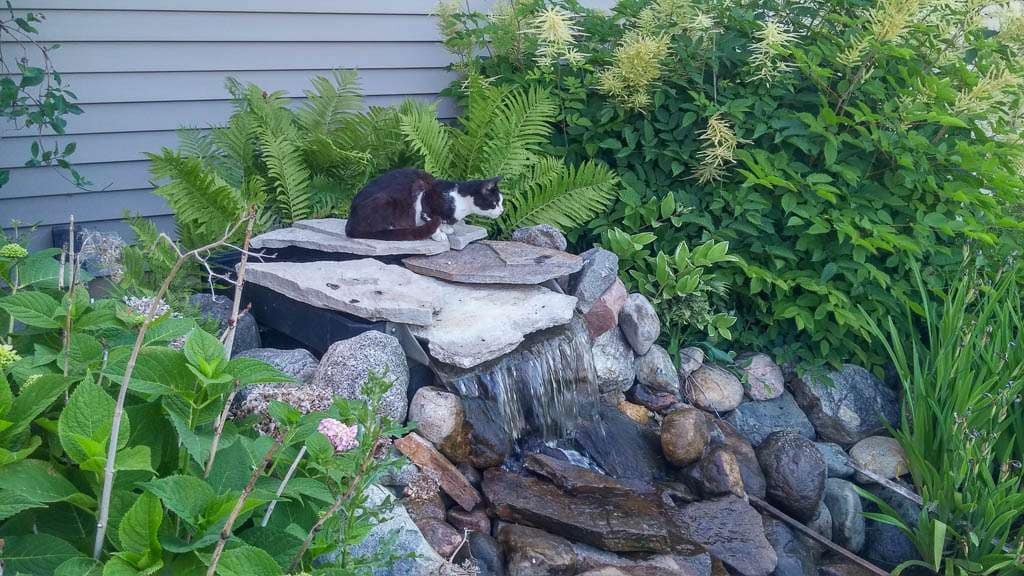
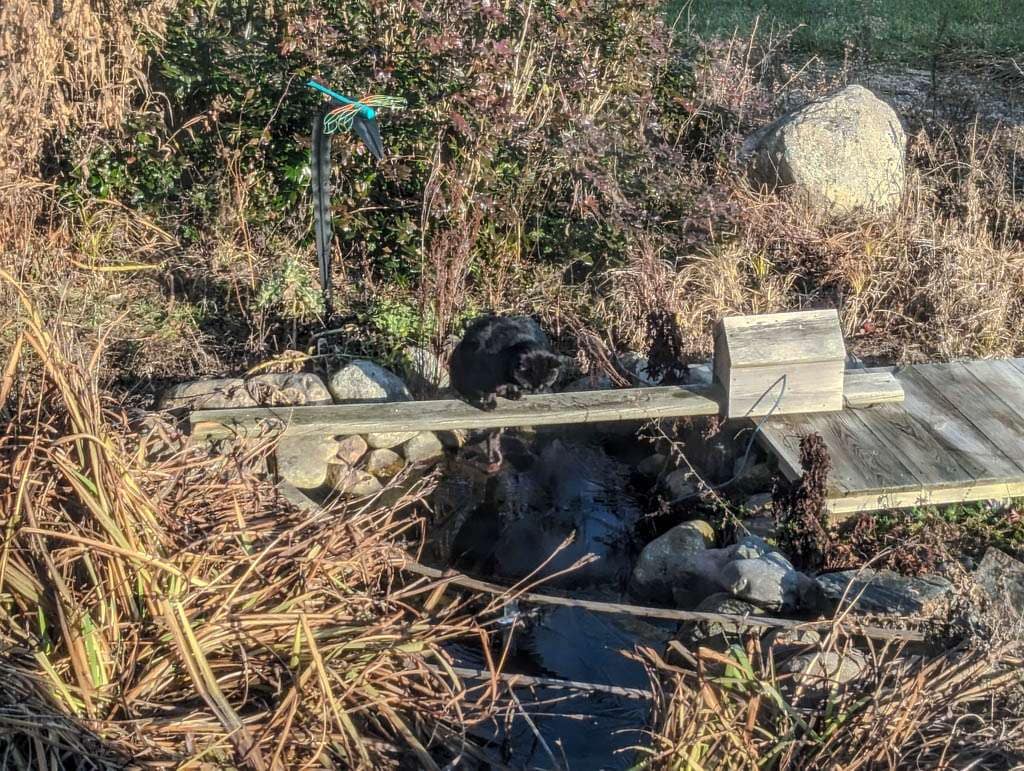
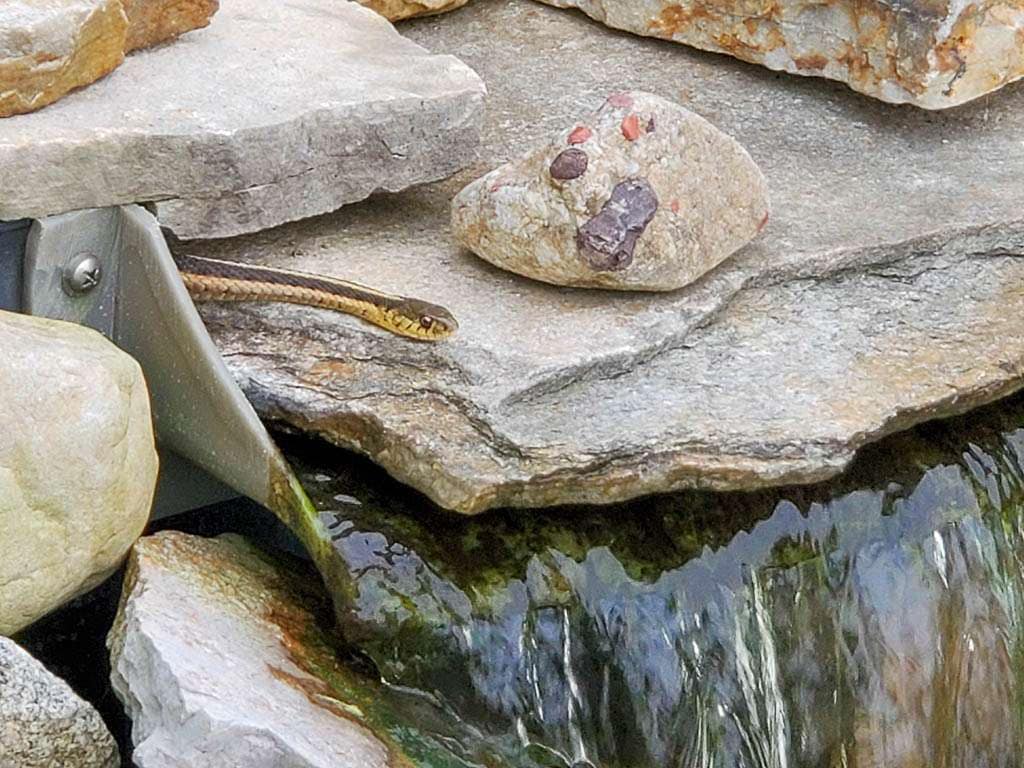
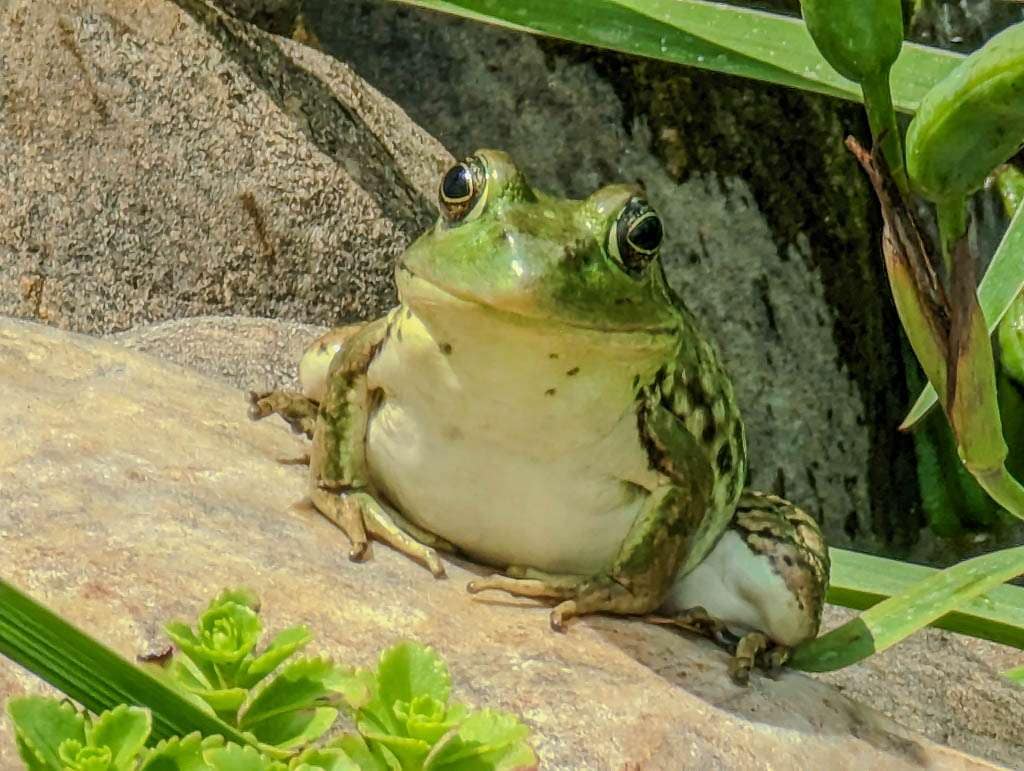
The pond draws local wildlife and semi-wildlife.
Here are just a few of the plants that we used.