The Original Garden
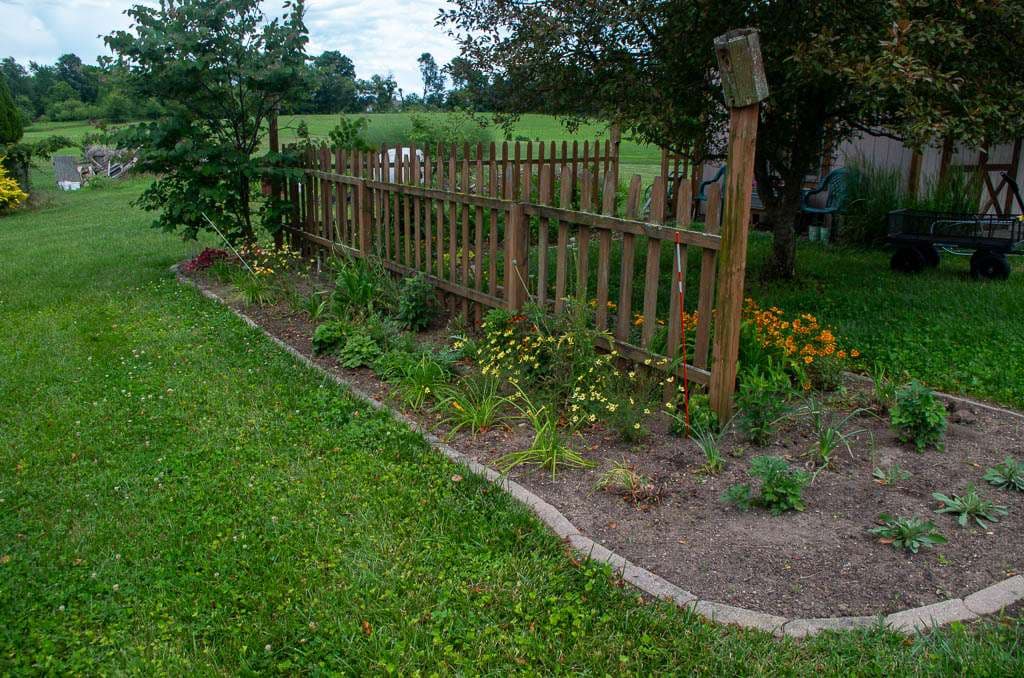
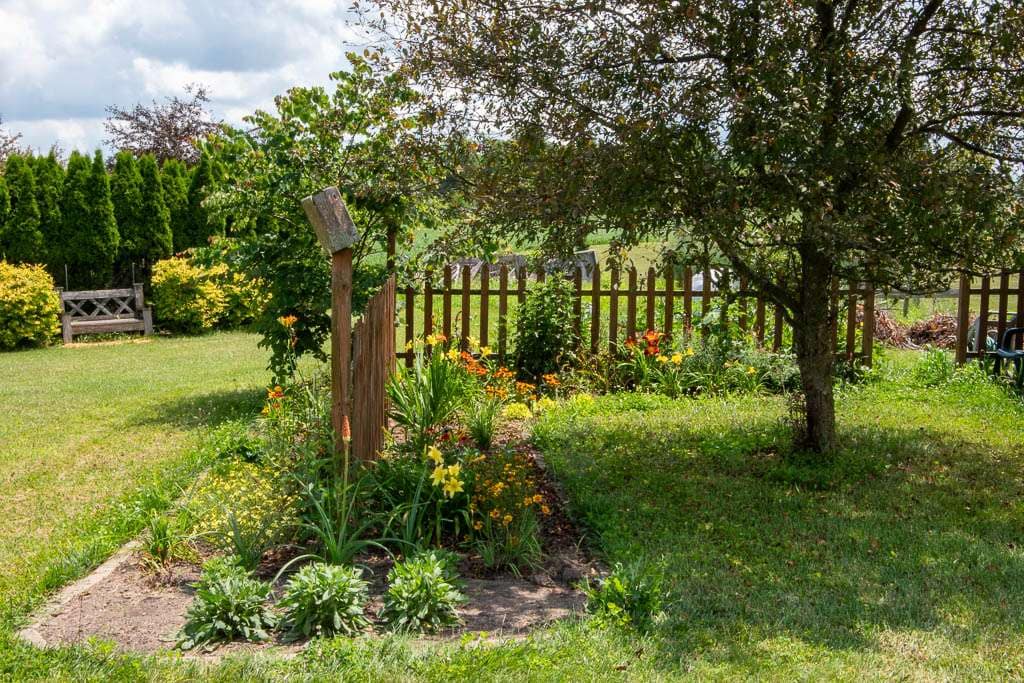
The perennial garden was originally planned in 2009 and planted in 2010. The backbone of the garden is a stained cedar picket fence in an L- shape. One section is about 16’ long, the other about 22’ long. The planting bed extends about 4’ from each side of the fence and is edged with pavers. We curved the corners for easier mowing. The back leg of the fence extends from the back wall of our shed. We created a pergola “doorway” near the shed. We planted a crabapple tree in the middle of that area.
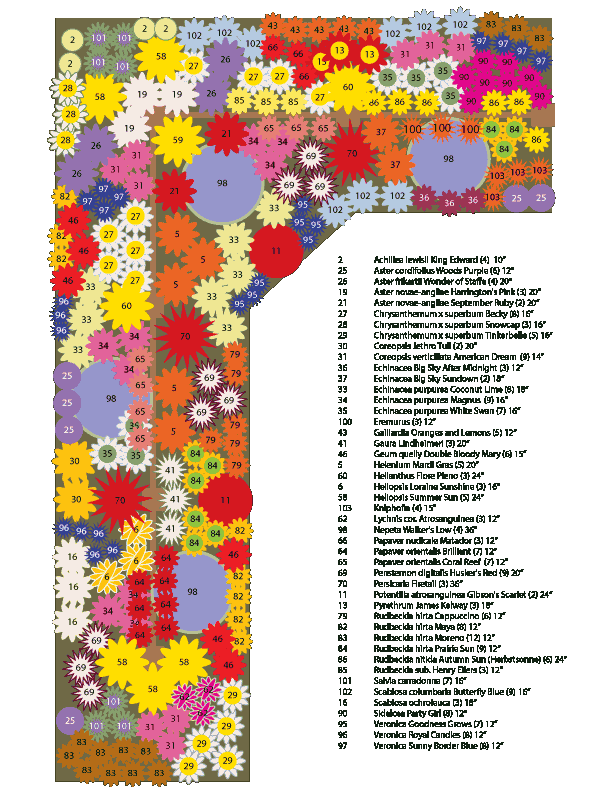
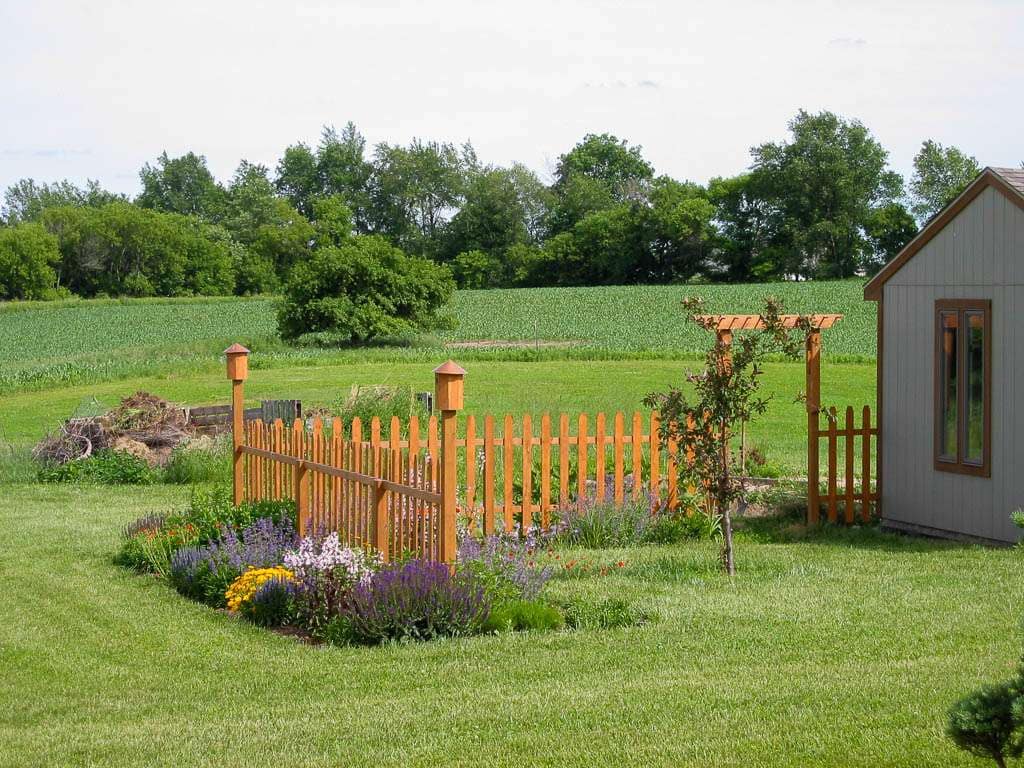
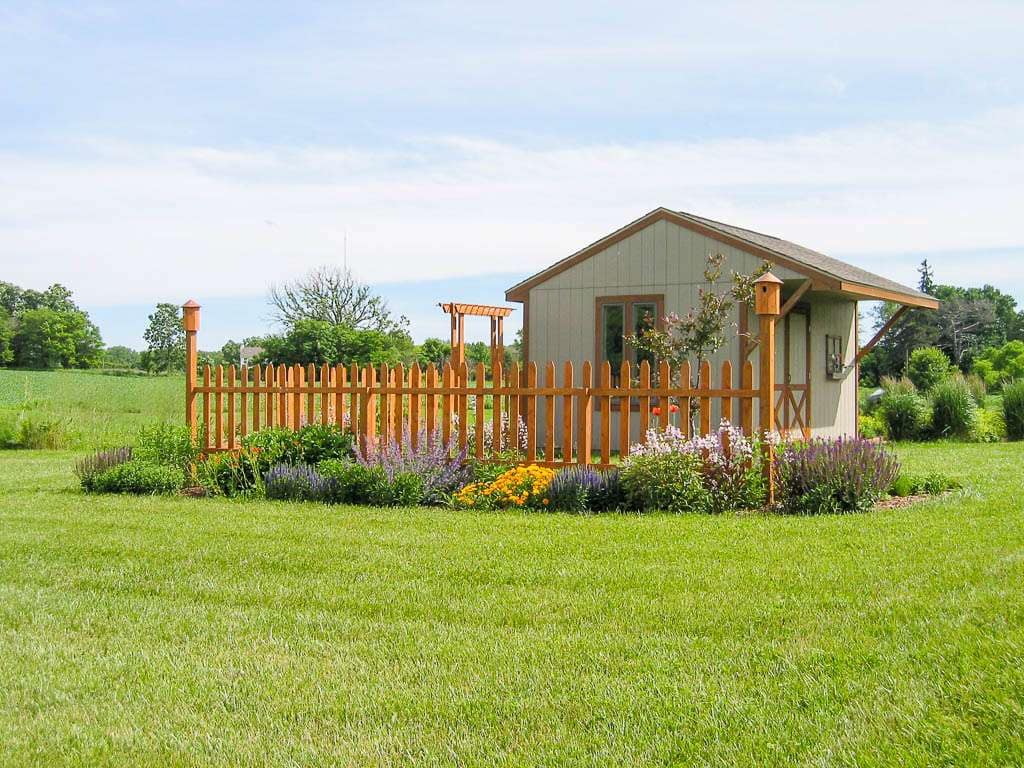
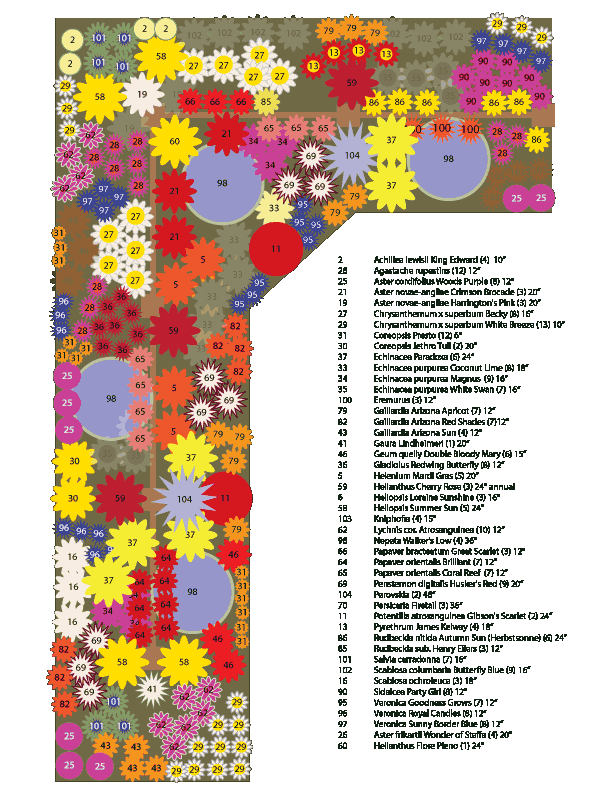
A LOT of planning went into this garden. I did the planning in Adobe Illustrator and made custom shapes for each plant, scaled to width and in colors the plants bloomed. I even created a layer for each part of the blooming seasons, to visualize what would be blooming when.. I created a legend that identified each plant, grouped by height. It was a lot of work, but I tried to plan a garden that would be interesting throughout the blooming seasons. [Side note: It occurs to me that I have a great start toward creating the current plan in Adobe Illustrator. Which is good because I really don’t like the landscaping software I bought.]
Of course the plan fell apart when I started shopping for plants and couldn’t find the specific varieties I wanted. So substitutions were made. In 2013 I updated the plan to show which plants hadn’t survived, and to show the substitutes I’d planted. I also made some small changes, such as replacing a plant that I wasn’t happy with in that spot and replacing and moving others as needed. Because plants are living things. Some spread, others die out.
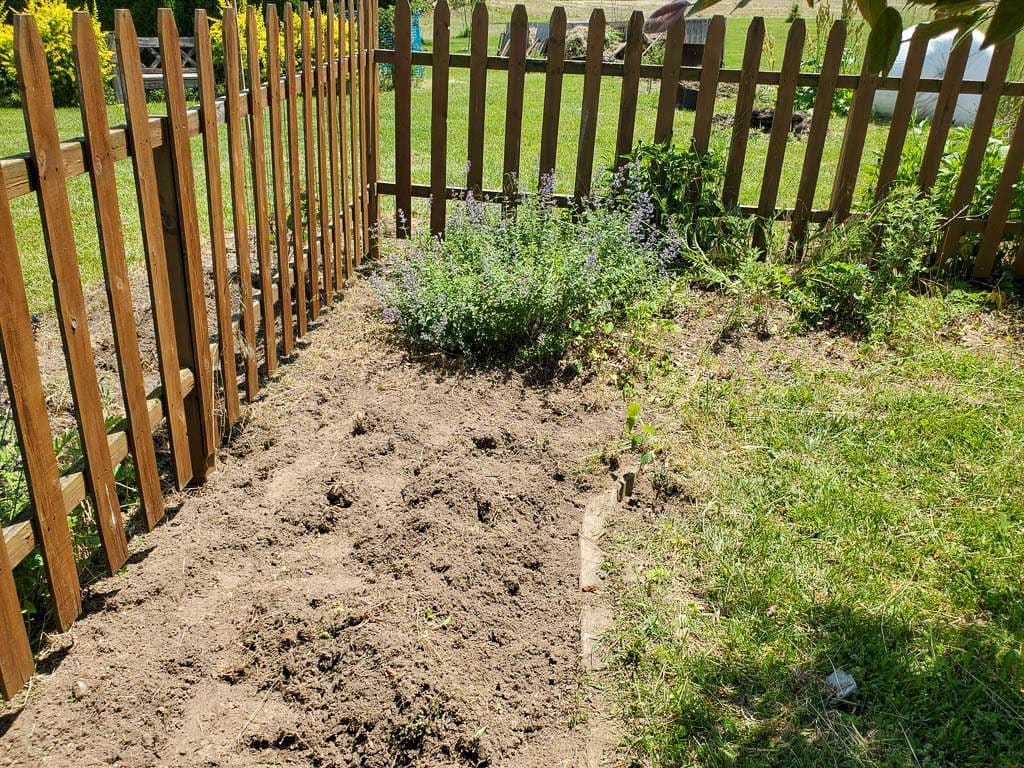
After that it was pretty much allowed to run wild, which resulted in a weedy mess. It’s been four years just getting it to the point of replanting it.
Planning the New (and Improved?) Version
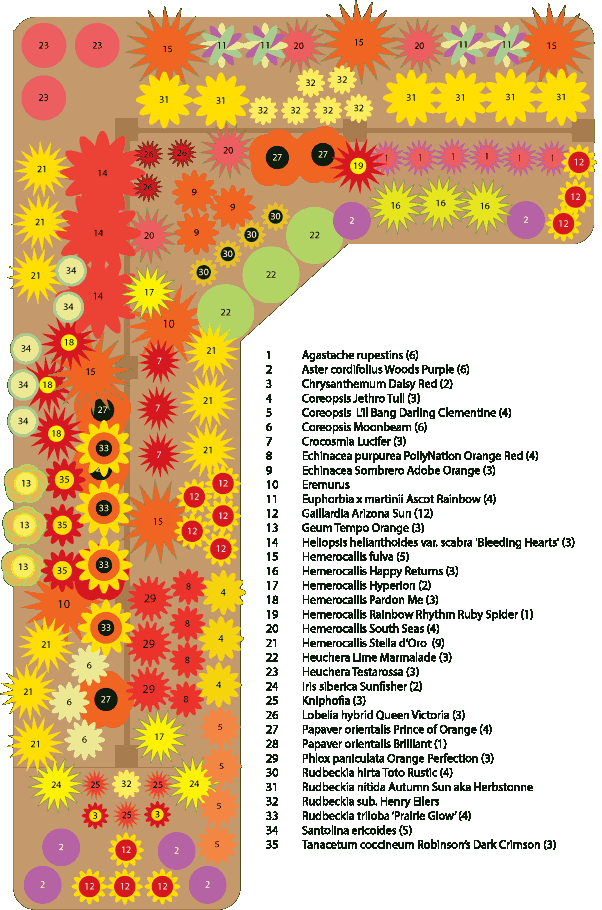
The backbone of the garden has not changed, other than a redbud tree volunteering itself in the outside corner. It’s not a bad location and we love those trees so we’re leaving it there. The redesign started with a color scheme: a garden in warm colors only (the yellow-orange-red spectrum). The one outlier will be some purple asters for fall. I like purple as a contrast to the warm colors and there likely won’t be many other flowers blooming then anyway. I also tried to stick to lower maintenance perennials. This time around I didn’t worry about what would be blooming when. I just tried to find varieties that bloom for a long period.
Here’s the plan for the new garden.
Plant Selection
I tried to keep costs down by keeping existing perennials that work, moving in perennials from elsewhere in the yard, and starting what I could from seed. The rest of the plants were bought locally or in a few cases, ordered online from Bluestone Perennials. I’ve purchased plants from them before with good results. They have a great selection but prices are higher so I only ordered plants that I couldn’t find a reasonable substitute for.
Here are the plants I chose:
- Agastache rupestris (hyssop): I wanted Tiki Torch coneflowers but couldn’t find them locally, so I got these instead. The flower color and height are similar. I like the flowers and it introduces a different foliage color. (And scent! They smell like licorice.) I just hope they survive our winter.
- Aster cordifolius ‘Woods Purple’ (aster): I’ll plant these in the fall.
- Chrysanthemum ‘Daisy Red’***: I’d planned on yellow mums but when I saw red and yellow mums on sale I ordered them.
- Coreopsis ‘Jethro Tull’ (tickseed): We had these in the original garden, though they died out. I really like the flowers (and the name!).
- Coreopsis ‘Li’l Bang Darling Clementine’ (tickseed): The flowers of this orange coreopsis are beautiful!
- Coreopsis ‘Moonbeam’ (tickseed): This is one of my favorite perennials – I’ve had it at two houses now – though we have had mixed success growing it.
- Crocosmia ‘Lucifer’: Another substitute. I wanted Hot Papaya coneflower but couldn’t find it, so I got this as a tall red flower. LIke the agastache, it introduces a new foliage texture.
- Echinacea purpurea ‘PollyNation Orange Red’ (coneflower): Another last minute addition to fill an unexpected gap.
- Echinacea ‘Sombrero Adobe Orange’ (coneflower): A last minute addition to fill an unexpected gap.
- Eremerus (foxtail lily): I’ll plant these when they become available in the fall.
- Euphorbia x martinii ‘Ascot Rainbow’ (spurge): I had planned to stick to daylilies in front of the taller coneflowers here but couldn’t find colors that I liked. I liked the colorful foliage on these.
- Gaillardia ‘Arizona Sun’** (blanket flower): This is another of my favorite perennials, long blooming and colorful.
- Geum ‘Tempo Orange’ (avens): This is a substitute for Coreopsis Cream Caramel.
- Heliopsis helianthoides var. scabra ‘Bleeding Hearts’** (Heliopsis Bleeding Hearts): These tricolored flowers look interesting. The seedlings are tiny so I hope they survive.
- Hemerocallis fulva* (daylily): I inherited a bunch of orange daylilies from my grandmother’s garden. We planted it near our wellhead and most of it hasn’t done much. But one clump somehow relocated out by the compost pile and was really healthy, so I incorporated some of that.
- Hemerocallis ‘Happy Returns’ (daylily): A short yellow daylily, just for a break from all the Stellas.
- Hemerocallis ‘Hyperion’* (daylily): We have a large clump of Hemerocallis Hyperion (a yellow daylily) near the gazebo that was due for division.
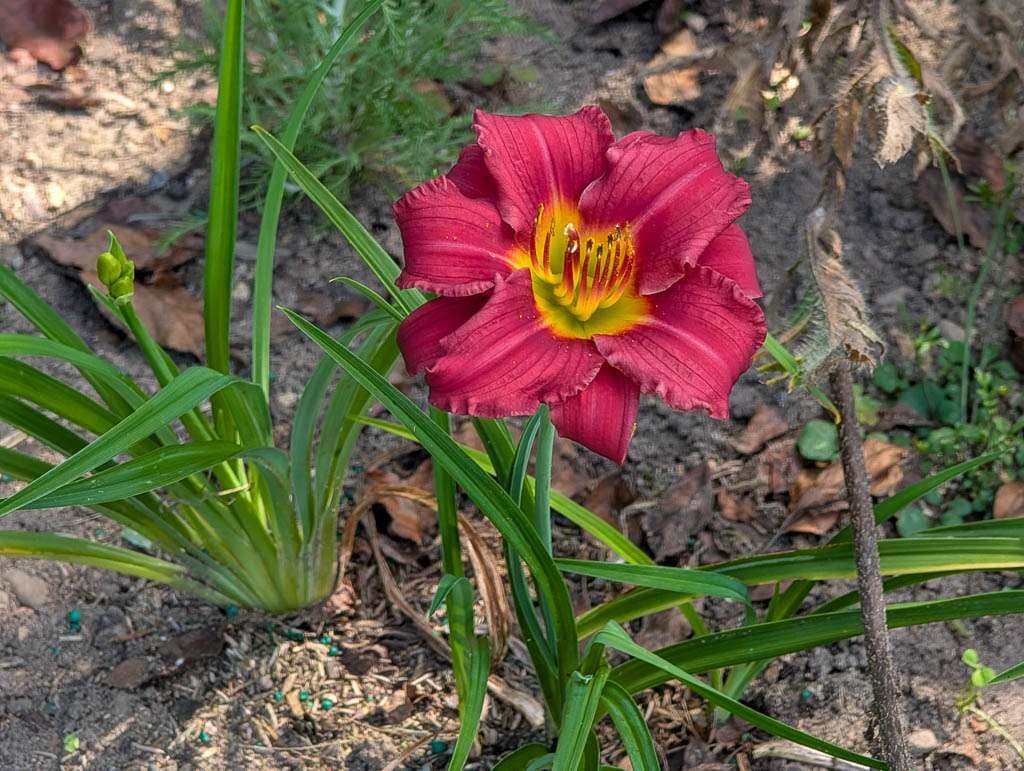
- Hemerocallis ‘Pardon Me’ (daylily): A short red reblooming daylily.
- Hemerocallis ‘Rainbow Rhythm Ruby Spider’ (daylily): A tall red daylily.
- Hemerocallis ‘South Seas’* (daylily): These coral-colored daylilies got shaded out of their original location in The Big Island [link]. (We had three different kinds of daylilies up there and had to wait until they bloomed to tell the difference. So they got to live in the veggie garden for a year so we could see which was which.)
- Hemerocallis ‘Stella d’Oro’ (daylily): I’ve seen these all over the place and while the color isn’t my favorite, they seem to bloom forever.
- Heuchera ‘Lime Marmalade’ (coral bells): I was planning on orange or red heuchera but thought this lime green/yellow variety would work and I do like it in its shadier corner.
- Heuchera ‘Testarossa’ (coral bells): The red heuchera I was looking for.
- Iris siberica ‘Sunfisher’ (Siberian iris): I didn’t even know there was a yellow Siberian iris. Once I saw it I had to have it. It blooms early and I like the foliage.
- Kniphofia* (red hot poker): This existing plant is in a new location since it was unhappy where it was. In fact I thought it had died out. I hope it likes its new home. We saw lots of it on a recent trip to New Zealand[link] and it’s so fun.
- Lobelia hybrid ‘Queen Victoria’: I’ve wanted this plant for a while but didn’t have a good place to put it. Hopefully I found one!
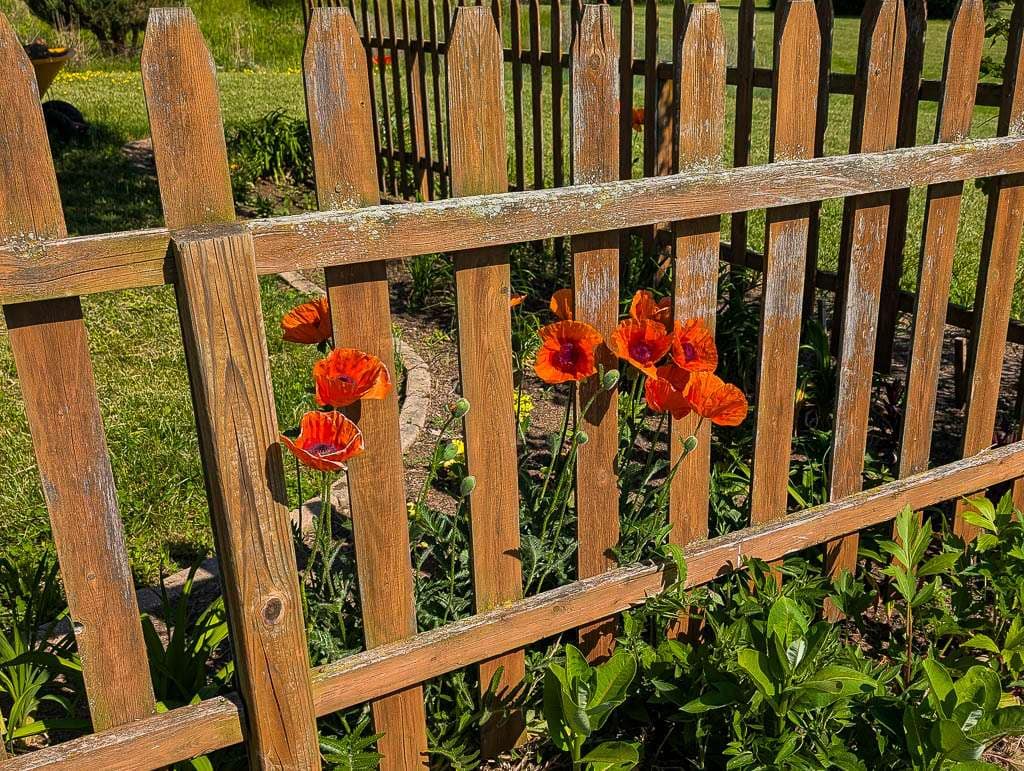
- Papaver orientalis ‘Prince of Orange’* (poppy): An existing poppy.
- Papaver orientalis ‘Brilliant’ (poppy): A red perennial poppy for a little variety.
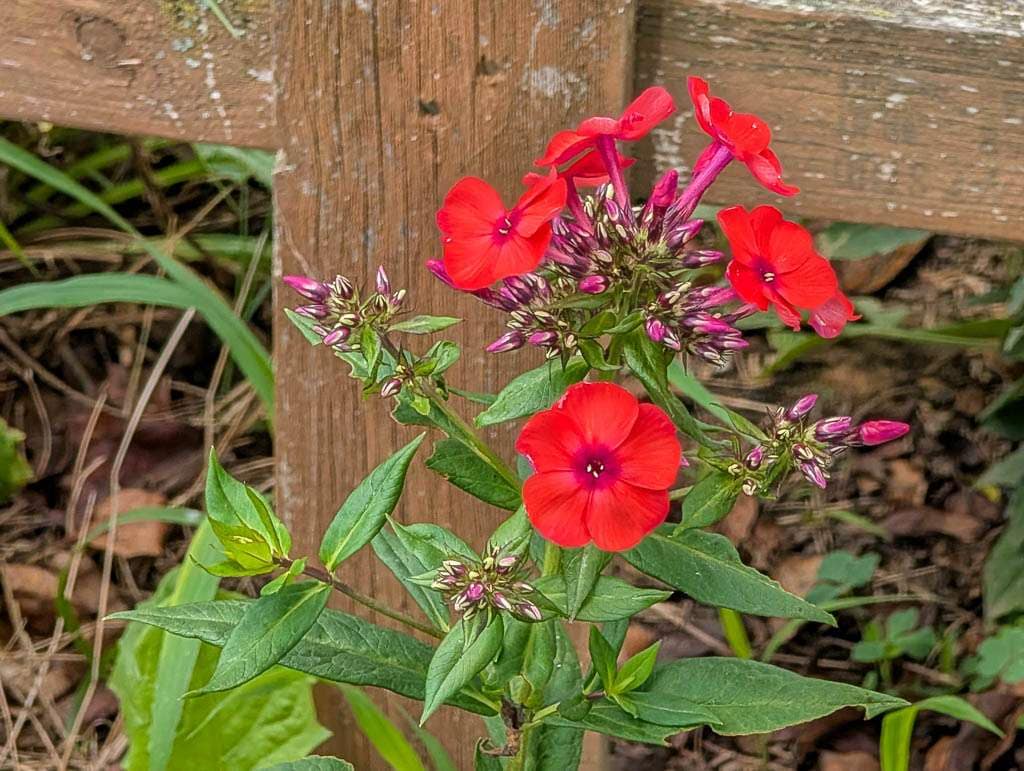
- Phlox paniculata ‘Orange Perfection’*** (garden phlox): I couldn’t find this locally so I ordered it. I’m curious to see what color it is in real life.
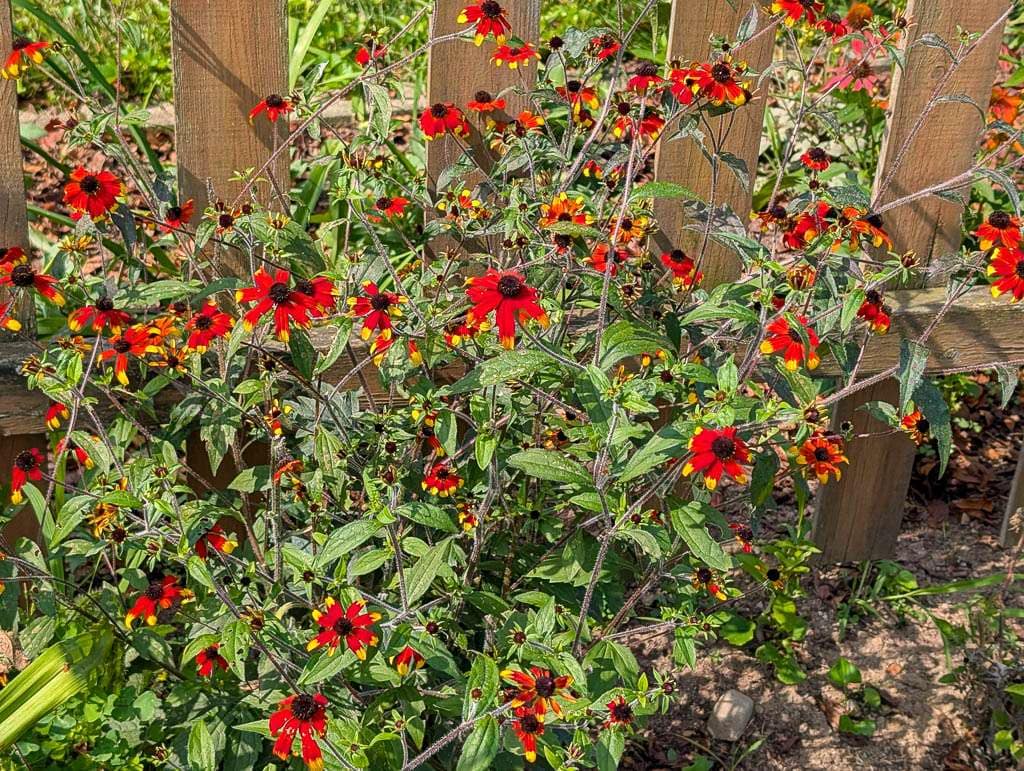
- Rudbeckia hirta ‘Toto Rustic’ (black eyed susan): This wasn’t in the original plan. I discovered while planting that I needed something here, and these flowers were fun.
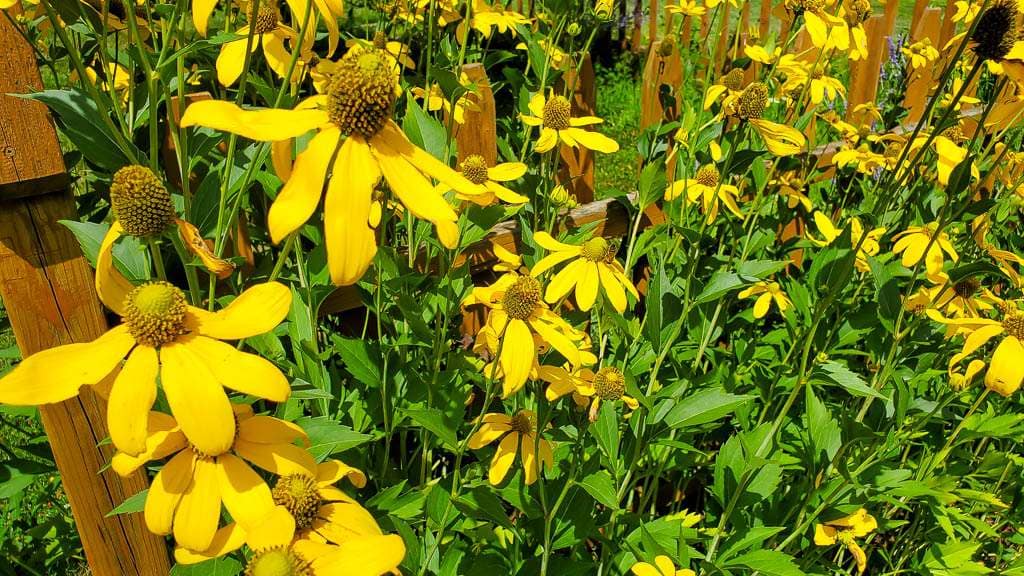
- Rudbeckia nitida ‘Autumn Sun’ aka ‘Herbstonne’* (black eyed susan): Most of this existing tall perennial was left in its original location. Some that was in front of the fence have been moved behind it.
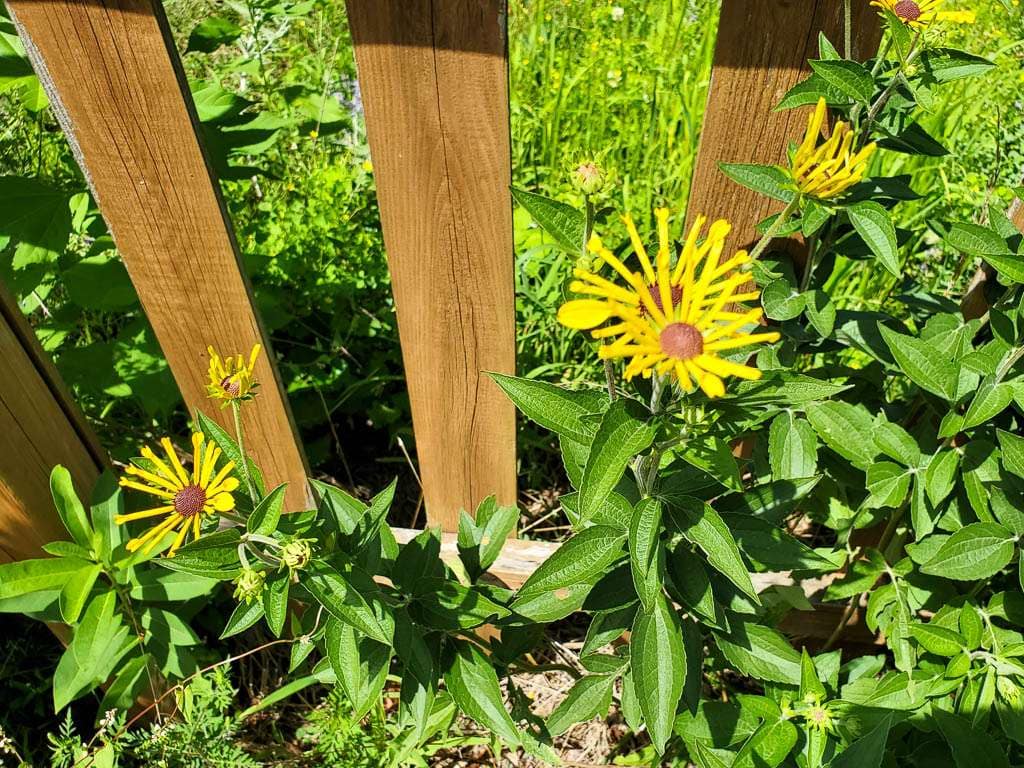
- Rudbeckia sub. ‘Henry Eilers’* (black eyed susan): Another existing tall plant that is also mostly in the original location. But I love the narrow-petaled flowers so much I transplanted some of it right up front.
- Rudbeckia triloba ‘Prairie Glow’* (black eyed susan): I was looking for Prairie Sun and found this instead.
- Santolina ericoides** (lavender cotton): We grew this short perennial with gray-green foliage and pale yellow flowers in another area and I like the color and texture of the plant.
- Tanacetum coccineum Robinson’s Dark Crimson (painted daisy): A red and yellow daisy. It was in the original perennial garden and died out.
* Existing perennial
** Started from seed
*** Ordered online
The original garden had 251 plants. The new version has about half that many: 124, plus an unknown number of existing tall rudbeckia.
TIP
Interested in low maintenance plants? Keep an eye out for what they plant in commercial settings. They’re often low maintenance with a long season of interest.
Prepping and Planting
Prepping the garden took four years. Not of constant work! The change in color scheme meant relocating any surviving perennials that didn’t match the new scheme, which caused delays:
- Some Echinacea purpurea ‘Magnus’ (purple coneflower), Chrysanthemum x superbum ‘Becky’ (Shasta daisy), and Rudbeckia ‘Goldsturm’ (black-eyed susan) are now in a bed near the garage and they are happy there. (The rudbeckia fit the new color scheme, but is a little too rambunctious.)
- The Nepeta ‘Walker’s Low’ (catmint) was moved to the foundation plantings. That delayed the perennial garden redesign because that foundation area is also a redesign. We had to get that done first.
- Any Salvia carradonna (perennial blue sage) is now in the herb garden.
That left the following surviving perennials that fit the new color scheme:
- The remaining poppies
- Rudbeckia nitida ‘Autumn Sun’ (aka Herbstsonne)
- Rudbeckia sub. ‘Henry Eilers’
- Kniphophia
With everything moved out that could be, we used liberal (and multiple) applications of Roundup to get rid of the weeds. We also took the opportunity to raise the paving block edging. It works nicely for mowing but the blocks had settled over time, allowing the lawn grass to creep over the edge. Once the weeds were gone we added compost and peat moss and rototilled. Most of that was done last fall. We put Preen down to prevent new weeds from sprouting. This spring we finished up prepping the remaining areas.
In mid-May the weather finally stabilized and I could actually start planting!
- Over the course of two days I hit three local garden centers to buy the plants I could find.
- I ordered online those that I couldn’t find locally.
- I transplanted all the existing perennials.
- I planted the perennials that I purchased locally.
- I went back to the store to get plants to fill some unexpected gaps.
- I planted the plants I started from seed.
- I planted the plants I ordered online, once they arrived.
- I applied Preen where I could to help keep weeds from sprouting.
Amidst all that we also managed to fit in another small project to finish off the general area, adding a small sitting area in the shade of the nearby shed.
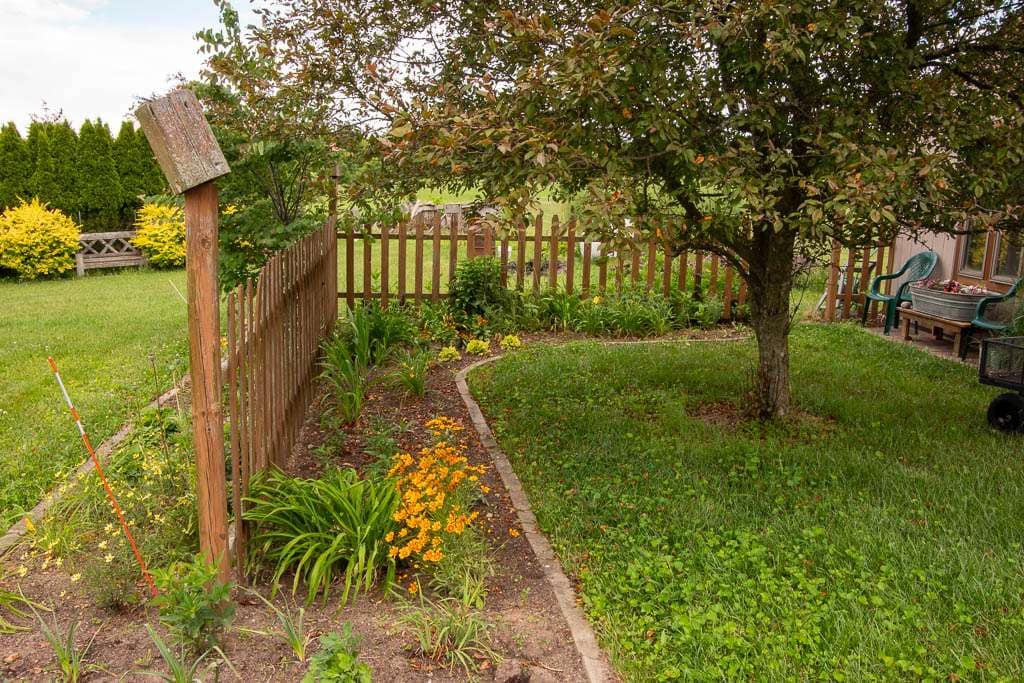
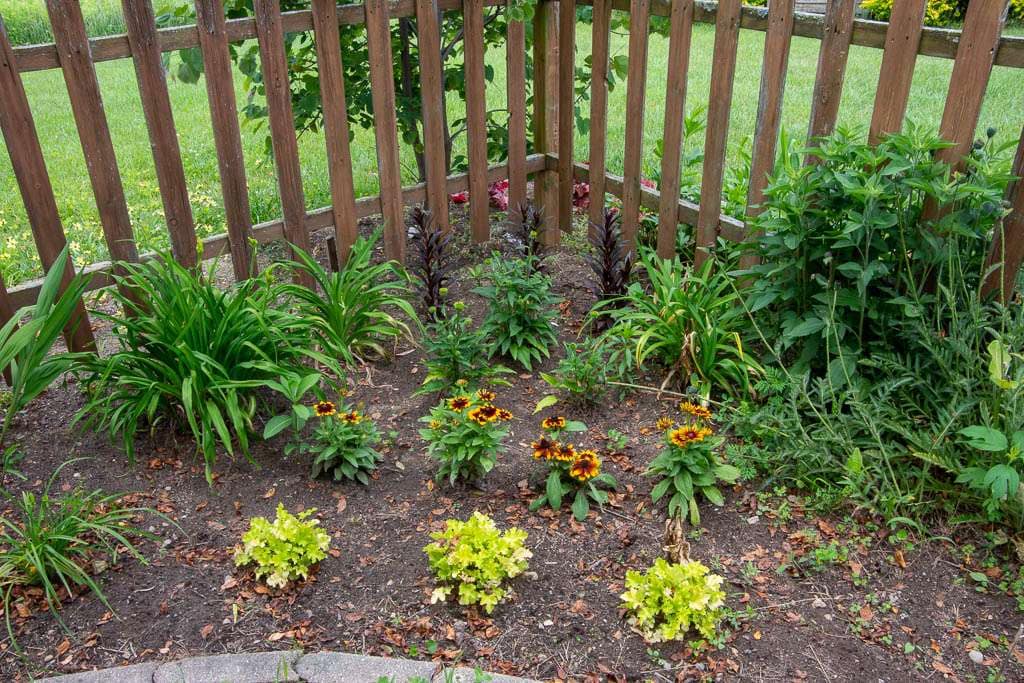
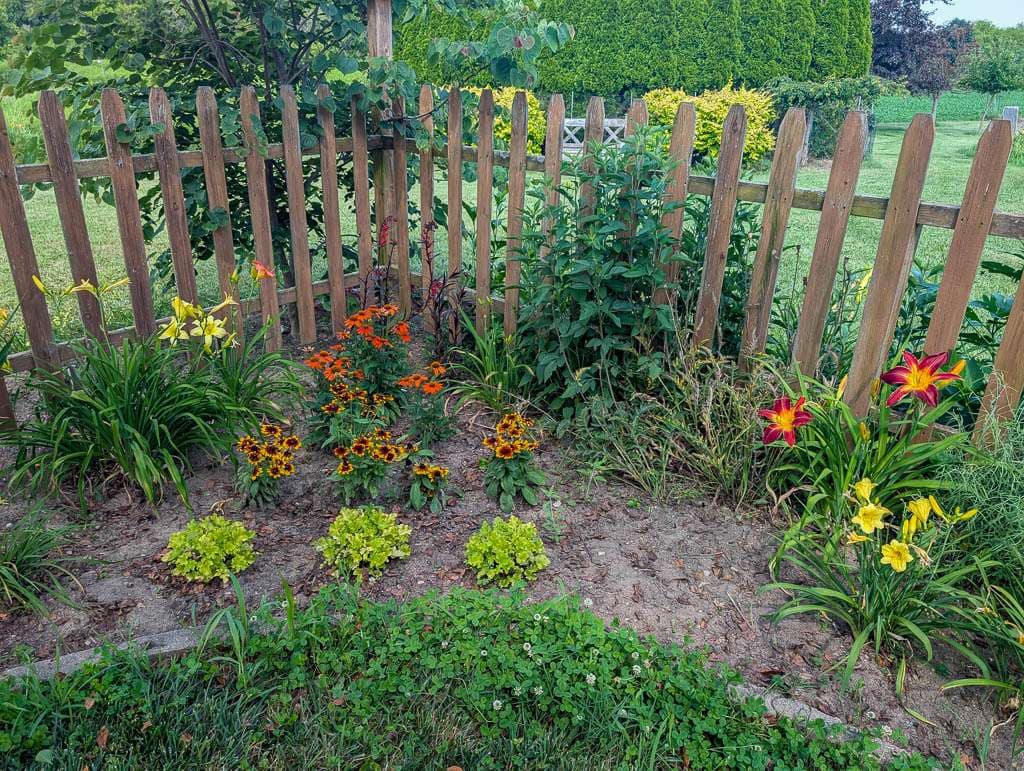
Now we wait for the magic to happen! Here are some photos of how it’s looking so far. As the season progresses I’ll add more photos.
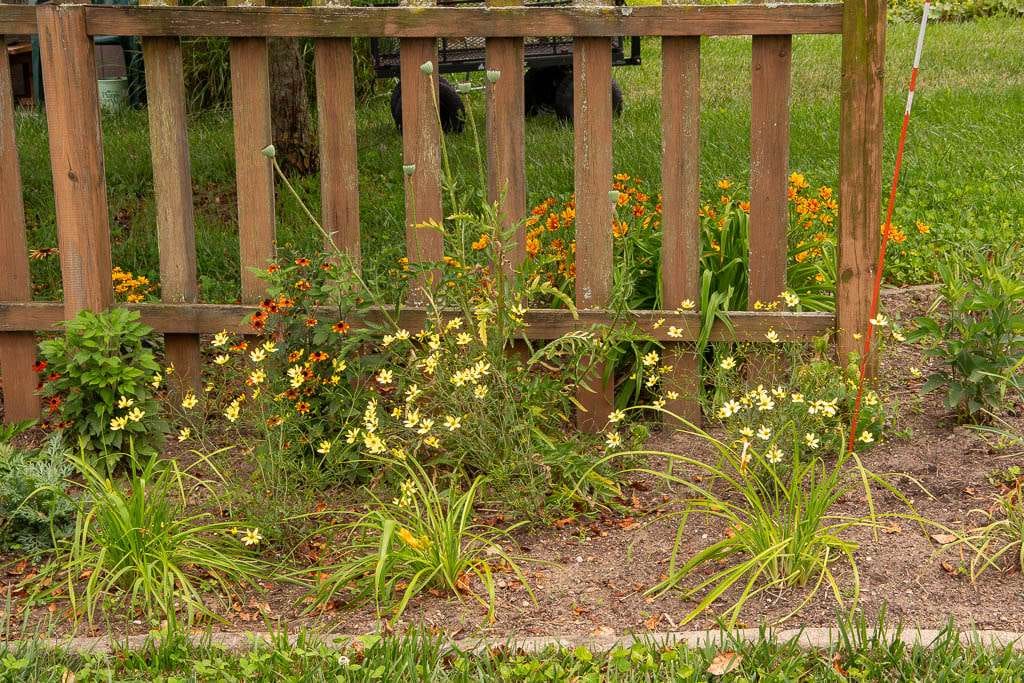
Here are some of the flowers:
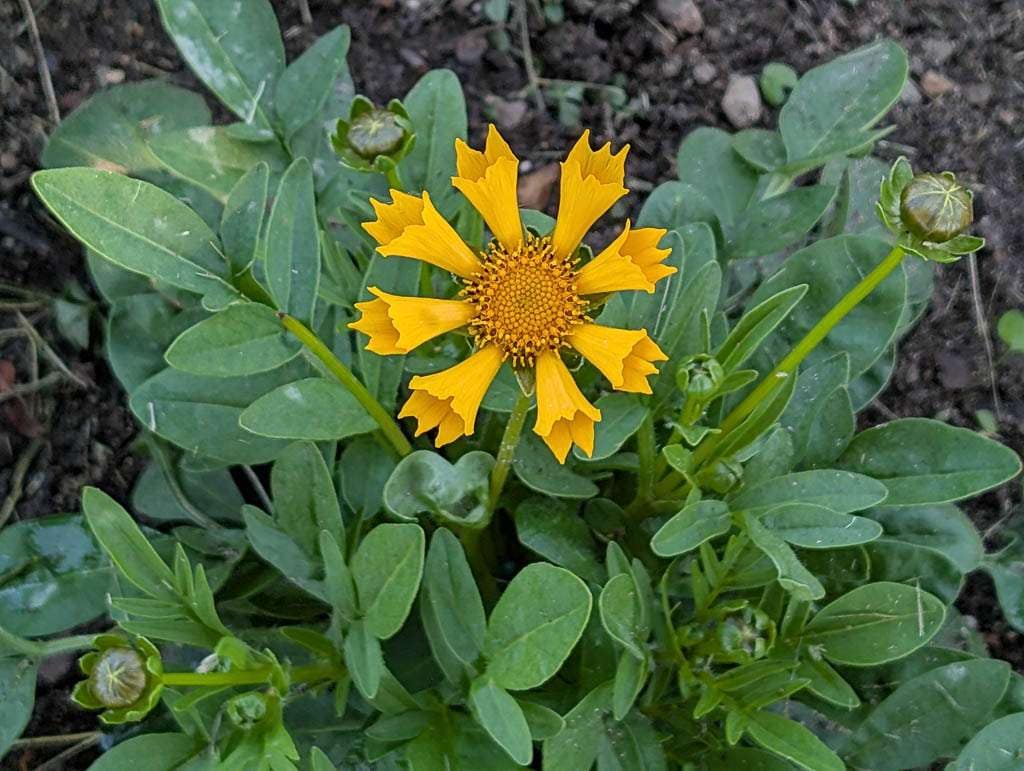
Here’s how things looked in July.
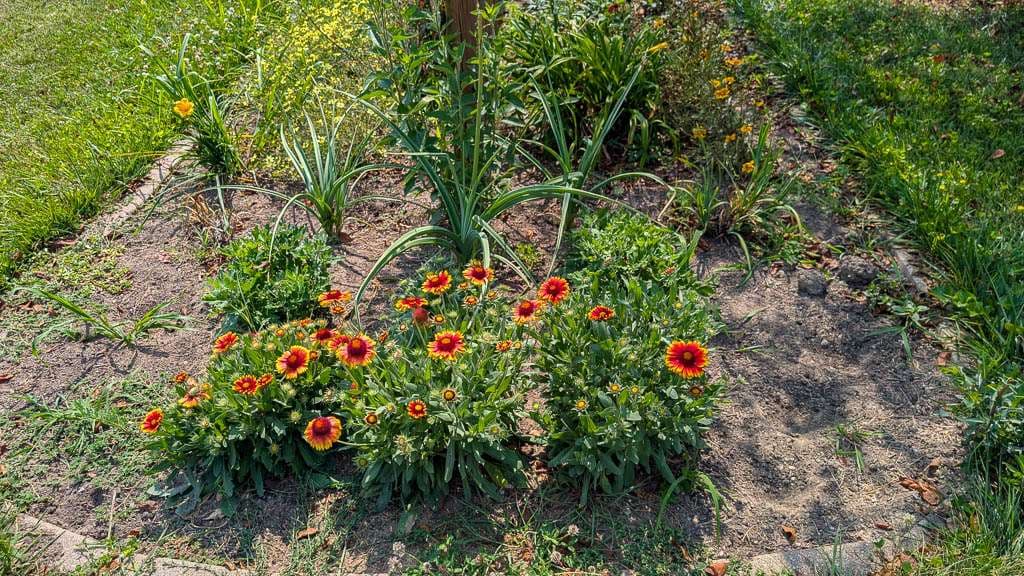
A couple of new flowers have bloomed for the first time: Pardon Me daylilies and Orange Perfection phlox. The phlox is even brighter than I’d hoped, I like the contrasting hot pink.