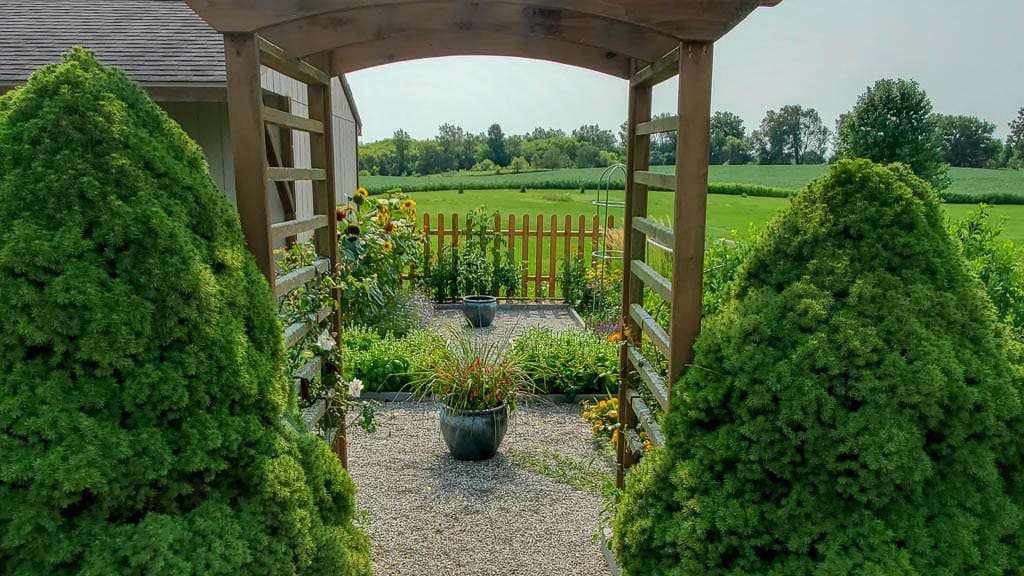
The Shed
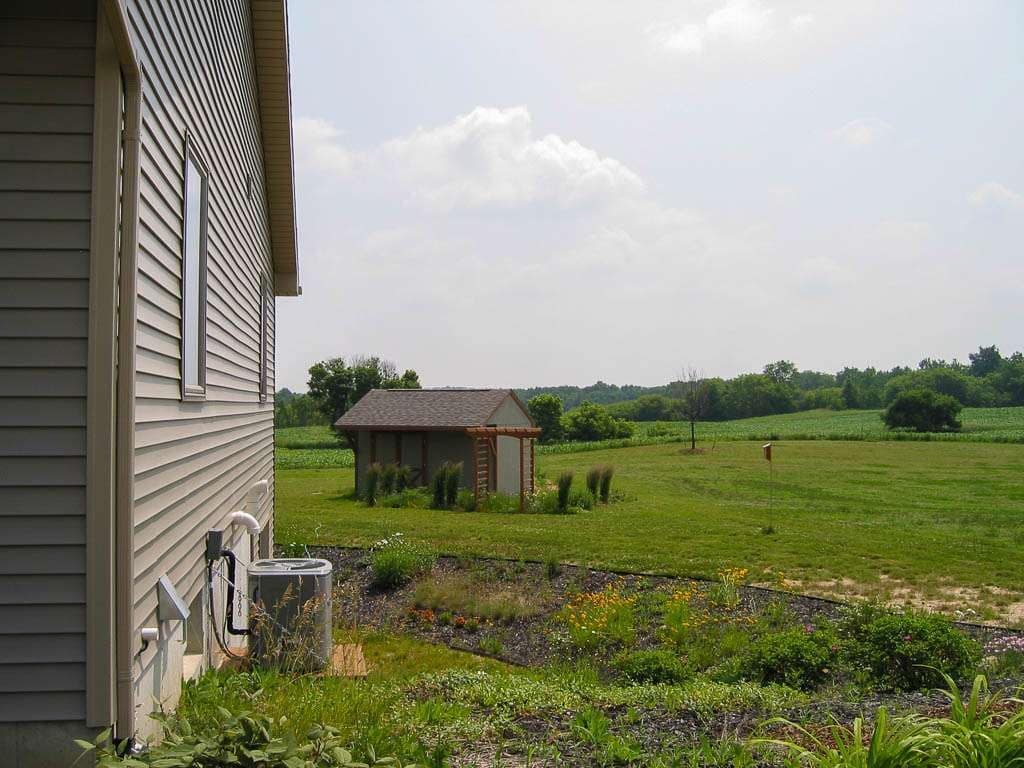
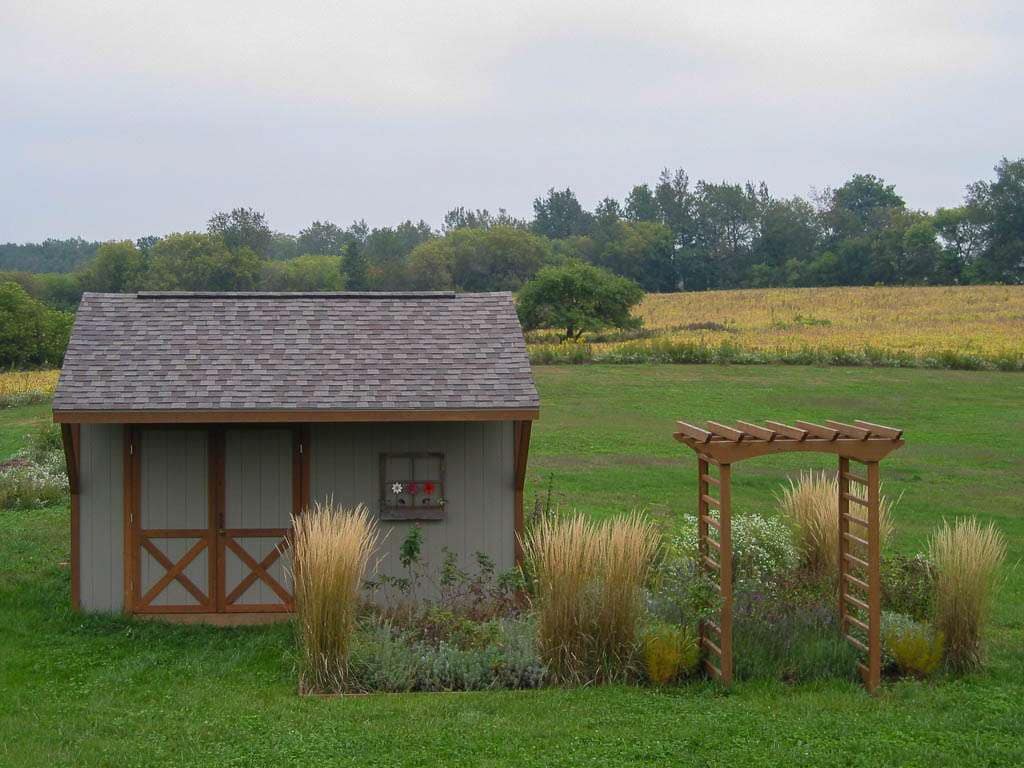
We needed a shed to store the garden tractor, rototiller, push mower, and other tools, supplies, and odds and ends. The largest we could build without a permit was 12’x16’ so that’s what we did. Rather than make it purely utilitarian we decided to make it aesthetically pleasing and put an overhang on the front for a porch effect. We may have the fanciest shed windows ever: we used the Anderson windows we took out of our old house when we replaced them. We painted the shed the same color as the house and added stained cedar trim.
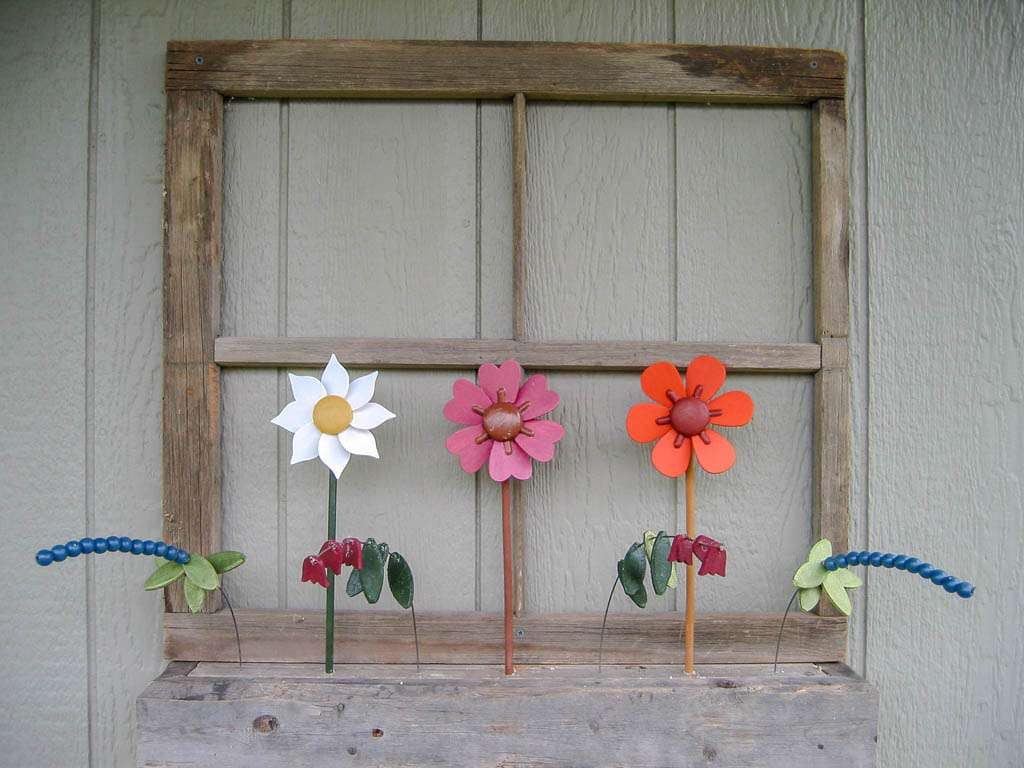
We also made a cute “window” on the front from an old window frame to which I added a “window box” with fake flowers made from whirlygigs, wooden beads, woodworking biscuits, and wire.
The Inspiration: Ye Olde English Herb Garden
The inspiration for the herb garden was a traditional English herb garden built around formal geometric beds with gravel paths in between. Ours isn’t that large though, measuring about 40’x54’ in an L-shape. So I had to cut some features like full-size hedges. While an herb garden was the inspiration we planned to include roses, annuals, and maybe vegetables too.
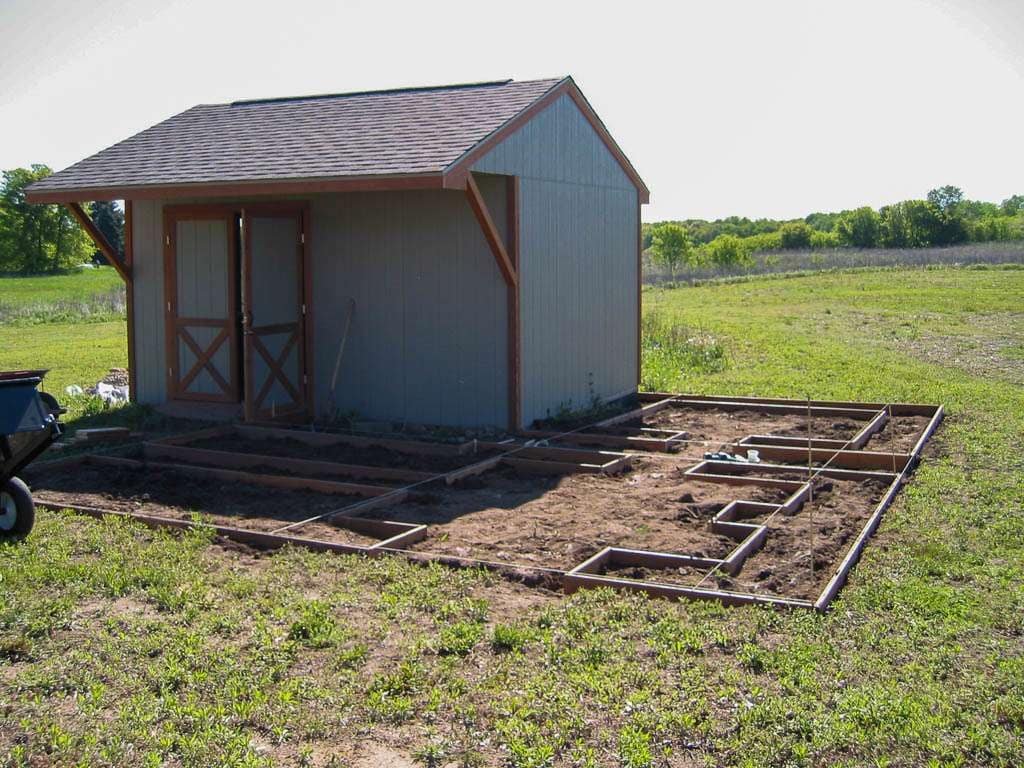
Initial Construction with Wood Borders
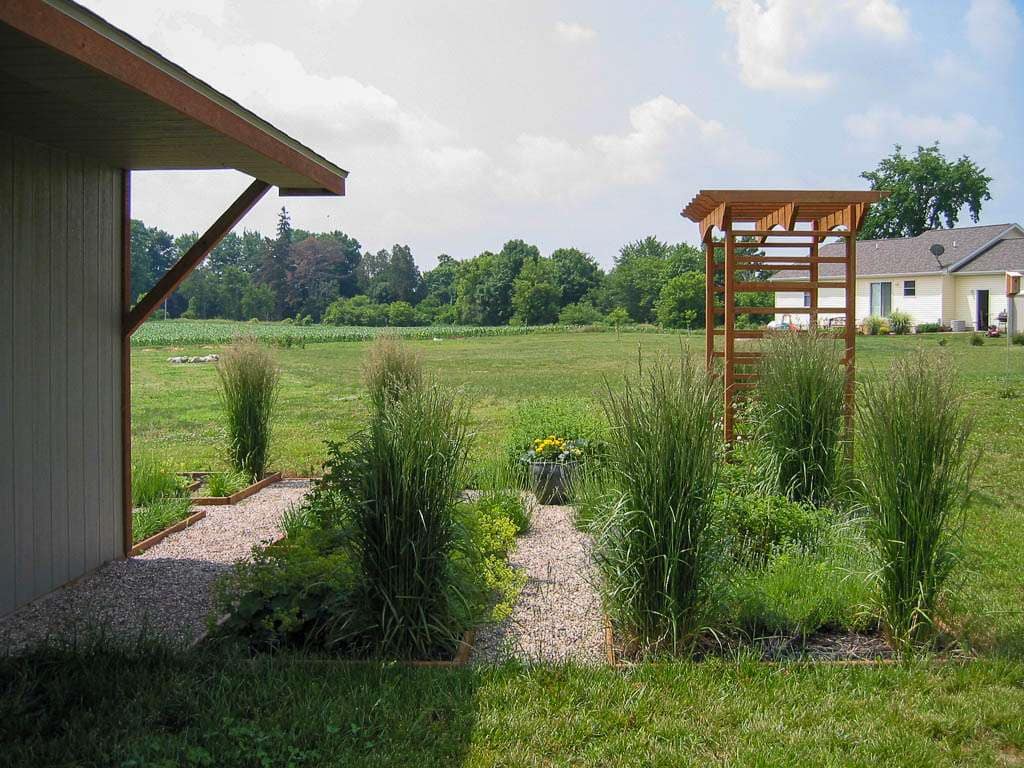
We initially constructed it with cedar wood borders. We rototilled the dirt and spent a lot of time hand picking the weeds out. We used a patchwork of scraps of plastic left over from construction of the house underneath the pea stone we used for gravel. We built a pergola for climbing roses out of cedar too.
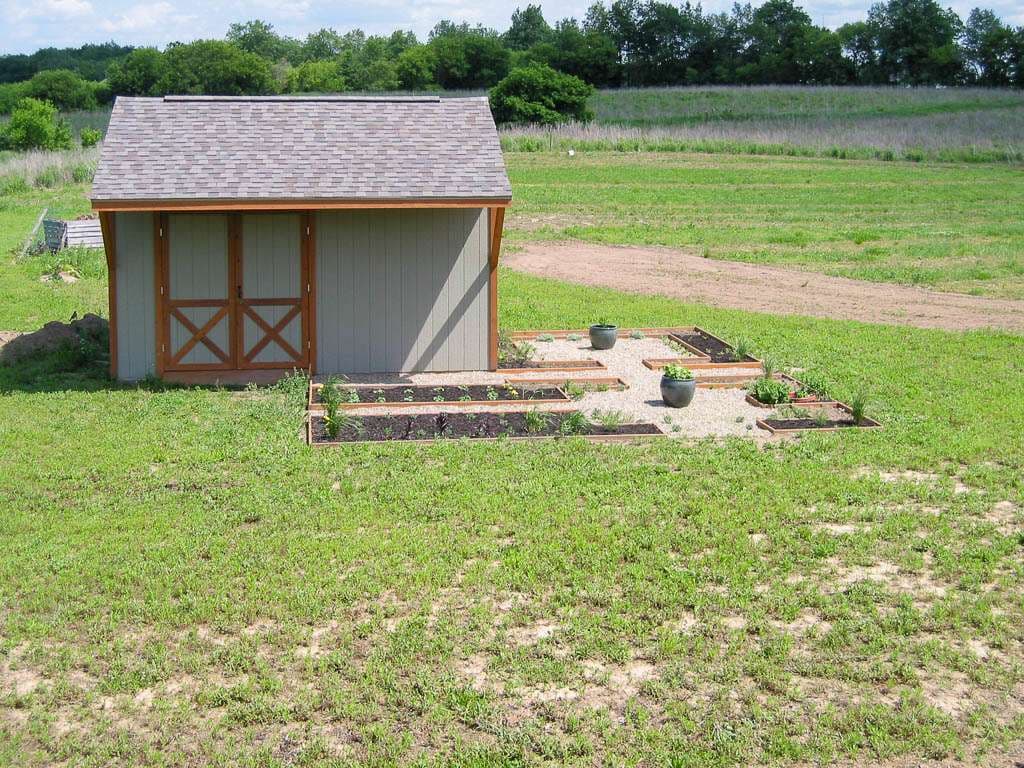
We didn’t have much experience growing herbs, other than some lavender and oregano at our previous house. (In fact we transplanted some of our lavender here.) A lot of the herbs we planted turned out to be some of the most pernicious weeds we have. We still have oregano and thyme growing in patches in the lawn. Be prepared to let things sprawl and spread all over or keep on top of it diligently. We didn’t and ended up re-doing the garden after learning a few things.
These are the plants we originally planted and how they’ve fared.
- Rosa Roseraie de l’Hay.
- Rosa Schneezwerg
- Rosa Gallica
- Rosa New Dawn
- Pot: Lemon Verbena
- Pot: Bay Tree
- Calamagrostis acutiflora Karl Foerster
- Lavender Munstead:
- Lavandin Provence
- Alchemilla Mollis (Lady’s Mantle)
- Thyme
- Culinary Sage
- Oregano
- Spearmint, apple mint
- Garlic chives
- Primrose
- Artemisia Silver Mound
- Hollyhock
- Fennel
- Rosemary
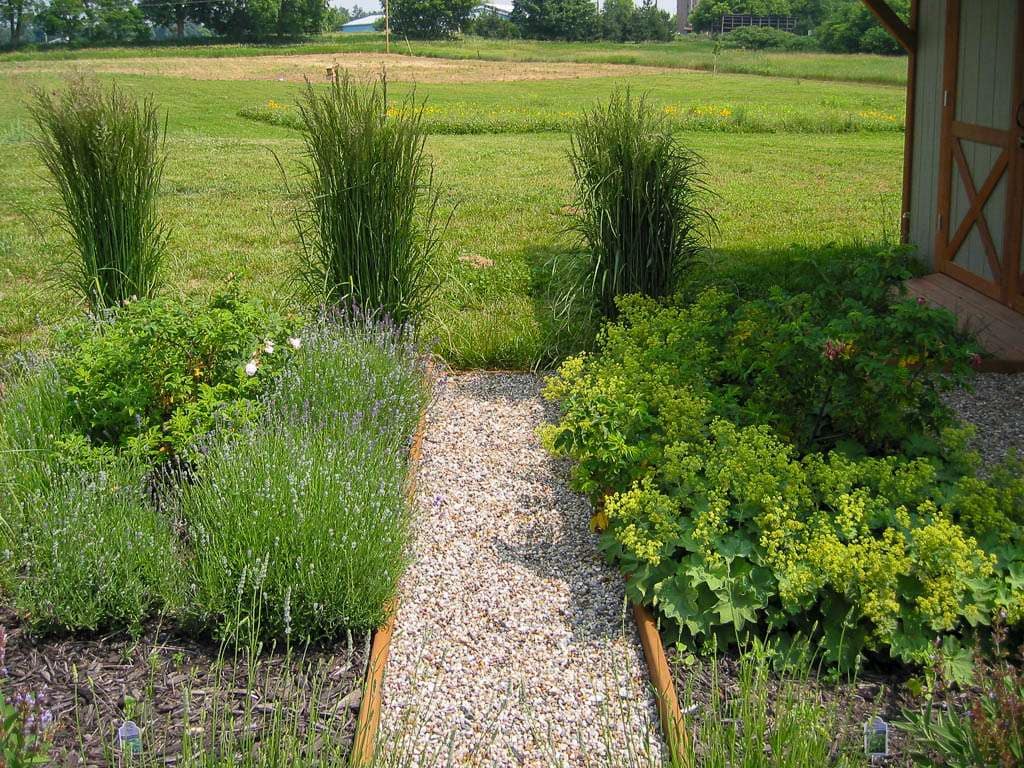
- The Roseraie de l’Hay and Schneezwerg roses got some kind of disease early on and never really amounted to much.
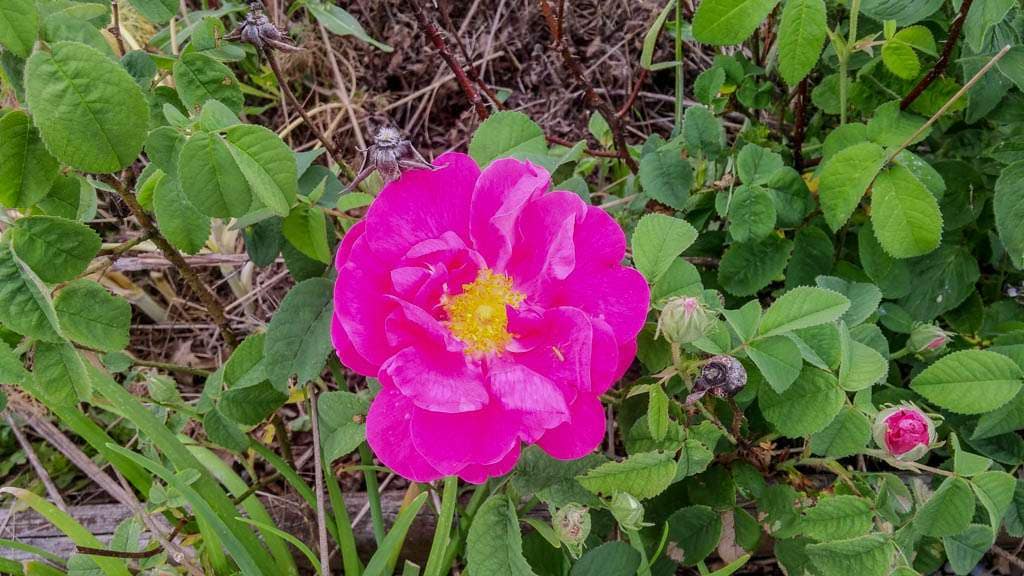
- The Rosa Gallica likes to spread and pop up in random spots. So it’s not very well-behaved and it doesn’t look like much most of the year but the flowers are a brilliant deep pink and the fragrance is wonderful. I harvest petals each year and dry them.
- We have two New Dawn roses, one on each side of the pergola. They ebb and fade depending on how harsh the winter is but have reached the top of the pergola at least twice.
- I got tired of the Lemon Verbena. It wasn’t interesting to look at and I never used the leaves for anything.
- The bay tree has to overwinter indoors, which is why it’s in a pot. It’s died back a couple of times due to drought but keeps coming back.
- The Calamagrostis acutiflora Karl Foerster ornamental grass is one of our favorite plants. It goes through a series of transformations during the growing season and it doesn’t reseed. The only maintenance is cutting it back once a year. (And finding new places to put it when you divide it. Like many grasses it eventually dies out in the middle.)
- The lavender, thyme, and sage all got MUCH larger than I thought they would, the thyme wandered everywhere, and it all became a mess. The fennel seeded itself everywhere too.
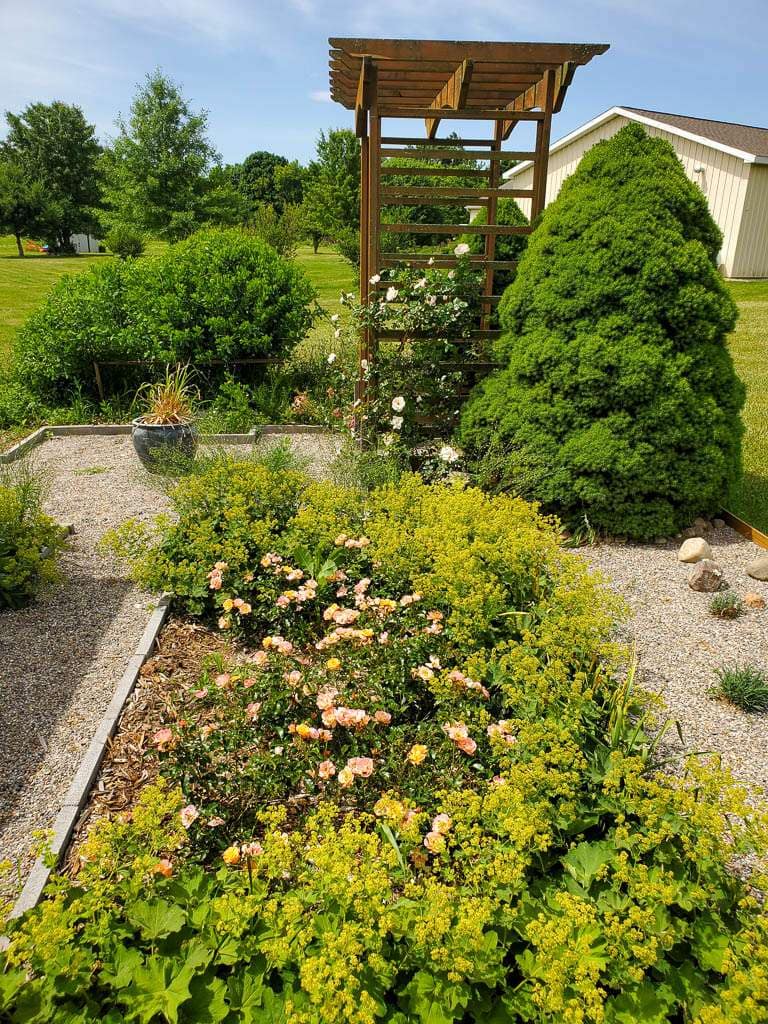
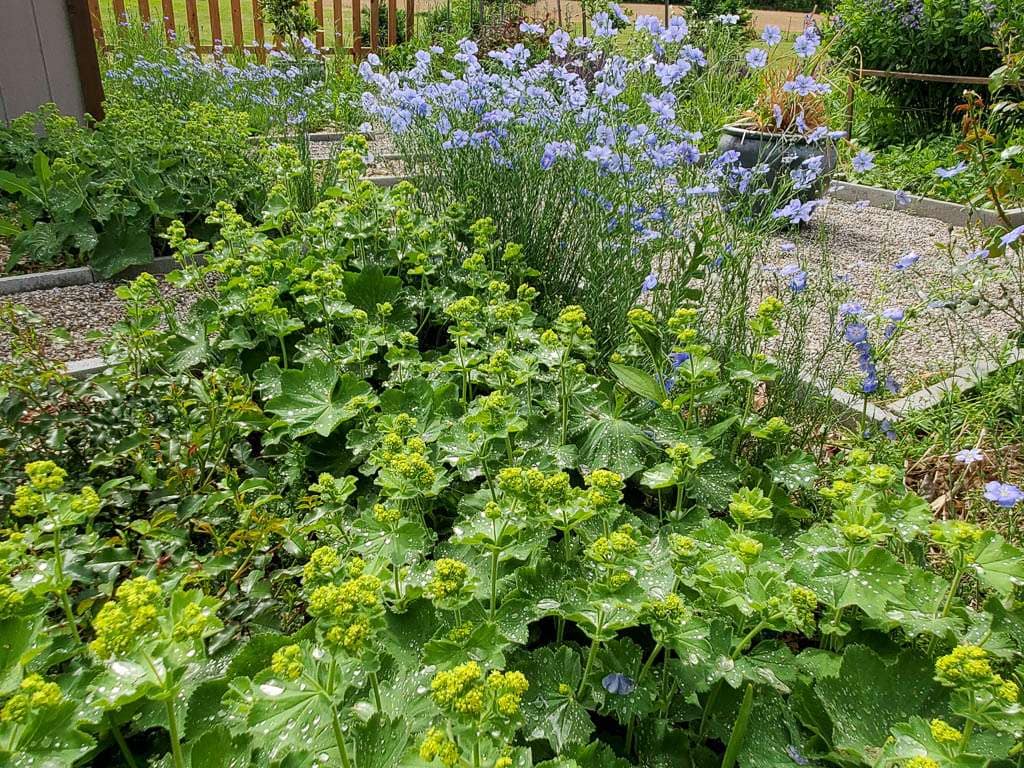
- Alchemilla Mollis (Lady’s Mantle) makes a nice little “hedge” and the leaves are beautiful when it rains, collecting individual water droplets.
- We knew to be careful growing mint because it likes to spread. We originally buried a plastic planting pot but it burst through the sides of that so we replaced it with a 5-gallon bucket. That held up better.
- Turns out garlic chives really like to spread too. We’ve been trying to get rid of those for years.
- The primrose was too sprawling for where I had it but it seems to have jumped to a bed across the lawn and is happy there so we’re letting it be.
- Artemisia Silver Mound is nice when it’s fresh but ends up opening up and falling over. Our original plants died out and haven’t been replaced.
- The hollyhocks are long gone, being biennial. The rosemary was always a risk; it didn’t survive the winter.
- We knew oregano was invasive. I specifically bought Greek oregano seeds this time since it’s supposed to be less invasive. Either they sent the wrong seeds or it’s just as bad as the other. It’s been a never-ending battle trying to get rid of it. Never again. I don’t care how pretty the trailing stuff looks. No!
Expansion Beyond the Original Borders
In 2009 we expanded the garden by adding 3’ deep angled beds on both sides of the L. It just looked like too abrupt a transition from the lawn to the garden. We planted a couple of dwarf Alberta spruce near the pergola and dianthus along the front in a gravel area. On the side we planted baptisia in one area and blueberries in the other.
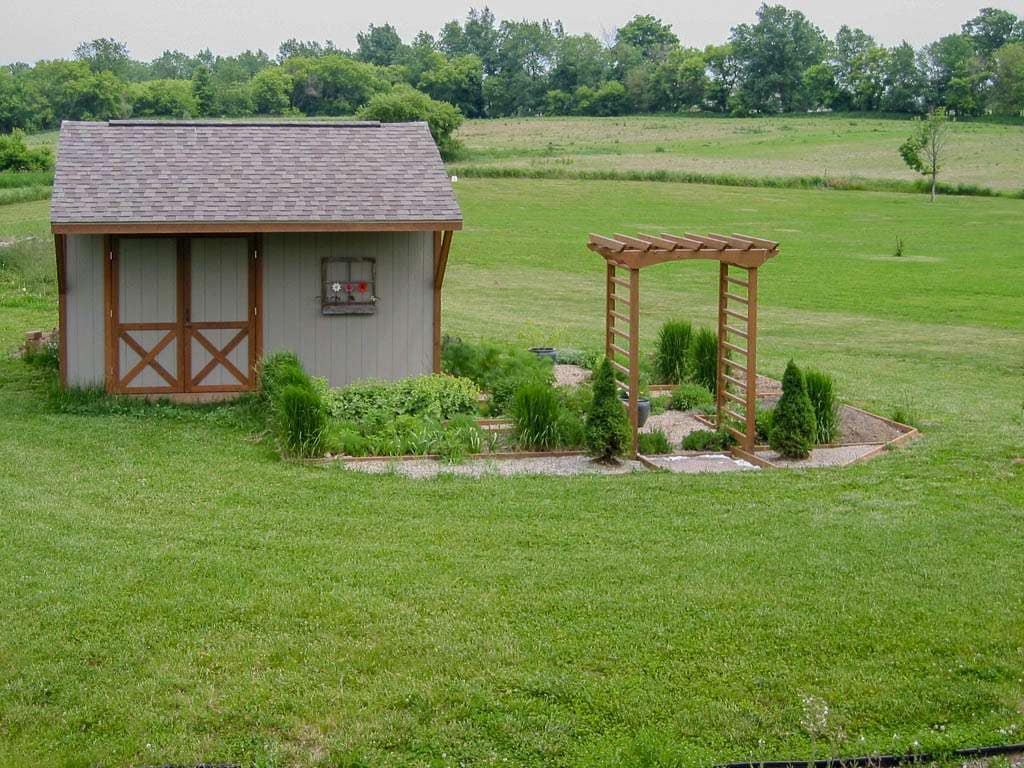
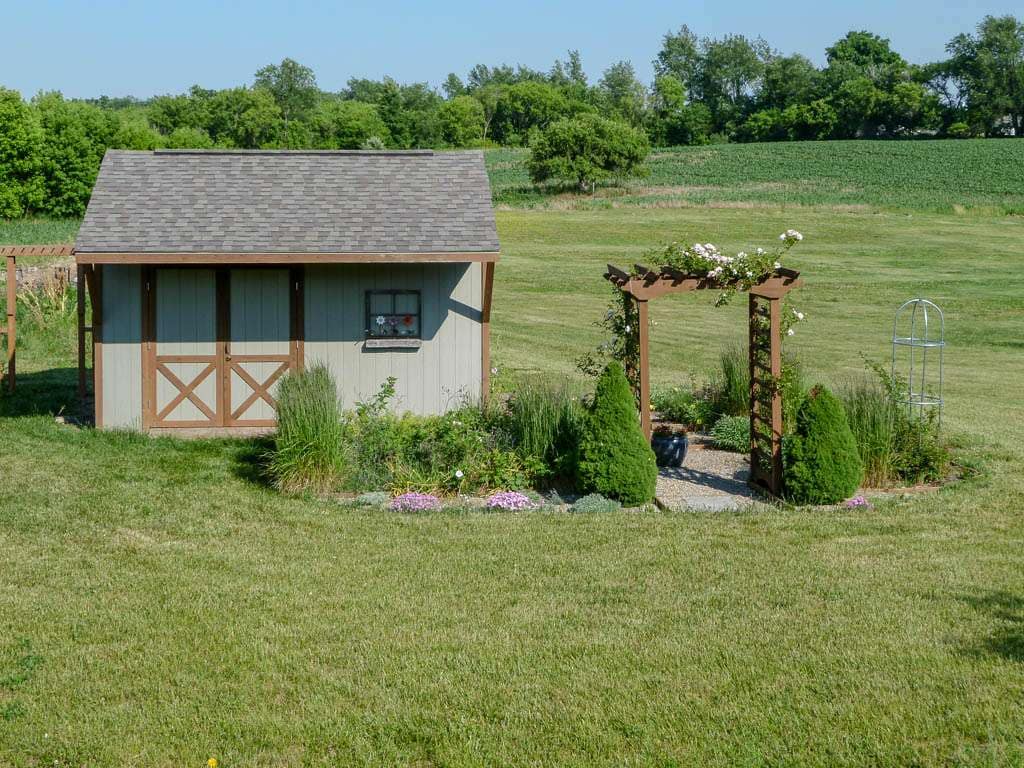
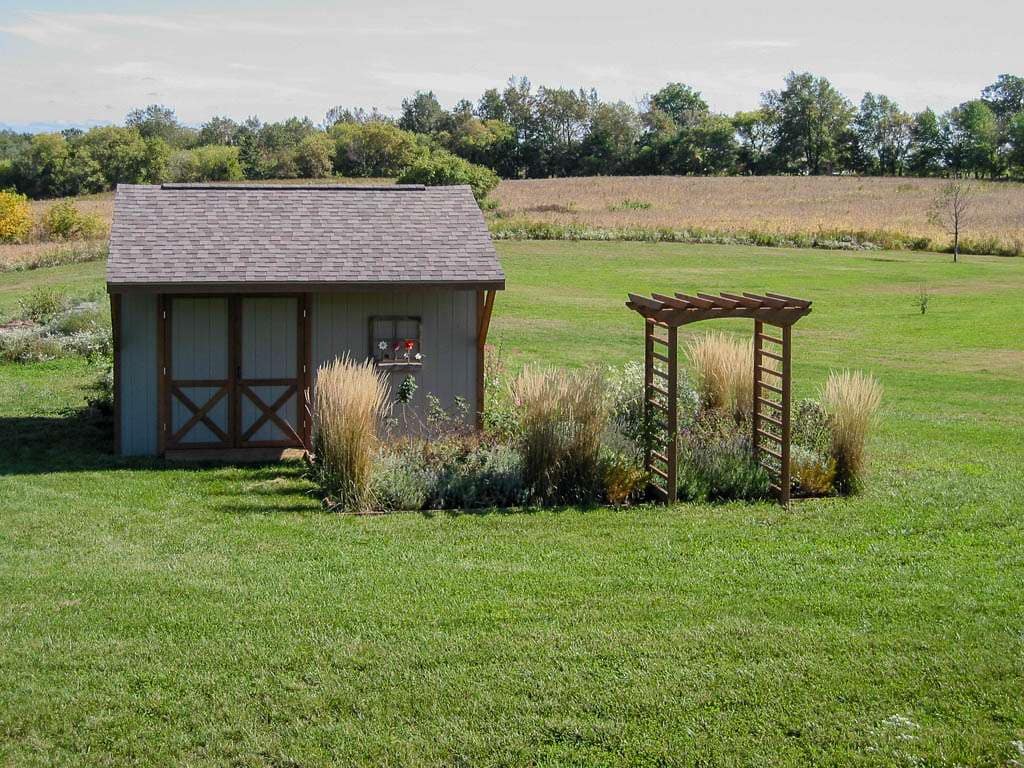
The photos below show the before (right) and after. They also show how the ornamental grass changes throughout the season. And in the center you can see the rose when it reaches the top of the pergola.
Second Construction with Concrete Borders
After losing control of the original garden, the wood borders rotting, and learning a few things, we redid the entire garden in 2021. We didn’t change the layout and the remaining roses, trees, and pergola stayed where they were, but everything else changed. Including my philosophy on the garden.
I still call it an “herb garden” but it’s much more than that because I’ve discovered that I just don’t use fresh herbs that often.
- We moved the blueberries here — this is their third location — because it’s sunnier. They actually seem happy now. We built a cage around them to protect them from the birds.
- I moved in roses from elsewhere in the yard to replace the roses that died. These roses were getting crowded or shaded out in their previous locations.
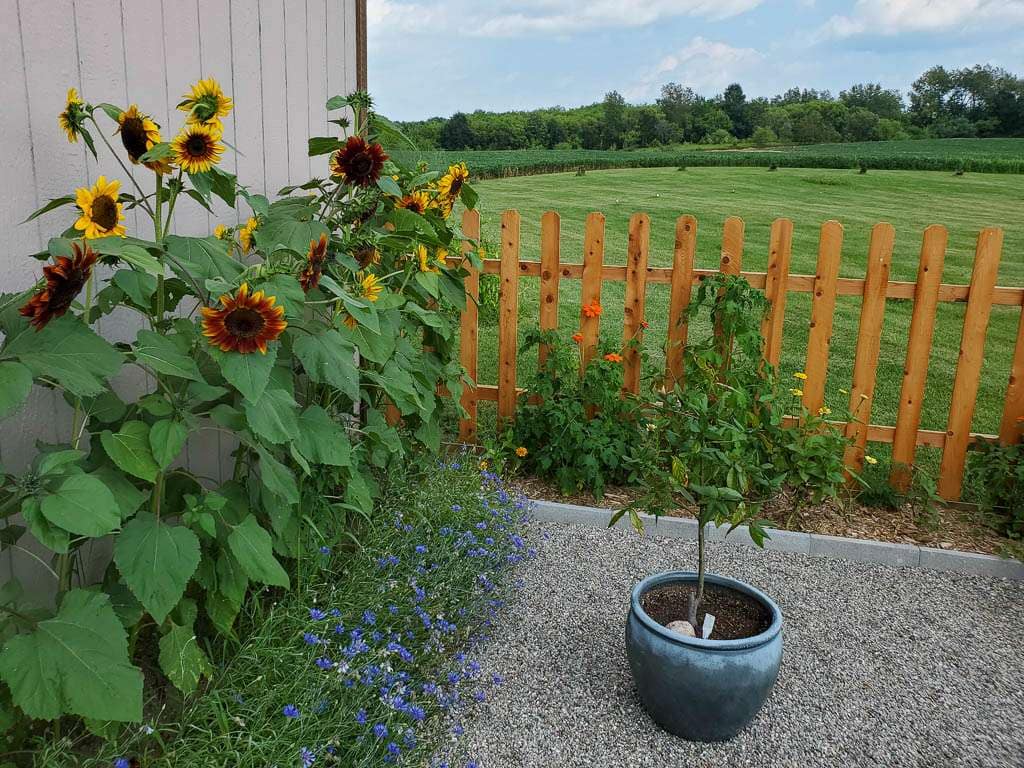
- It’s a place to plant taller annuals that we like, like sunflowers and cosmos, that don’t fit anywhere else.
- I have space reserved for growing basil, which is an annual, because I like making my own pesto.
- I may try growing some flowers specifically for cutting, though historically I don’t really end up cutting flowers.
- I’ve planted some vegetables in there, like one year when we didn’t really plant a vegetable garden. (We’re never going on vacation in May again.)
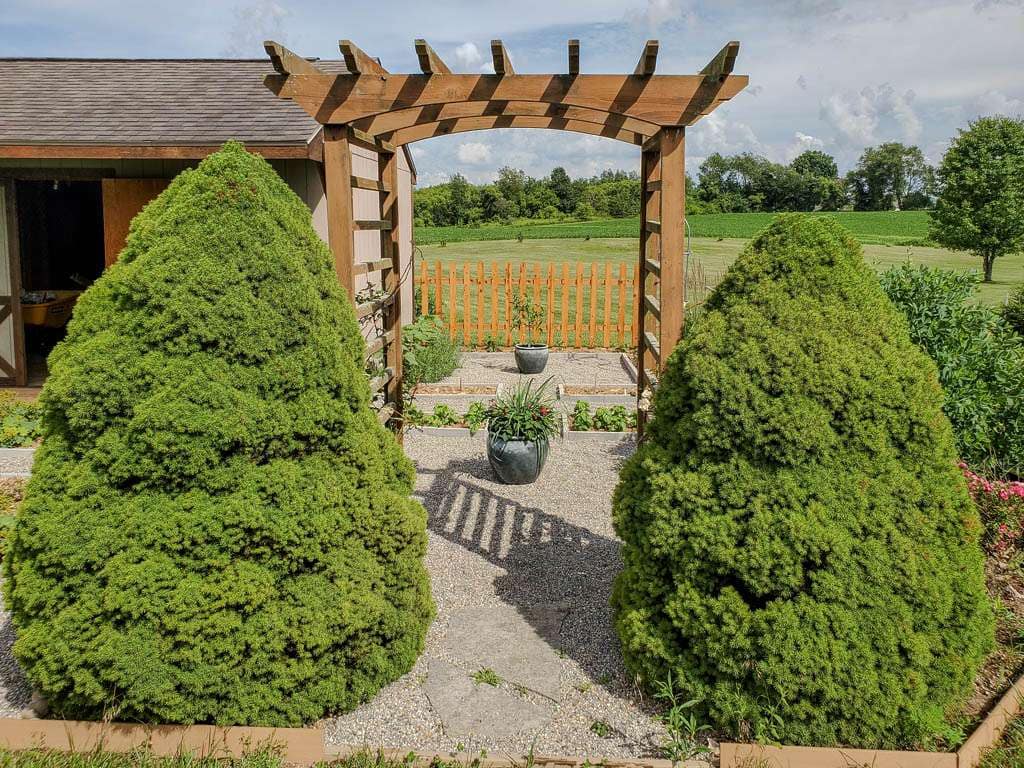
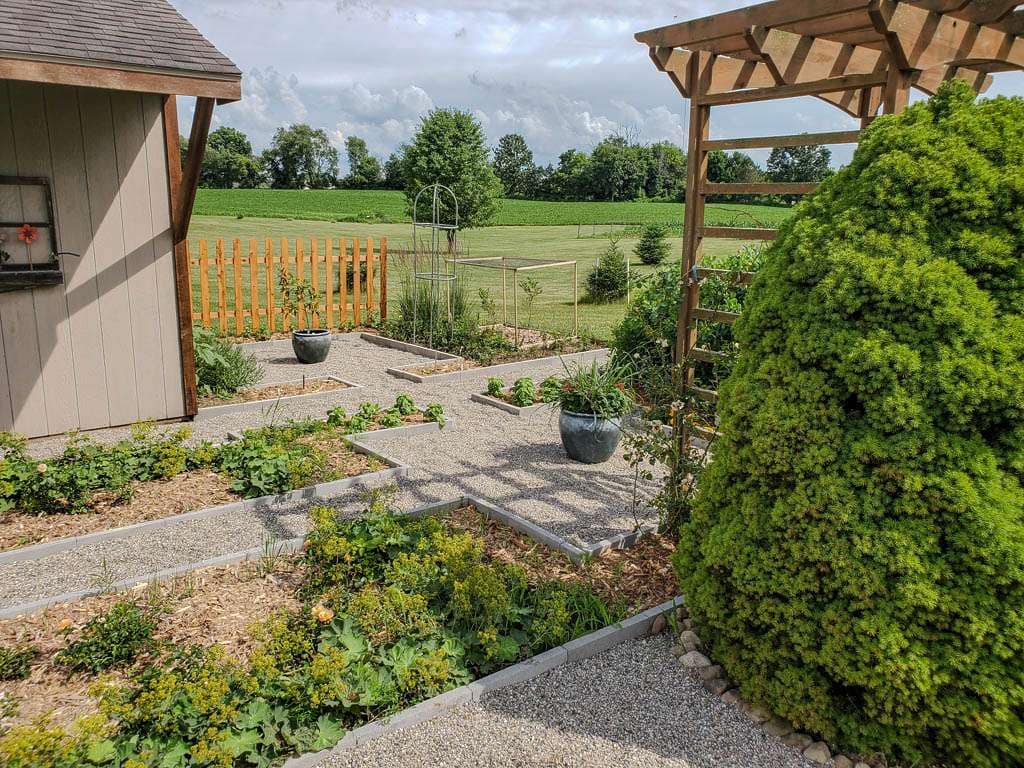
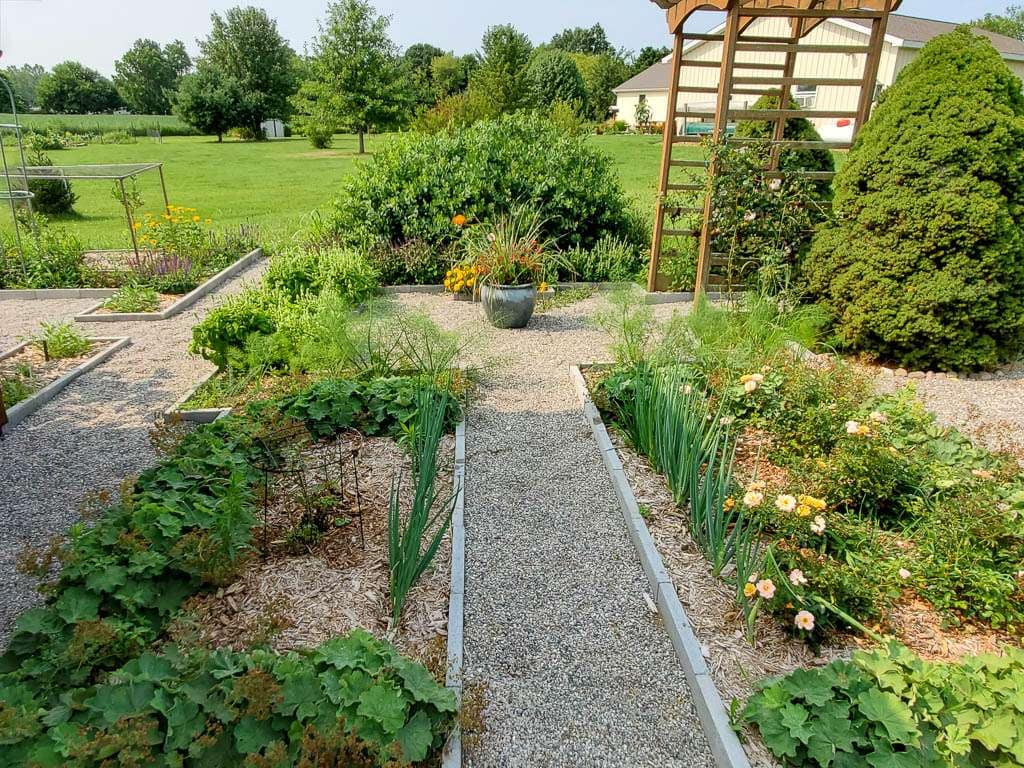
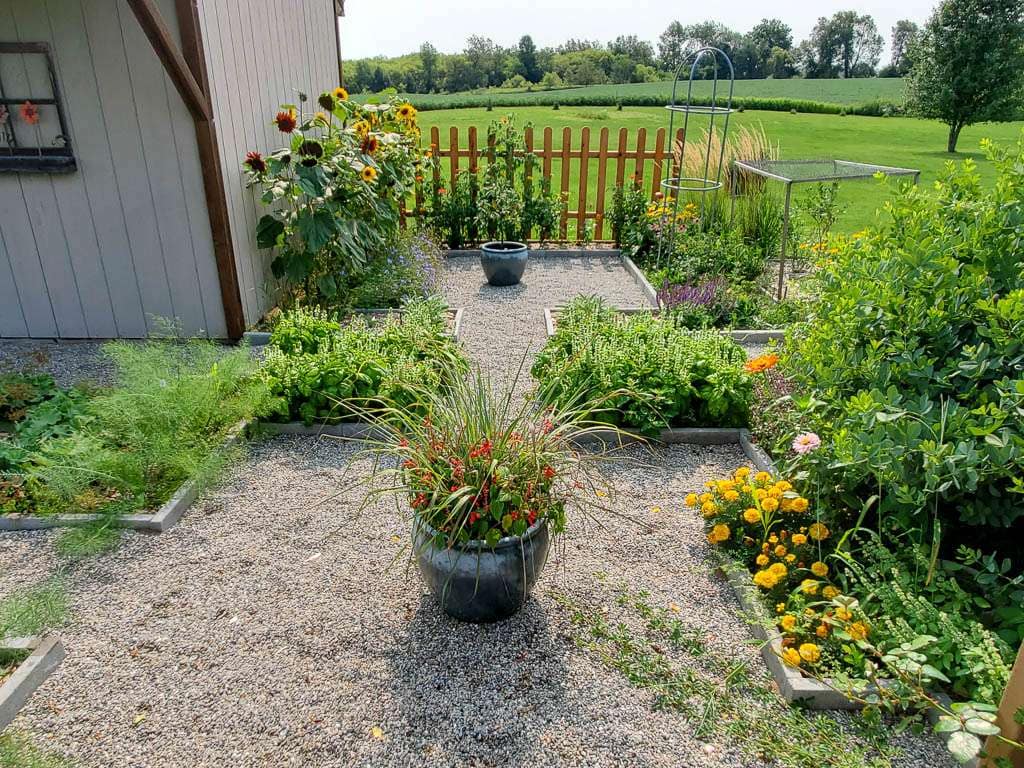
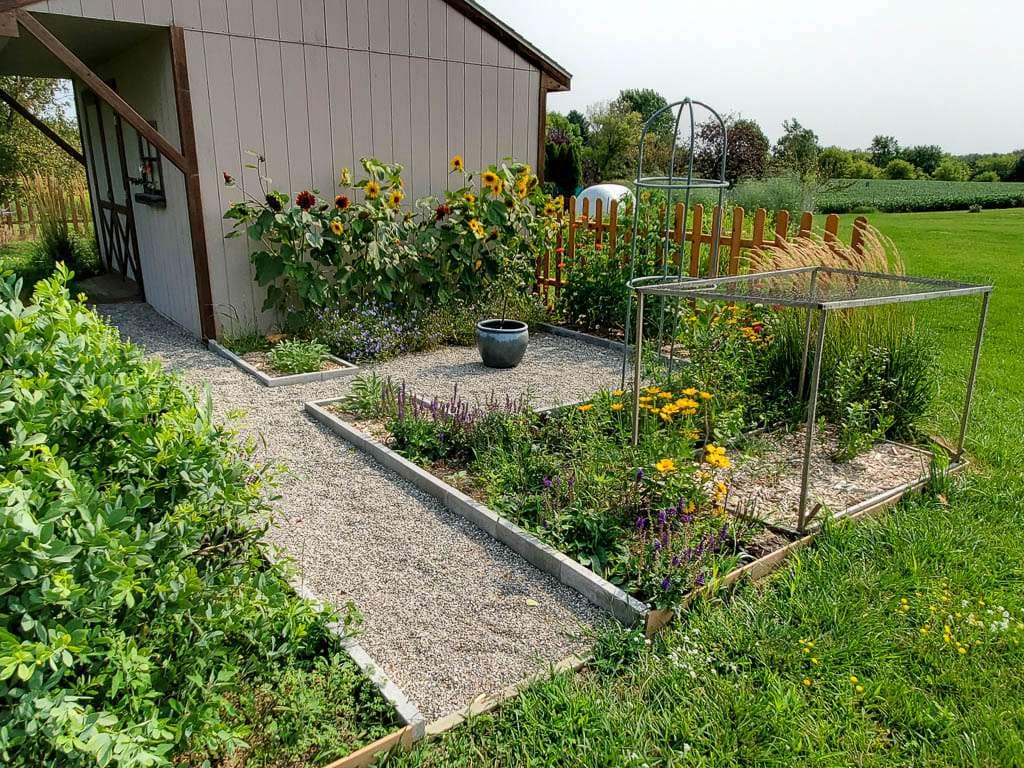
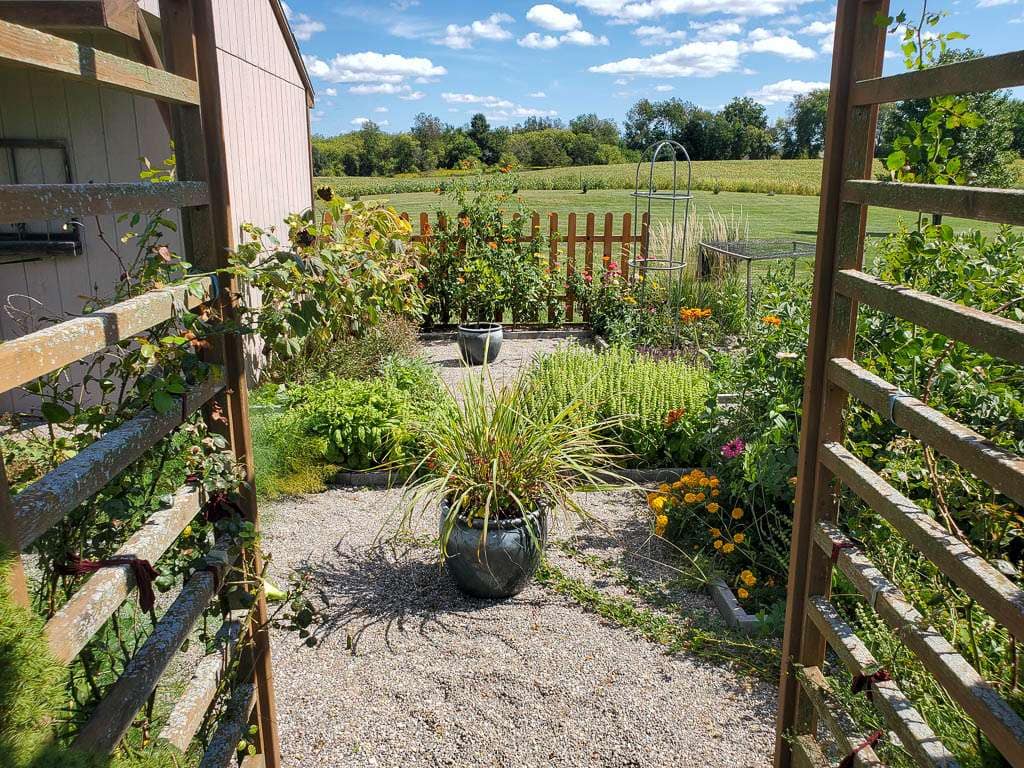
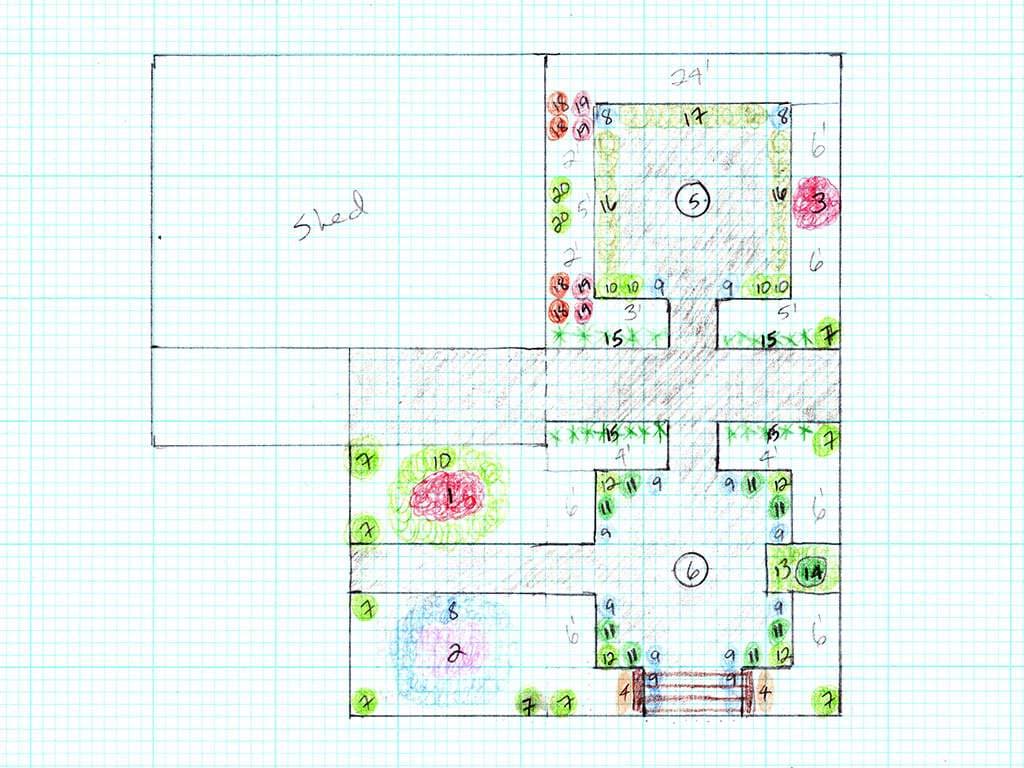
Here’s the current layout and permanent plants.
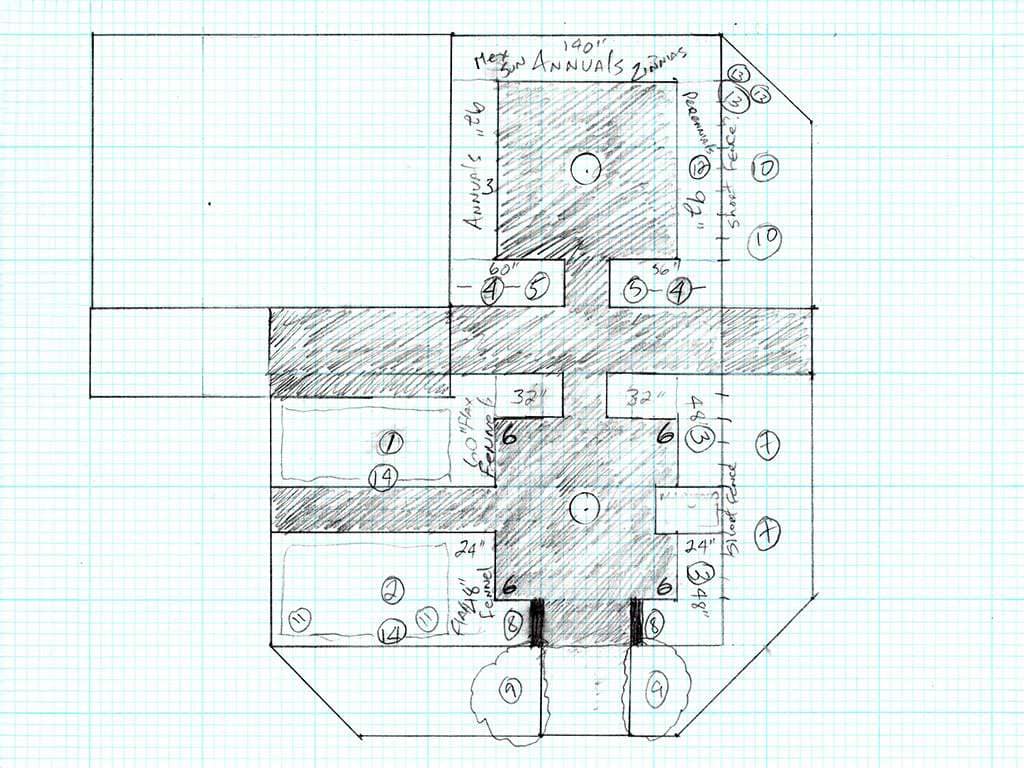
- Rosa Abraham Darby (moved from elsewhere)
- Flower Carpet Roses (moved from elsewhere)
- Basil
- Culinary Sage
- Floral Sage (moved from elsewhere)
- Baptisia
- Rosa New Dawn
- Dwarf Alberta Spruce
- Blueberry (moved from elsewhere)
- Calamagrostis Karl Foerster
- Alchemilla Mollis (Lady’s Mantle)
- Pot: Lemongrass
- Pot: Bay Tree
- Rosa Gallica
- Russian Sage (moved from elsewhere)
- Flax
- Dianthus
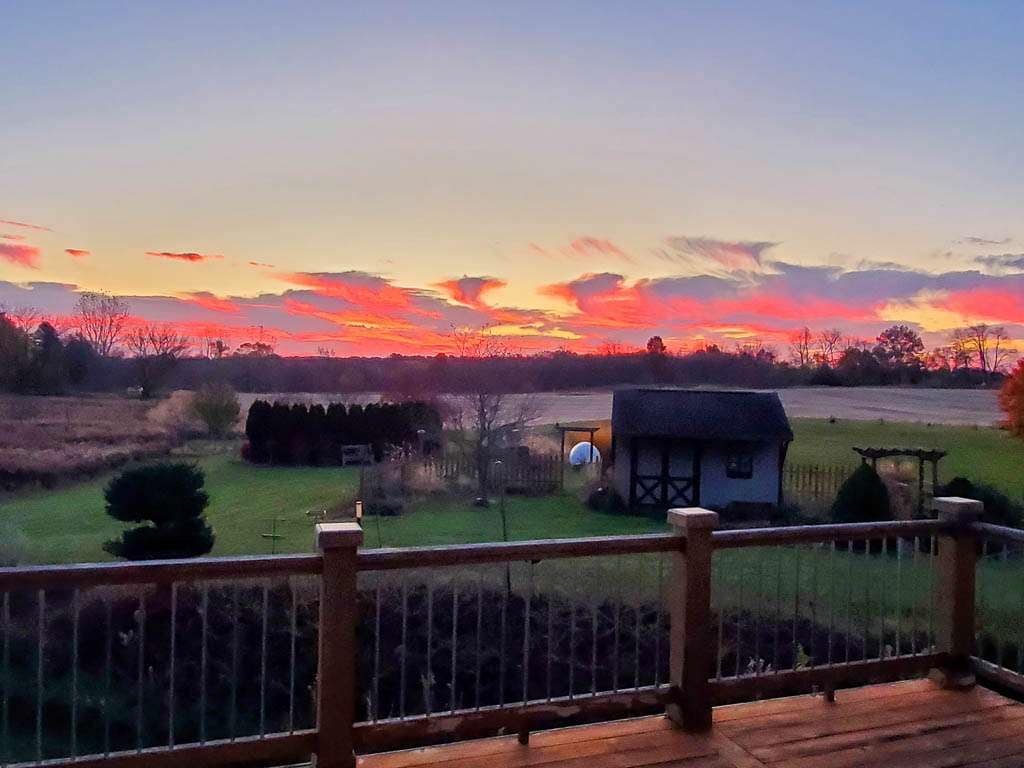
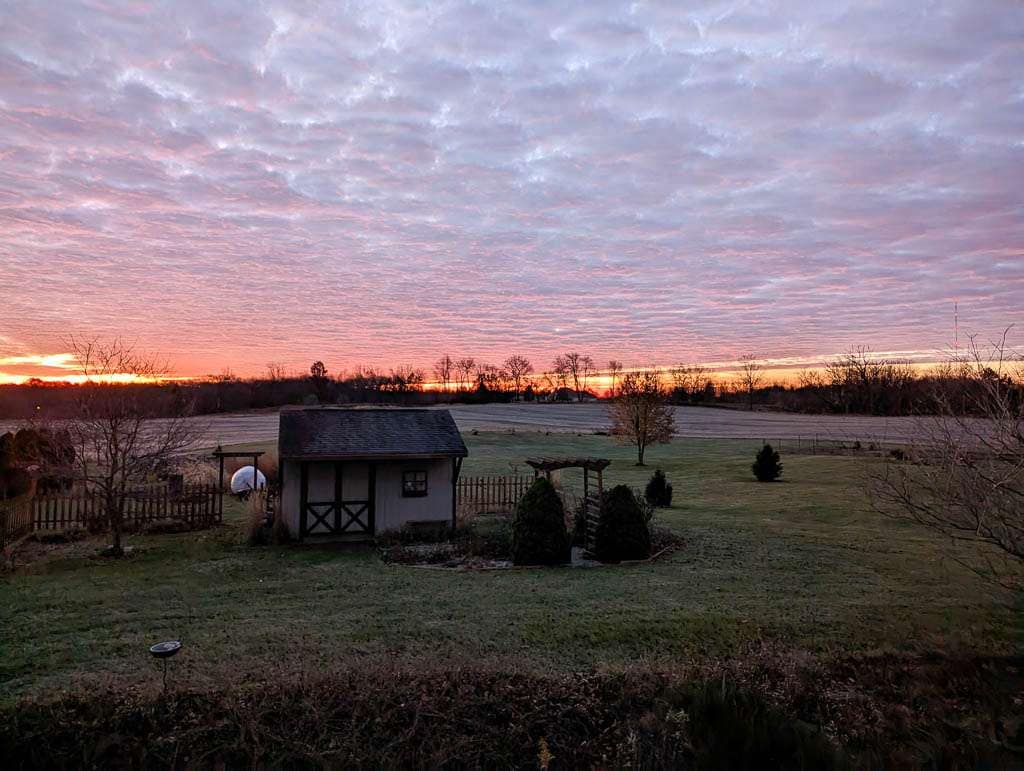
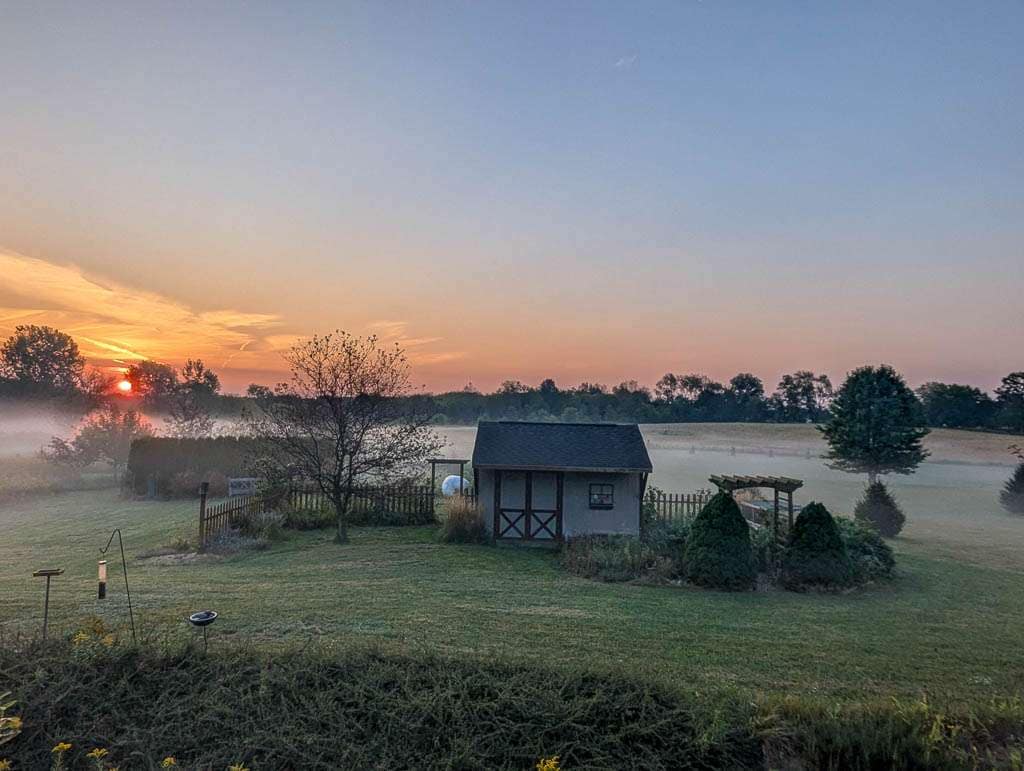
We get nice sunrise views over the shed. I’m not usually awake then, but Steve takes photos of the best.
Here are some photos of some of the plants.