How it all started
We were sitting around having a beer, as one does, when I said “We need to buy another house, because we’ve done all the projects we can here.” And he responded, “Why don’t we build a new house. We could do that.” And so it began.
One thing we wanted was land, so we could have more plants. We looked at plots of 1-3 acres and eventually found what seemed perfect. Two and a quarter acres on a side road, mostly flat but with a slight downward slope front to back. Along the edge of the road were a few trees, including two mature oaks and an old leaning apple tree. Steve has been driving by and admiring that apple tree for years, never imagining that one day he would own it.
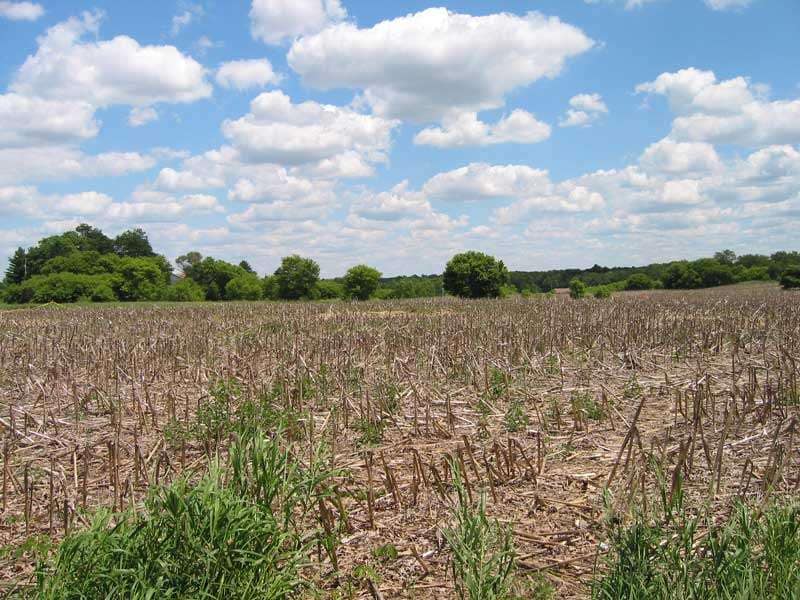
The rest of the land was cornfield, so we had a blank slate for landscaping.
Where we are now
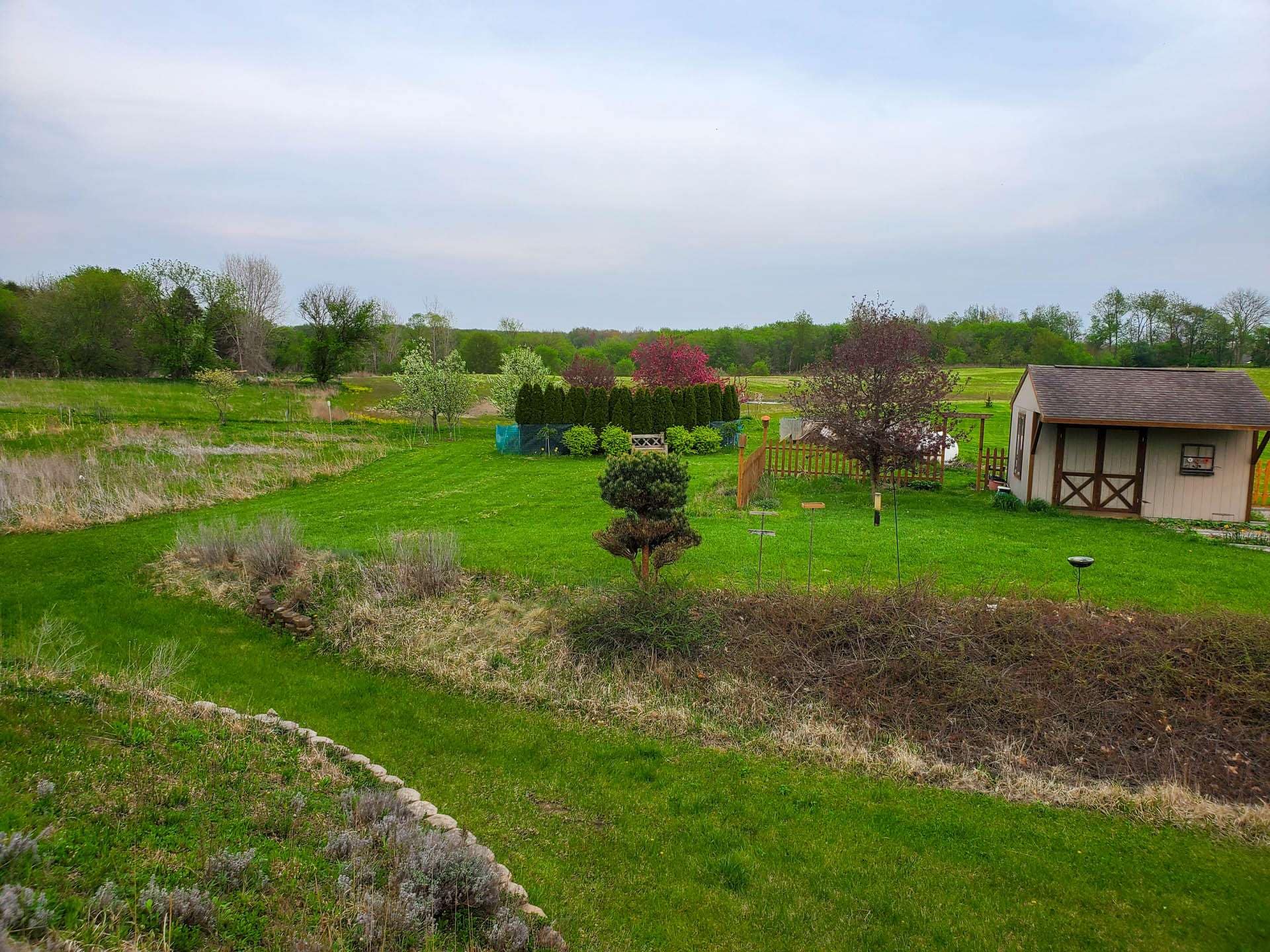
We bought the land in 2005 and moved in in 2006. Since then we’ve added:
- A yard
- A meadow
- A windbreak/privacy screen
- Foundation plantings
- Landscaping on slopes around the house (it’s a walkout)
- A shed
- A compost pile
- A deck and gazebo
- A vegetable garden
- An herb garden
- A pond and a patio
- Island beds in the front yard
- A perennial garden
- A secret garden
- Other trees and shrubs
Here I’ll talk about what we planned and how it worked out (and didn’t work out). You can see that on the Planning page.
I’ll cover both the plants and the hardscaping, because some of our hardscaping is really cool. (And the other gardening partner is a carpenter and generally handy, so most of it is DIY.)
Where we’re going
Gardening is never done, which is both a blessing and curse. Now that I’m old(er), I understand much better what my parents meant when they looked at what we were doing and said “that looks like a lot of work.” And it is. But it’s (mostly) fun too. Plants grow, they die, they volunteer themselves, and they require maintenance. (Some more than others.) And we come up with ideas for how to improve and/or simplify things.
Besides talking about how we designed and built different parts of the landscape I also try to cover what’s happening to and in the garden throughout the year, including ongoing maintenance. We’ll see how that goes. The growing season is busy!
Design Principles
I try to apply these principles:
1 Low maintenance
We have a LOT of property to maintain and only two of us to do it, so I try to keep things low maintenance. That means — among other things — plants that are hardy, don’t need special winter protection, constant watering, or regular soil amendments. We do break this rule occasionally. For example, we grow blueberries though we don’t have naturally acidic soil. I also try for plants that don’t need regular pruning and that aren’t invasive, though I have made mistakes there. Low maintenance also means limited pots and hanging baskets that dry out quickly, curves for easier mowing, and edging and mulching.
2 Multi-season interest
I try to choose plants that offer multi-season interest. Not just flowers, but berries, foliage that changes color in the fall, branch structure that looks interesting in winter. This is especially important in areas near the house that we see all the time. We do have one area that’s devoted to flowering shrubs like lilac (which we both like) that’s pretty forgettable the rest of the year, which is why it’s off in a corner of the yard. Beautiful in bloom, boring the rest of the time.
3 Support for wildlife
I try to incorporate plants that offer something to wildlife, like food, nesting materials, or cover. At the same time we try to avoid deer food like hostas!
Garden (and gardener) facts
There are two of us who manage all this. We’re not professionals — well, not at gardening — just enthusiastic amateurs. One of us was a professional carpenter, so we do have an expert handling the hardscape and structures. On the gardening side we’re self-taught. We try to learn from out mistakes and hope by sharing that we can help others avoid some of those mistakes!
- We’re in mid-Michigan, hardiness zone 6a, formerly 5b.
- We have 2.25 acres of land.
- Our soil tends to be alkaline.
- Our soil tends to be clay.